
 Search Articles


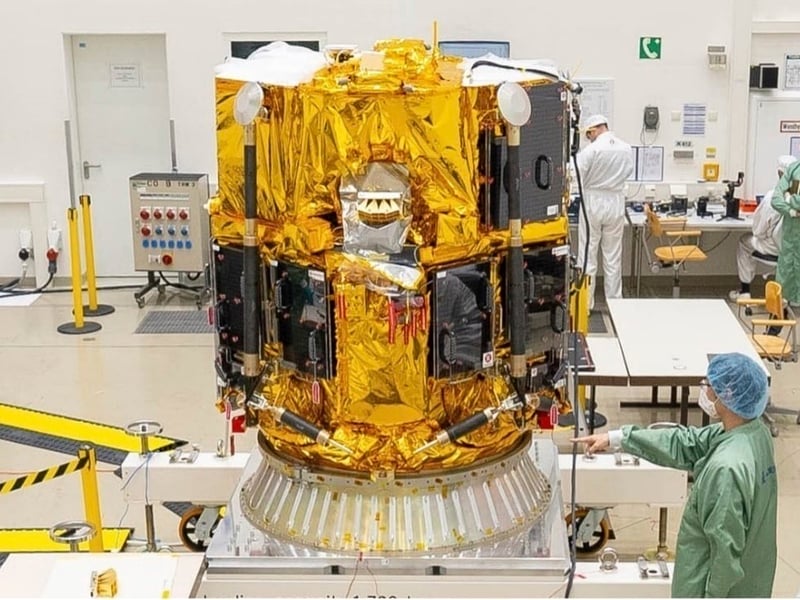
CAPE CANAVERAL, Fla. (AP) — A private Japanese moon lander went into free-fall while trying to land on the lunar surface last month, company officials said Friday, blaming a software issue and a last-minute switch in the touchdown location.
The spacecraft belonging to the company ispace was originally supposed to land on a flat plain. But the target was changed to a crater before December’s launch. The crater’s steep sides apparently confused the onboard software, and the 7-foot (2-meter) spacecraft went into a free-fall from less than 3 miles (5 kilometers) up, slamming into the lunar surface.
The estimated speed at impact was more than 300 feet (100 meters) per second, said the company’s chief technology officer, Ryo Ujiie.
NASA’s Lunar Reconnaissance Orbiter photographed the crash site the next day as it flew overhead, revealing a field of debris as well as lunar soil hurled aside by the impact.
Computer simulations done in advance of the landing attempt did not incorporate the terrain of the new landing site, Ujiie said.
CEO and founder Takeshi Hakamada said the company is still on track to attempt another moon landing in 2024, and that all the lessons learned will be incorporated into the next try. A third landing attempt is planned for 2025.
If successful, ispace would have been the first private company to land a spacecraft on the moon. Only three governments have achieved that: Russia, the United States and China. An Israeli nonprofit tried in 2019, but its attempt also ended in a crash landing.
Named Hakuto, Japanese for white rabbit, the spacecraft and its experiments were insured, according to Hakamada. The United Arab Emirates had a mini lunar rover on board that was lost in the crash.
Two U.S. companies have lunar landers awaiting launch later this year from Cape Canaveral, in partnership with NASA.
__
By MARCIA DUNN AP Aerospace Writer
The Associated Press Health and Science Department receives support from the Howard Hughes Medical Institute’s Science and Educational Media Group. The AP is solely responsible for all content.
Subscribe to our free newsletters
Our weekly newsletter Closing Arguments offers the latest about ongoing trials, major litigation and rulings in courthouses around the U.S. and the world, while the monthly Under the Lights dishes the legal dirt from Hollywood, sports, Big Tech and the arts.