
 Search Articles


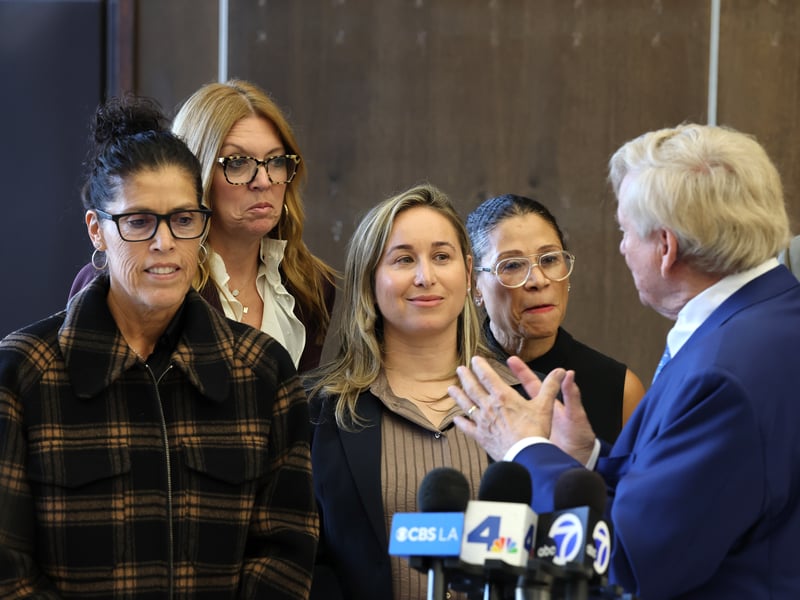
SANTA ANA, Calif. (CN) — The family of former pitcher Tyler Skaggs and the Los Angeles Angels reached a settlement Friday in the civil suit over Skaggs’ 2019 death from accidental drug overdose.
The settlement, for an undisclosed amount, came as the jury deliberated for a fourth day, following a trial that lasted more than two months.
After the deal was announced, the family’s attorney, Rusty Hardin, told reporters his clients were “delighted that this is behind them.”
“This was a great day for them, because it’s finally over,” Hardin said. “Tomorrow is the first day of the rest of their lives, after six years of living with this.”
Negotiations began Thursday, when the jury had the day off. A key moment that might have set off settlement talks came Wednesday, when the jury sent the judge a note with a question: Were they responsible for awarding punitive damages?
In fact they were, but only if they thought the Angels were negligent in hiring and retaining one of their chief spokesmen, Eric Kay, who is currently serving 22 years in federal prison for selling Skaggs the counterfeit oxycodone pill laced with fentanyl, which directly led to his death. The question seemed to tip the jury’s hand, and signaled a willingness to award the family hundreds of millions of dollars.
The Skaggs had argued that the Angels knew Kay was drug addict, knew he was selling opiate painkillers to a number of players, and continued to employ him. They even allowed him to travel with the team to Texas for a road trip, offering him personal access to Skaggs and others.
“If Eric Kay was not allowed to return to work, then Tyler Skaggs would still be alive," Skaggs’ family attorney Daniel Dutko said during his closing argument to the jury.
The Angels denied any knowledge of Kay’s drug-dealing, and sought to paint Skaggs as a “partier” and drug addict who had been snorting opiate painkillers for at least eight years and was certainly capable of obtaining opiates from any number of sources.
“You can’t prevent a drug addict from getting counterfeit pills and chopping them up and snorting them,” Angels attorney Todd Theodora told the jury during closing arguments. “Terminating Eric Kay would not have changed the outcome."
The two-month trial featured testimony from a number of Skaggs’ former teammates, including Angels star center fielder Mike Trout, who admitted to paying Kay $1,000 to be hit by a pitch, among other clubhouse “shenanigans.” More enlightening testimony came from pitcher Mike Morin, who said he and Skaggs would take illicit pills to cope with the pain of pitching. “It was a temporary solution that would be discreet, that I would be able to do my job,” he said.
Perhaps the most impactful testimony for the plaintiffs came from Kay’s ex-wife Camela, a reluctant witness who told the court that Kay’s boss Tim Mead once searched Kay’s room and found six or seven small plastic baggies of pills. Camela said she thought the pills were meant for players. Mead, who testified for the plaintiffs as a hostile witness, said he couldn’t recall the incident.
One of the jurors, who gave only his first name, Daryl, said Mead’s behavior was the key issue for most of the jury.
“The thing that bothered a lot of people was that Tim Mead had the ability to do something above and beyond, and I think he offered too much protection [to Kay,]” Daryl said. “If he had reported it to HR, it would have been a completely different outcome.”
In a written statement issued after the settlement was announced, the Angels said: “The death of Tyler Skaggs remains a tragedy, and this trial sheds light on the dangers of opioid use and the devastating effects it can have."
Skaggs’ wife and parents had asked the jury to award them at least $90 million in lost compensation for what Skaggs would have earned during the rest of his career. They asked for an additional unspecified amount for the loss of Skaggs’ love, companionship and support. The Angels had argued that Skaggs would have made closer to $30 million for the rest of his career, much of which he would have spent.
After being released by the judge, the jury foreman, who asked to be identified by his first name, Richard, said they were poised to award the Skaggs family between $60 and $70 million for economic damages, or loss of future earnings, and around $20 million for noneconomic damages. He also said they were leaning toward awarding around $10 million in punitive damages, although that would have been done at a later phase of the trial.
But the family would have only received part of that award, based on what percentage blame the jury decided to assign the Angels. They were in the middle of discussing just that topic when the judge interrupted them and told them to stop deliberating, because a settlement was imminent. Richard said that he personally thought the Angels were 50% responsible for Skaggs’ death — meaning his family’s compensation could have been closer to $50 million.
Another added benefit of a settlement is that the payout is significantly faster than a judgment, which can be held up for years in an often lengthy appeals process.
Far from being disappointed that the settlement was announced mere hours before they were set to render a verdict, jurors said they were relieved.
“We don’t want anybody to really be disappointed,” said Daryl. “So the fact that it can conclude in an amicable manner is better than us doing something that one side is not going to be happy about.”
 Follow @hillelaron
Subscribe to our free newsletters
Our weekly newsletter Closing Arguments offers the latest about ongoing trials, major litigation and rulings in courthouses around the U.S. and the world, while the monthly Under the Lights dishes the legal dirt from Hollywood, sports, Big Tech and the arts.