
 Search Articles


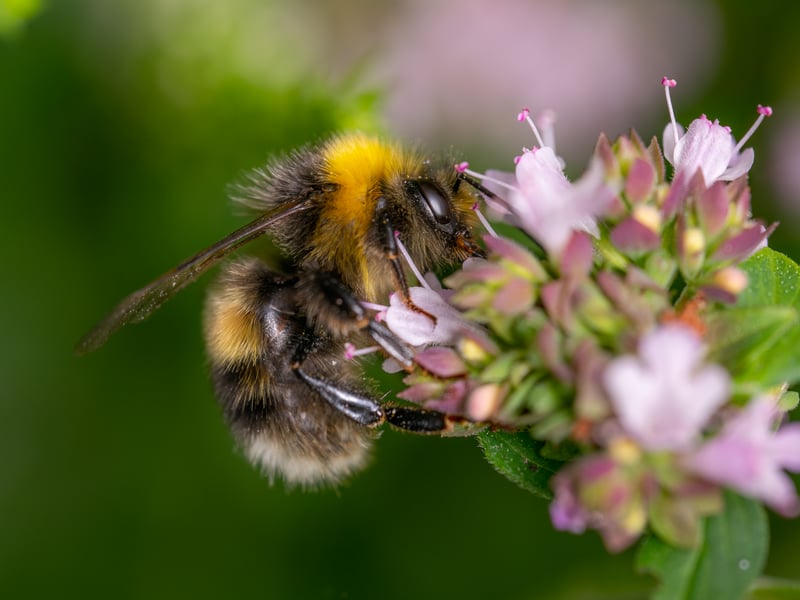
(CN) — While honeybees and beekeeping, urban or rural, have gained popularity and attention amid growing concerns over honeybee survival and colony collapse disorder, most pollinators remain overlooked. Species such as nocturnal moths, hoverflies and native bees continue to decline, with little public recognition.
Researchers at the University of Sheffield and the University of Helsinki aim to shift the spotlight. A new study published in the Royal Society’s biological research journal reveals that urbanization, in its many forms, both drives and reflects the decline in pollinating insects.
Analyzing data from Sheffield, Leeds and Leicester, the study found up to a 43 percent drop in pollinator species due to a “reduction of tree canopy and semi-natural habitat, suggesting that urban insect conservation depends on the preservation or expansion of habitat features specific to different threatened taxa,” according to the study.
The research details how pollinators are crucial to the life cycle for over 35 percent of crops and 60 to 90 percent of flowers, yet in urban areas, the lesser-known fly and moth species are “disproportionately threatened by major anthropogenic forces due to the diversity of non-floral resource requirements needed to sustain their communities.”
To understand how insect biodiversity is affected by urban surroundings, scientists set up numerous traps at different times of day and seasons in the three cities and analyzed the resulting sample collections.
“One of the most surprising findings was the consistency in responses across the three cities,” Emilie Ellis, lead author of the study, said in an email. “These cities are geographically close but differ in layout, land use, and urban structure. Despite these differences, we found remarkably consistent patterns: pollinators declined with increasing urbanization but responded positively to habitat features of green spaces.”
The causes of decline varied by species. Nocturnal moths are especially vulnerable to light pollution in large cities, while some hoverflies require stagnant freshwater to lay their eggs, an uncommon necessity in urban landscapes.
The solutions vary as well. “Whilst planting flowers for pollinators should not be discouraged, we found that pollinator conservation may depend on thinking beyond nectar and pollen,” said Ellis. “Different pollinator groups rely on different habitat features. For example, moths responded positively to tree cover, while bees and hoverflies did not.”
Thoughtful urban planning is needed to help curb the decline, but Ellis said a city dweller may contribute to active and vibrant green spaces by planting a wide range of plant, shrub, and tree species. Keeping wild patches undisturbed is also a good idea.
“I also strongly encourage collaboration among friends, families, and neighbors,” she said. “Individual gardens might seem small, but when connected across neighborhoods, they can create valuable habitat networks.”
Subscribe to our free newsletters
Our weekly newsletter Closing Arguments offers the latest about ongoing trials, major litigation and rulings in courthouses around the U.S. and the world, while the monthly Under the Lights dishes the legal dirt from Hollywood, sports, Big Tech and the arts.