
 Search Articles


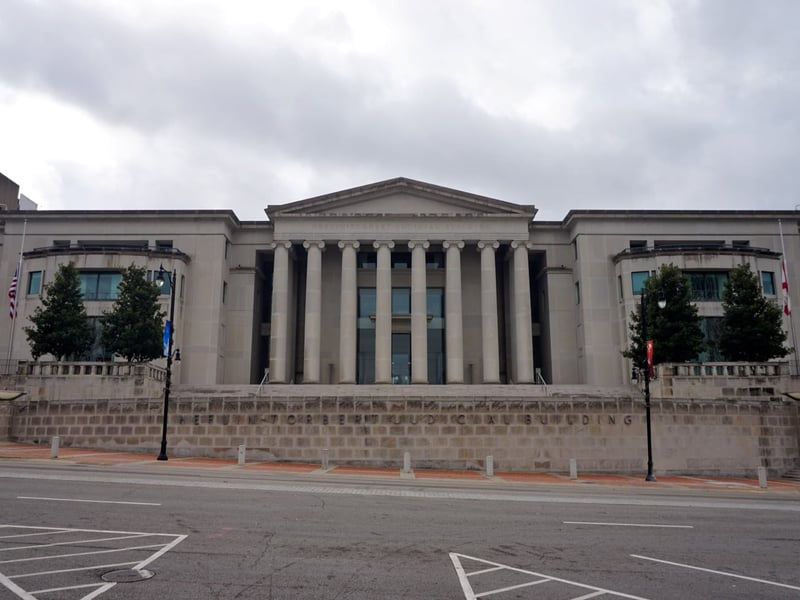
(CN) — What began as a mistaken identification in a college town shooting case has become a test of how far Alabama law protects anonymous sources and how modern journalism fits into statutes written for another era.
After The New York Times wrongfully identified a student-athlete as being present at the scene of a 2023 murder in Tuscaloosa, former Alabama basketball player Kai Spears filed a defamation lawsuit against the media conglomerate in federal court, claiming the reporting was false, inadequately verified and presented as fact despite contrary information.
Spears sought information about the confidential sources underlying the article that mistakenly identified him as a passenger in a car connected to the shooting. The Times refused to provide that information, invoking Alabama’s reporter shield statute.
That dispute put the federal judge in a bind. To rule on Spears’ motions to compel, the court first had to determine what Alabama law actually protects — specifically, whether the shield statute applies to information published online by a newspaper and whether it shields only a source’s name or also broader source-identifying information.
Because those questions involve unsettled issues of Alabama statutory interpretation, the judge stayed the discovery dispute and certified two questions to the Alabama Supreme Court, asking it to definitively interpret the scope of the shield statute.
Representing The New York Times Wednesday, attorney Chad Bowman argued the law protects the identity of sources, including documents or other information that could reveal their identity. Bowman noted Alabama’s shield statute was adopted in 1936 and is one of the oldest in the nation.
“Source clearly means the identity of the person providing the information and facially identifying information, like the source’s phone number and address,” he said. “But the plain language means … it could be a document as well.”
Bowman added that the definition of privileged information should be interpreted to include any information that could identify a source, as well as “any disclosure of information, such as place of employment, that would tend to identify him otherwise through a series of indirect questions.”
The panel downplayed the significance of the federal court’s first question, suggesting there is no distinction in the 90-year-old law between printed and online news reporting. But it focused intensely on the second question, prodding both sides to define the term “source,” asking how the law could be interpreted by trial courts and seeking advice on whether it could be more narrowly construed.
Bowman emphasized the shield statute protects all information that could reasonably lead to the identification of a source.
“The public policy in this state has long been to protect the ability of people to share information with the press for the benefit of the public,” he said.
Attorney Matt Glover argued on behalf of Spears, stressing his client bears the burden to prove at least negligence and, importantly, the Times’ state of mind at the time of publication. Glover noted the article stated six times as an unequivocal fact that Spears was in the car with the murder weapon, even though it was based on a single anonymous source. The Times later admitted a second source, who was not cited in the article, told the newspaper the information about Spears was likely wrong.
Glover said the plaintiff needs discovery into what the Times knew, when it knew it and how it evaluated the reliability of its sources to prove negligence and punitive damages.
“Look, make no doubt about it, we intend to seek punitive damages, and that is premised on what The New York Times did or did not know,” he said, adding: “I can’t help but think that what we don’t know is even more detrimental than what we do know.”
Glover said the shield law should only protect the anonymous source actually used in the story and only the kinds of information that obviously reveal who that source is, with the Times having to prove that to the trial judge each time.
The Reporters Committee for the Freedom of the Press is one of several media organizations that filed a friend-of-the-court brief in the case supporting The New York Times. In a brief phone conversation, Senior Staff Attorney Mara Gassmann explained that Alabama’s shield statute is adequate, and if courts allow runarounds, journalists would struggle to do their jobs and whistleblowers or other sensitive sources might never come forward.
“Reporters need to have conversations with sources so that the government won’t then be able to turn and use [reporters] as sort of an investigative arm,” she said. “Reporters have the freedom to know. Promises of confidentiality mean something; without them, the kinds of journalism that the public depends on are just not going to be able to happen. We hope the court recognizes why protecting sources is a public good and why, as a matter of the First Amendment, it’s important to do.”
 Follow @gabetynes
Subscribe to our free newsletters
Our weekly newsletter Closing Arguments offers the latest about ongoing trials, major litigation and rulings in courthouses around the U.S. and the world, while the monthly Under the Lights dishes the legal dirt from Hollywood, sports, Big Tech and the arts.