Search Articles


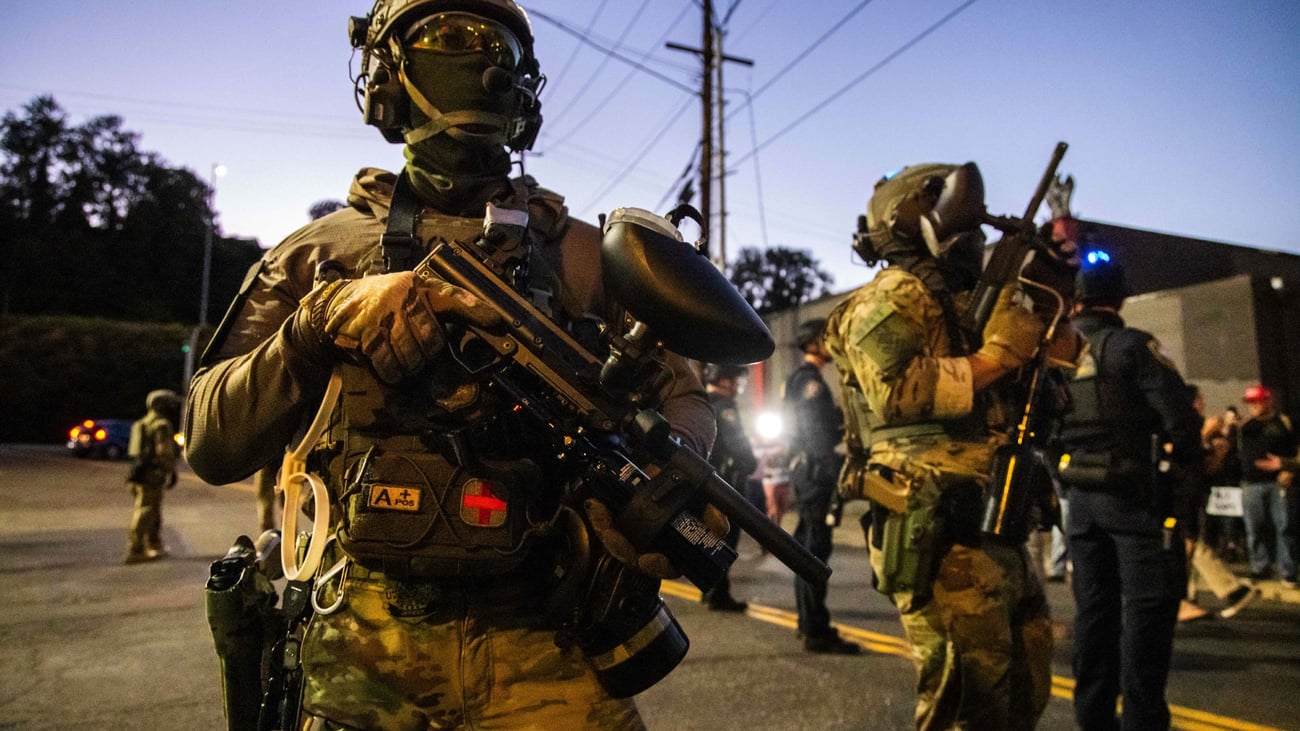
WASHINGTON (CN) — A pair of congressional Democrats on Monday unveiled a bill they said would shield the legal rights of people filming immigration officers and other federal agents conducting law enforcement activities and allow people to sue the government for infringing on those rights.
The measure, proposed by Florida Representative Maxwell Frost and Connecticut Senator Richard Blumenthal, comes amid renewed scrutiny of the Trump administration’s immigration crackdown following days of intense clashes between federal agents and protesters outside a detention facility in New Jersey.
And it comes as a multi-agency crime task force is already facing a lawsuit claiming it violated the First Amendment rights of American citizens during recent operations in Tennessee.
The proposed “Right to Record” Act, obtained by Courthouse News, would make it illegal for federal police officers or immigration agents to prevent people from recording, observing or peacefully protesting law enforcement activity. The measure would also bar federal agents from “threatening, intimidating or coercing” a person who records their operations with any negative consequences, including adding the person’s information or “biometric characteristics” into any database.
The legislation would also make it illegal for federal officers to pursue a person filming law enforcement activity or to use surveillance powers to identify them later.
Protesters and observers could also sue individual federal officers who stop them from filming or retaliate against them for recording law enforcement activities.
Agents who violate the law would face a $25,000 fine for each count, as well as additional damages of up to $100,000 for violations “engaged in with malice or reckless disregard for the federally protected rights” of demonstrators. Similar liability would apply to the U.S. government.
In a statement, Frost argued the Trump administration has tried to distort the circumstances around high-profile incidents involving federal agents and that access to recordings has set the record straight on more than one occasion.
“Without firsthand recordings, those false narratives might have become the official story, which is why the Right to Record Act is so important,” the Florida Democrat said. “It would protect the public’s ability to expose the truth without fear, giving individuals a legal path forward if an officer does violate their constitutional rights.”
During the Trump administration’s immigration crackdown in Minneapolis earlier this year, federal agents shot and killed two U.S. citizens — Renee Good and Alex Pretti — in separate incidents.
The Homeland Security Department and then-Secretary Kristi Noem initially claimed both Good and Pretti were “domestic terrorists” and attempting to attack or impede federal law enforcement. But video of both shootings, recorded by bystanders, raised serious questions about the administration’s framing of events. The deaths of Pretti and Good ultimately contributed to Noem’s firing as homeland security chief.
“Over the last year, I’ve investigated dozens of cases of Americans brutalized by agents of their own government, and across the board, video footage corroborated their testimony — showing the world what they experienced and making sure that justice was served,” Blumenthal said in a statement. “The right to bear witness has never been more important.”
The Connecticut Democrat argued his proposed legislation would create “real enforcement tools” for shielding First Amendment protections.
Efforts to protect the rights of protesters come during a tense standoff between law enforcement and demonstrators at Delaney Hall, a U.S. Immigration and Customs Enforcement detention facility in Newark, New Jersey. Federal agents have been filmed using tear gas, pepper spray and batons on protesters, and officers have arrested a handful of journalists. A New Jersey police sergeant last week was charged with stealing roughly $10,000 worth of camera equipment from an Associated Press photojournalist on assignment at Delaney Hall.
Newark Mayor Ras Baraka last week called the actions of federal agents “overly aggressive, unnecessary and in some instances unconstitutional,” and has called for the closure of Delaney Hall, where inmates last month reportedly began a hunger and labor strike.
Meanwhile the American Civil Liberties Union in May filed a lawsuit against the Trump administration on behalf of residents of Memphis, Tennessee, who said they were targeted by federal agents working for the White House’s Memphis Sage Task Force because they recorded law enforcement activities.
The residents claim federal officers threatened and harassed members of the public who filmed them and that the multi-agency task force, composed of 13 federal agencies, failed to properly train its agents not to retaliate against people who record their operations, despite First Amendment protections for such behavior.
In addition to codifying federal protections for filming law enforcement, the bill proposed Monday by Frost and Blumenthal would also require federal agencies to train their officers on how to conduct activity while “respecting the right to record, observe or peacefully protest law enforcement activities.”
In a statement Monday, ACLU senior policy counsel Jenna Leventoff lauded congressional Democrats for their effort to codify protections for protesters filming federal agents.
“We can’t hold our government accountable if we can’t see for ourselves what they’re doing in our communities,” said Leventoff. “Observing and filming allows people to create an independent record, share information with their communities and demand better from our government.”
 Follow @BenjaminSWeiss
Subscribe to our free newsletters
Our weekly newsletter Closing Arguments offers the latest about ongoing trials, major litigation and rulings in courthouses around the U.S. and the world, while the monthly Under the Lights dishes the legal dirt from Hollywood, sports, Big Tech and the arts.
Additional Reads

 Ukrainian strikes hit oil sites in Russia and Crimea June 8, 2026