
 Search Articles


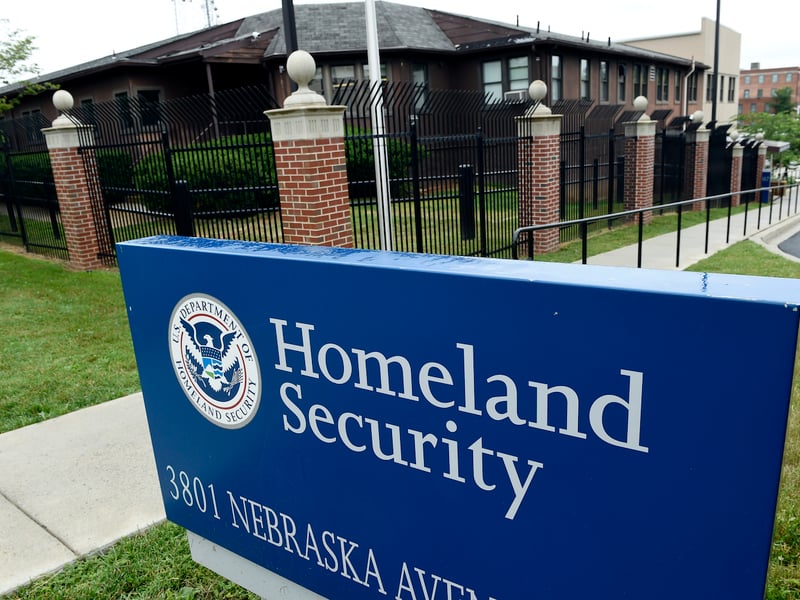
(CN) — A Rhode Island federal judge on Wednesday permanently barred the Trump administration from enforcing sweeping new requirements aimed at withholding disaster aid from so-called “sanctuary” states.
The Department of Homeland Security revised the requirements governing all federal grants in March to comply with an executive order signed by President Donald Trump. Critics said the new provisions conditioned the receipt of DHS grants and disaster aid on compliance with the administration’s aggressive immigration agenda — the latest attempt to strong arm states that Trump finds to be uncooperative.
On Wednesday, U.S. District Judge William Smith declared the new provisions unconstitutional in a 45-page opinion that admonished the federal government’s overreach.
“The combination of overbreadth, disregard for reliance interests, and failure to consider public safety and possible alternatives makes it clear that DHS’s decision does not comply with the [Administrative Procedure Act],” Smith said.
Smith agreed with the plaintiffs — a group of states including Illinois, California, New York, Rhode Island and more than a dozen others — that the new requirements were arbitrary and capricious under the APA and violated the spending clause because they are coercive and unrelated to the purpose of the federal grants.
In May, the coalition of 20 states sued, targeting DHS and the Federal Emergency Management Agency over the sweeping policy change, arguing that the new requirements force them to either reroute their own police resources to immigration enforcement or risk losing billions in federal funding.
“Defendant’s grant funding hostage scheme violates two key principles that underlie the American system of checks and balances: Agencies in the executive branch cannot act contrary to the authority conferred on them by Congress, and the federal government cannot use the spending power to coerce states into adopting its preferred policies,” the states argued.
Siding with the states, Smith determined that the conditions are coercive and unrelated to the purpose of the federal grants, and would cause great and immediate harm to the states that can only be remedied with an injunction.
The agencies had argued that Congress delegated broad discretion to DHS to administer the grant programs and to impose any conditions that serve federal interests, including immigration enforcement.
Unconvinced, Smith found that DHS failed to present a reasoned explanation for the new policies beyond Trump’s executive order pressing it to restrict federal grant funding to “sanctuary jurisdictions.”
Smith admonished the defendant agencies for their clear agenda in applying the new requirements, saying that the limited justifications offered force him to conclude that DHS engaged in “wholly under-reasoned and arbitrary process,” a clear violation of the Constitution.
He went on to point out the vague language in the new conditions, making compliance next to impossible, he said.
DHS implemented six specific requirements for grant recipients related to immigration: Grant recipients must share information with DHS concerning immigration status; must not encourage or induce noncitizens to unlawfully enter the country; must cooperate with Immigration and Customs Enforcement agents; must give agents “access to detainees”; must not publicize ICE operations; and must certify compliance across the state.
The financial pressure also goes well beyond the “relatively mild encouragement” approved in 1987’s South Dakota v. Dole, according to Smith in Wednesday’s ruling. The U.S. Supreme Court held in Dole that the federal government could attach reasonable conditions to funds.
Rhode Island Attorney General Peter Neronha called the injunction a “win for the rule of law” and said that Trump cannot “pick and choose which laws he and his administration obey.”
“Today’s permanent injunction says in no uncertain terms that this administration may not illegally impose immigration conditions on congressionally allocated federal funding for emergency services like disaster relief and flood mitigation. Case closed.”
Without an injunction, the states say, the consequences of the new conditions would be far-reaching. New York alone claimed in the complaint that it would stand to lose hundreds of millions of dollars in funding for bomb squads, SWAT teams, hazmat units and emergency relief services that responded to Hurricane Sandy and Covid-19. Each state said it would see a loss in human services that cannot be replaced by state revenues.
The plaintiff states have collectively received more than $23 billion in federal funding through FEMA since 2017, excluding Covid-19 relief funds.
Although the Supreme Court restricted nationwide universal injunctions in June, under the APA, courts are still empowered to “set aside” unlawful agency action like Smith has done on Wednesday with the permanent injunction.
“Cities and states who break the law and prevent us from arresting criminal illegal aliens should not receive federal funding. The president has been clear on that. Under Secretary Noem’s leadership, DHS is working to end violations of federal immigration law and remove criminal illegal aliens from American communities," DHS Assistant Secretary for Public Affairs Tricia McLaughlin said in an email.
“Radical sanctuary politicians need to put the safety of the American people first — not criminal illegal aliens. The Trump administration is committed to restoring the rule of law. No lawsuit, not this one or any other, is going to stop us from doing that,” she added.
 Follow @desdev5
Subscribe to our free newsletters
Our weekly newsletter Closing Arguments offers the latest about ongoing trials, major litigation and rulings in courthouses around the U.S. and the world, while the monthly Under the Lights dishes the legal dirt from Hollywood, sports, Big Tech and the arts.