
 Search Articles


MANHATTAN (CN) — The Second Circuit Court of Appeals on Thursday declined to resuscitate a German pharmaceutical drugmaker’s constitutional case against participation in the Medicare Drug Price Negotiation Program, which allows the federal health insurance program for seniors to negotiate directly with manufacturers to lower the cost of certain prescription drugs.
Finding that participation in the Medicare price negation program is “voluntary because there is no legal compulsion to offer products or services through the program,” a three-judge panel for the Second Circuit affirmed a lower court’s dismissal of Boehringer Ingelheim’s suit.
“The program does not impose unconstitutional conditions on Boehringer’s ability to participate in Medicare and Medicaid because the program is designed to promote the legitimate government purpose of controlling Medicare spending and does not regulate the company’s conduct in the private market,” U.S. Circuit Judge William Nardini wrote in the panel’s 49-page opinion.
“The program does not impose unconstitutional conditions on Boehringer’s ability to participate in Medicare and Medicaid because the program is designed to promote the legitimate government purpose of controlling Medicare spending and does not regulate the company’s conduct in the private market,” the Donald Trump appointee added.
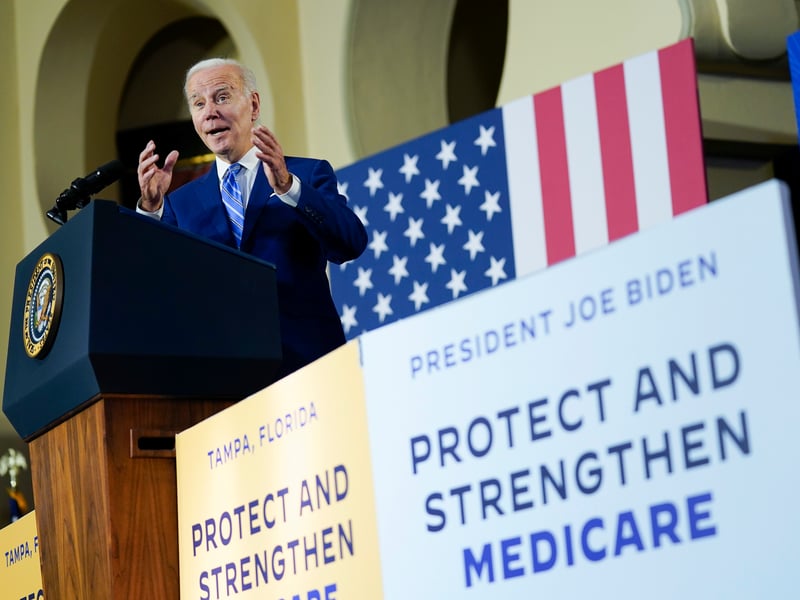
Congress created the prescription drug pricing initiative as part of the Inflation Reduction Act passed during Joe Biden’s presidency in 2022. The first 10 drugs targeted for negotiations were announced the following year and new prices, agreed upon in 2024, are set to take effect in 2026.
Boehringer Ingelheim Pharmaceutical, a private German pharmaceutical company with a U.S. headquarters in Ridgefield, Connecticut, sued the government in Connecticut federal court last year, claiming it was faced with an ultimatum to either provide its Jardiance diabetes drug to Medicare participants at a highly discounted price, or else incur an even greater economic toll in the form of a 1,900% excise tax.
In the complaint challenging its leverage participation in the Medicare Drug Price Negotiation Program, the company claimed violations of its First Amendment right barring compelled speech, Fifth Amendment right to procedural due process and the Eighth Amendment excessive fines clause.
It argued the program violated the Fifth Amendment’s takings clause by appropriating Boehringer’s property rights in its Jardiance diabetes drug, thus subjecting the company to tens of billions in annual excise taxes or across-the-board exclusion from Medicare and Medicaid if it did not “negotiate” and “agree to” a “maximum fair price” far below the prevailing rate.
Boehringer Ingelheim’s Jardiance (empagliflozin) is used to treat Type 2 diabetes, long-term heart failure and chronic kidney disease.
Chief U.S. District Judge Michael Shea struck down the case in July 2024, granting the government’s motion for summary judgment and concluding that Boehringer Ingelheim had the option to withdraw from Medicare and Medicaid before any taking or deprivation of its property interests.
“With all the resources at the federal government’s disposal, private corporations will often have an incentive to participate in federal programs,” the Barack Obama appointee wrote. “The Fifth Amendment does not prevent the federal government from placing conditions on participation in those programs."
Appealing that judgment to the Second Circuit, Boehringer Ingelheim contended that the statute’s use of the term “maximum fair price” violated the company’s First Amendment right by compelling Boehringer to engage in expressive conduct.
On appeal, the Second Circuit panel was not persuaded to overturn the lower court’s dismissal.
“The district court properly dismissed Boehringer’s takings claim on the ground that participation in Medicare, and thus in the Negotiation Program, is voluntary,” the panel wrote in their opinion.
At oral arguments before the Second Circuit in April, U.S. Circuit Judge Joseph Bianco signaled the panel was unlikely to side against Boehringer Ingelheim’s constitutional challenge.
“When a service provider voluntarily participates in a price regulated program or activity, there is no is legal compulsion to provide services, and thus there can be taking,” Bianco interjected early during the oral arguments.
Bianco, a Trump appointee, noted multiple times that he found Boehringer Ingelheim’s accusation of “leveraging” to be “an overly broad” term.
Nardini and Bianco were joined on the panel by U.S. Circuit Judge Pierre Leval, a Bill Clinton appointee.
The Second Circuit panel observed in a footnote that pharmaceutical manufacturers, such as Boehringer, are not without leverage in these prescription drug price negotiations.
“While the government has a strong interest in using its purchasing power to drive drug costs down, the Negotiation Program can cover only drugs without generic alternatives, so that the government will be incentivized to reach a deal with drug manufacturers to avoid leaving Medicare beneficiaries without viable substitutes,” the appeals judge wrote in a footnote in the opinion. “The ramifications of Boehringer’s withdrawal from Medicare and Medicaid would be significant, and potentially harmful to the Medicare program, in that it would result in 20 drugs falling out of those programs and ‘more than 1.3 million Americans losing insurance coverage for Jardiance alone.’”
The negotiations with participating drug companies under the federal Inflation Reduction Act took place in 2023 and 2024, and any negotiated prices will become effective beginning in 2026. Medicare enrollees taking the first round of 10 drugs covered under Part D selected for negotiation paid a total of $3.4 billion in out-of-pocket costs in 2022 for these drugs, according to the Department of Health and Human Services.
 Follow @jruss_jruss
Subscribe to our free newsletters
Our weekly newsletter Closing Arguments offers the latest about ongoing trials, major litigation and rulings in courthouses around the U.S. and the world, while the monthly Under the Lights dishes the legal dirt from Hollywood, sports, Big Tech and the arts.