
 Search Articles


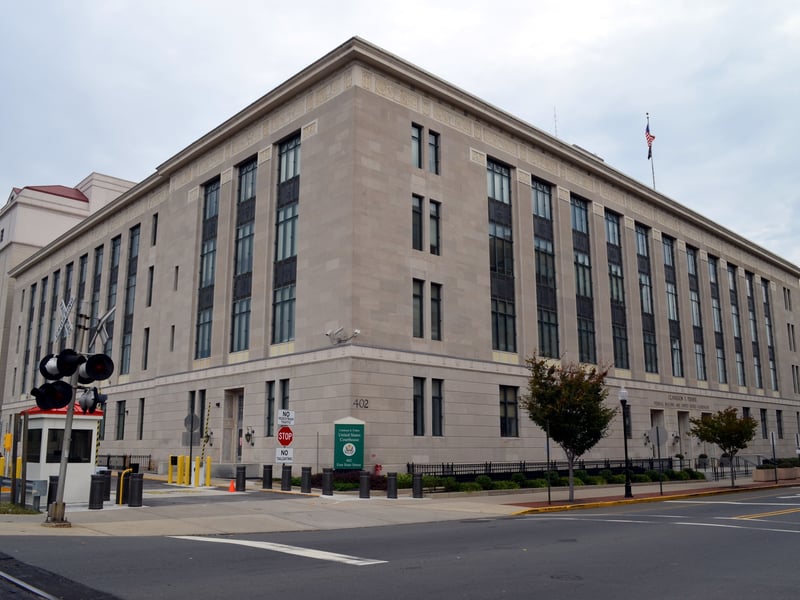
WASHINGTON (CN) — The Trump administration has violated federal court orders on more than 50 occasions as it’s prosecuted immigration cases in the state of New Jersey, the Justice Department’s lead attorney in the state acknowledged in a recent filing.
The admission from Jordan Fox, an associate deputy attorney general and a special attorney in the District of New Jersey, comes amid sharp rhetoric from the White House against judges presiding over immigration cases. And the acknowledgement is sure to rile critics of the administration who have for months worried about its willingness or ability to adhere to court orders.
U.S. District Judge Michael Farbiarz earlier this month directed Fox to conduct an investigation into the Justice Department’s compliance with judicial orders in 547 immigration-related habeas petitions between December and February. The request came after Farbiarz noted the administration had failed to comply with an injunction for a habeas case under his purview.
And, in a report filed with the court Friday, Fox said her review uncovered more than 50 additional and different violations.
Among the judicial orders the Justice Department violated in New Jersey were a dozen missed deadlines for bond hearings and three instances in which U.S. Immigration and Customs Enforcement released a detainee after a court-imposed deadline.
But the Justice Department also admitted to running afoul of court orders demanding immigration authorities halt the transfer or removal of people in custody. In 17 cases, Fox said, ICE transferred detainees out of New Jersey even after a judge ruled that they could not be moved. In many of those cases, the detainee was eventually returned to the Garden State.
Fox told Farbiarz that the offending transfers occurred “inadvertently” thanks to logistical delays in communicating court orders to ICE or to “administrative oversight” of the order. She added that her investigation showed no indication immigration authorities had “intentionally” run afoul of an injunction.
The Justice Department also noted one instance in which ICE deported a detainee to Peru in violation of a court injunction. Fox, in her report, noted the petitioner in that case decided to remain there instead of returning to the U.S. “This office has obtained no indication that [ICE] intentionally removed the petitioner despite the injunction,” she wrote.
Still, in a letter filed alongside her report, Fox expressed remorse for the Trump administration’s conduct — though she maintained the court order violations were “unintentional and immediately rectified” once the Justice Department became aware of them.
“[W]e deeply regret all violations for which our office is responsible,” Fox said. “The line AUSAs and staff of the Civil Division, their supervisors, the front office, and I will all continue to ensure full compliance with court orders.”
In a filing Tuesday, Farbiarz said the Justice Department’s review was “careful, thorough and plainly the product of a great deal of work” by Fox and staff at the U.S. attorney’s office in New Jersey. But he worried the agency’s violations were more than a fluke.
“[T]he sworn materials show that this case is not fully an outlier,” said the judge. “Judicial orders have been violated by the Respondents in other recent cases.”
Farbiarz added that the Justice Department’s conduct fell below standards. “Judicial orders should never be violated,” he wrote. “And they very rarely are, especially not by federal officials.”
The jurist demanded the agency explain to the court “across-the-board” steps it planned to take to ensure federal attorneys continue to comply with court orders. He required a senior Justice Department official to report back by next week with an affidavit detailing procedures implemented to achieve that goal.
Carl Tobias, chair of the University of Richmond School of Law, told Courthouse News that the Justice Department’s conduct was a “comedy of errors” which damaged the delivery of justice in the state of New Jersey.
“The DOJ just cannot seem to do anything correctly in the District of New Jersey,” said Tobias, who added that the tenor of Fox’s letter and her report “contrasts sharply” with the Justice Department’s past criticism of federal judges.
An admission that it ran afoul of federal court orders, even unintentionally, is an unusual move for the Trump administration — which has branded several lower court judges as “rogue” political activists standing in the way of the president’s mass deportation agenda.
In New Jersey, that dynamic was laid bare last year after Alina Habba, Trump’s former personal attorney and his pick to be U.S. attorney for the Garden State, was forced to step down after she was disqualified from the role by a federal appeals court. Attorney General Pam Bondi at the time blamed “politicized judges” for handing down a “flawed” decision that led to Habba’s resignation.
“These judges should not be able to countermand the President’s choice of attorneys entrusted with carrying out the executive branch’s core responsibility of prosecuting crime,” said Bondi.
Fox was one of several Justice Department officials tapped in December to take on Habba’s responsibilities in the U.S. attorney’s office. As a special attorney, she was authorized to work in the district’s civil and appellate divisions.
Habba, meanwhile, is currently serving as a senior adviser to the attorney general.
 Follow @BenjaminSWeiss
Subscribe to our free newsletters
Our weekly newsletter Closing Arguments offers the latest about ongoing trials, major litigation and rulings in courthouses around the U.S. and the world, while the monthly Under the Lights dishes the legal dirt from Hollywood, sports, Big Tech and the arts.