
 Search Articles


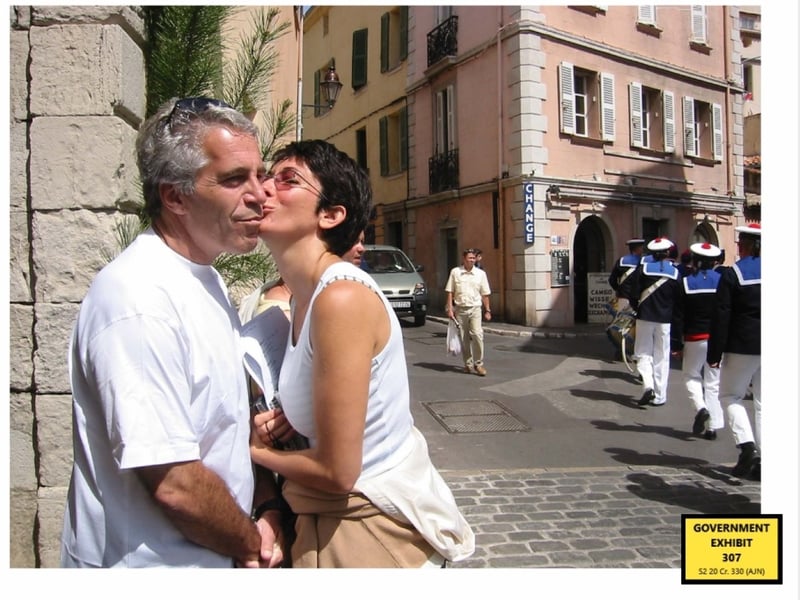
MANHATTAN (CN) — A pair of lawmakers hellbent on getting the full release of the so-called “Epstein files” shouldn’t be allowed to intervene in Ghislaine Maxwell’s criminal case to make it happen, the Department of Justice argued on Friday.
Writing to U.S. District Judge Paul Engelmayer, the Barack Obama appointee overseeing Maxwell’s case, top DOJ officials claim the two congressmen lack standing to enter the case as amicus curiae — or “friends of the court.”
“Rather, they seek to vindicate ‘their own particular interests,’" Jay Clayton, U.S. attorney for the Southern District of New York, states in the six-page letter.
The representatives, California Democrat Ro Khanna and Kentucky Republican Thomas Massie, moved officially to intervene in Maxwell’s case earlier this week. They claimed that the Trump administration has been slow-rolling the publication of files relating to late sex predator Jeffrey Epstein, and asked the judge to appoint a special master in Maxwell’s case to facilitate their release.
According to the DOJ, that request “exceed[s] the well-defined role of amici curiae.”
“Representatives Khanna and Massie lack standing,” Clayton claims. “Most obviously absent here is an injury-in-fact, or an ‘an invasion of a legally protected interest that is concrete and particularized and actual or imminent, not conjectural or hypothetical.’”
Khanna and Massie co-led the Epstein Files Transparency Act, which passed late last year and required the Justice Department to release everything it’s gathered on Epstein over decades of investigation by Dec. 19, 2025.
While thousands of documents have already been released to the public, they pale in comparison to the millions of others the department claims it still has to review for redactions prior to their release.
Massie said in a statement last week that the DOJ is “egregiously violating the requirements of the Epstein Files Transparency Act” by missing the deadline. But according to Clayton, nothing in the act gives the representatives the right to interfere with Maxwell’s criminal case.
“This is a criminal case, with two parties — the government and defendant Ghislaine Maxwell — that is long since over,” he writes.
Clayton adds that the act never should have been able to weave its way into Maxwell’s case at all, as her judgment was finalized when the Supreme Court denied her bid for release in October 2025.
“With no standing and no cause of action, the representatives are unable to seek the relief they request, and, respectfully, the court is without authority to issue it,” Clayton argues.
Khanna told Courthouse News on Friday that the DOJ’s letter “misconstrues both our intent and our role as amici.”
“We are not seeking to relitigate Maxwell’s criminal case; rather, we are informing the court of serious misconduct by the Department of Justice that requires a remedy, one we believe this court has the authority to provide, and which victims themselves have requested,” Khanna said. “This is not simply about the Epstein Files Transparency Act; it is about the fact that DOJ represented to this court that it would produce these records by December 19 with appropriate redactions to protect the victims, and it has failed to do so. Our purpose is to ensure that DOJ complies with its representations to the court and with its legal obligations under our law.”
A spokesperson for Massie didn’t immediately respond to a request for comment.
Just three names were on the bottom of the six-page letter to Engelmayer: that of Clayton, Attorney General Pam Bondi and Deputy Attorney General Todd Blanche — who interviewed Maxwell from prison last summer amid a renewal in public interest of Epstein’s sex crimes.
President Donald Trump’s close ties with Epstein, which resurfaced after winning the 2024 election, caused that surge in public interest.
It remains a sore spot for the president. He was caught on camera earlier this week giving the middle finger to a Michigan auto worker who called him a “pedophile protector” as he toured a Ford plant in the suburbs of Detroit.
And throughout his second presidential term, Trump has repeatedly shot down questions about their friendship. He asked a reporter in July 2025: “Are you still talking about Jeffrey Epstein?”
As federal prosecutors review documents related to the late New York financier, the workload may be affecting their other cases. On Tuesday, a federal judge in Manhattan told prosecutors to pull people off of reviewing the Epstein files to focus on another marquee sex crime prosecution: the case of Oren, Alon and Tal Alexander — a trio of wealthy brothers in real estate accused of using their status to rape and traffic dozens of women.
“A few people can be strung from the Epstein case given that these people are on trial,” said U.S. District Judge Valerie Caproni, a Barack Obama appointee. “Epstein is dead.”
Epstein was found dead in his Manhattan prison cell in August 2019, around a month after the 66-year-old was arrested on federal sex trafficking charges that could have implicated powerful people in his orbit. His death was ruled a suicide by hanging.
Maxwell is in prison, convicted in 2021 of recruiting underage girls and young women for Epstein to abuse. The former socialite is representing herself in an effort to get released, but rumors of a potential pardon from Trump continue to swirl.
 Follow @Uebey
 Follow @uebey.bsky.social
Subscribe to our free newsletters
Our weekly newsletter Closing Arguments offers the latest about ongoing trials, major litigation and rulings in courthouses around the U.S. and the world, while the monthly Under the Lights dishes the legal dirt from Hollywood, sports, Big Tech and the arts.