
 Search Articles


(CN) — An Eighth Circuit panel ruled Tuesday that the U.S. Surface Transportation Board exceeded its statutory authority when it established a new procedure for resolving disputes over railroad shipping rates through arbitration in place of traditional board action.
The five-member Surface Transportation Board — formerly the Interstate Commerce Commission — typically exercises its independent judgment in resolving disputes over rail shipping rates. The alternative process, called “final offer rate review” (FORR), was designed to serve smaller shippers with a streamlined process in which the board chooses between either the shipper’s or the railroad carrier’s final offer, but nothing in between.
The St. Louis-based Eighth Circuit panel ruled Tuesday that the board was not authorized by Congress to establish by rule the new procedure for resolving challenges to rail carrier rates.
In deciding whether the new process is consistent with board’s statutory authority, U.S. Circuit Judge Lavinski Smith wrote for the panel: “We hold that it is not because some of FORR’s requirements conflict with the board’s statutory duties,” including the duty that the board hold a “full hearing” before determining a rate’s reasonableness. The panel thus vacated the rule.
Smith was joined by U.S. Circuit Judge Raymond Gruender, like Smith a George W. Bush appointee, and by U.S. Circuit Judge L. Steven Grasz, a Donald Trump appointee.
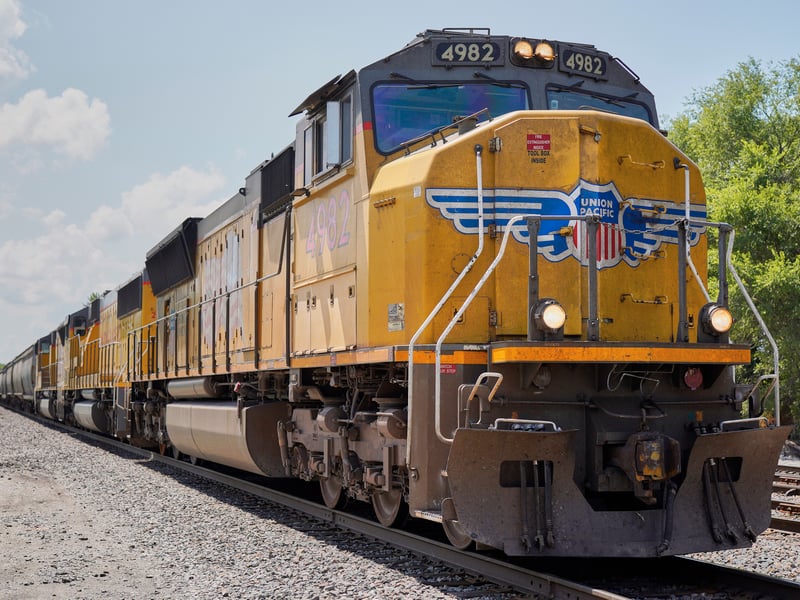
The Omaha, Nebraska-based UPRR filed its appeal in the Eighth Circuit. The Association of American Railroads appeal was transferred to the Eighth Circuit from the D.C. Circuit.
In defending the new rate-review process, the Surface Transportation Board argued in court filings that despite the board’s previous efforts to simplify the process, small shippers continue to report that the board’s rate-dispute process remains too complex, time-consuming and costly.
“As a result, shippers that routinely ship large quantities, such as coal and bulk chemical companies, are the only ones that have used the [traditional] approach," the board said.
The railroads argued the new process conflicts with the statutory requirement that parties be afforded a full hearing before an adjudicator that exercises its own independent judgment — not one that has announced in advance it will issue decisions that have been proposed by one of the parties.
“Under ‘Final Offer Rate Review’ — or ‘FORR’ — the board will abandon its century-old practice of bringing its independent judgment to bear in evaluating the statutory factors, weighing the public policy interests at stake, and specifying the maximum rate permitted under the law,” the railroads argued in their brief filed with the appellate court. “Instead, the railroad and the shipper will each give the board an ‘offer’ in the form of their proposed rate, and the board will accept the offer that comes the closest to what, in the board’s view, would otherwise have been the legally correct result.”
Attorneys representing the parties in this case did not immediately respond to a request for comment by press time.
 Follow @roxalaird16
Subscribe to our free newsletters
Our weekly newsletter Closing Arguments offers the latest about ongoing trials, major litigation and rulings in courthouses around the U.S. and the world, while the monthly Under the Lights dishes the legal dirt from Hollywood, sports, Big Tech and the arts.