
 Search Articles


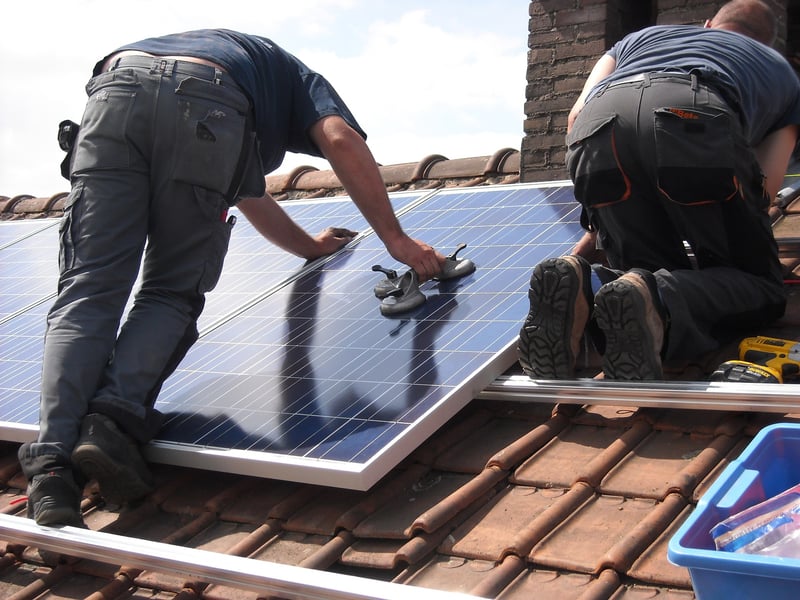
LOS ANGELES (CN) — The amount of credit a rooftop solar owner receives took center stage Wednesday before the California Supreme Court, as attorneys battled over how much power is wielded by the state Public Utilities Commission.
The Center for Biological Diversity appealed a lower court’s ruling affirming the commission’s changes to its net energy metering policy — a tariff allowing solar panels owners to give energy they don’t use to the grid in return for credits on their electricity bill — leading to Wednesday’s hearing before the high court.
The center says that the new policy drastically decreased the incentives solar panel owners get for giving their excess energy back to the grid by up to 80% — hampering efforts to expand renewable energy for low-income communities. The center claims the commission failed to account for certain benefits rooftop solar provides when making its decision, a requirement of the state public utilities code.
According to attorney Malinda Dickenson, who represents the center, the commission should have accounted for the costs and benefits conferred by customer-generated electricity, or rooftop solar. Instead, it excluded certain societal benefits when making its analysis.
Chief Justice Patricia Guerrero said Dickenson’s argument seemed to apply no limits to the benefits the commission should have considered. Justice Joshua Groban added that it appeared the commission must consider national security interests, which is beyond its expertise.
Dickenson argued that the code contains inclusive language, meaning the commission must consider customer-generated electricity in its analysis.
“All customers, not some,” she added. “The electrical system includes customer-generated, too.”
By excluding benefits, such as helping communities grow, the commission erroneously applied the utilities law, Dickenson said. Justice Leondra Kruger asked how much deference the commission is owed. Dickenson said none.
Dickenson also claimed the lower court gave the commission undue deference in its decision making.
“The words in the law do matter,” Dickenson told the justices Wednesday.
The center has asked the high court to reverse an appeals court decision and remand the issue to the commission, with instructions to examine all benefits of customer-generated electricity. It also wants alternatives created to induce growth of such electricity in disadvantaged communities.
The high court made no decision on Wednesday.
The center in legal fillings said the appeals court noted the commission’s ability to place value on rooftop solar’s societal benefits. That lower court still opted to defer to the commission’s opinion about its power and ignore certain benefits to customer-generated electricity.
The deference granted to the commission affirms a decision that fails to comply with the utilities code and damages the Legislature’s authority, which named the courts as the final arbiter of lawmaker intent, the center argued.
Attorney Mica Moore, representing the commission, said courts have granted her client deference in its reasonable interpretation of the utilities code for years. She disagreed with Dickenson’s characterization of the commission’s requirements, saying it only needed a cost-benefit analysis, not an examination of every benefit rooftop solar offers.
Additionally, the commission held a series of meetings and had public comment before issuing its changes, Moore said.
“It’s been tasked with developing tariffs for decades,” she added.
Moore questioned what action the commission could take to compensate rooftop solar customers for every possible benefit they provide, asking how it could account for labor and national security.
The commission in its own legal filing pointed to California’s decadeslong subsidy for renewable energy, which includes rooftop solar. However, the credits rooftop solar customers received greatly outweighed the value of power given to the grid, leading to high demand for solar panels.
“But utilities had to increase their rates to maintain the subsidy,” the commission wrote. “And the burden of those higher rates disproportionately fell on customers without solar panels, including many low-income individuals.”
Under direction of the state Legislature, the commission then made its new strategy: significantly reduce the credit, but not eliminate it.
Given the last chance to speak, Dickenson reiterated her claim that the commission improperly applied the utilities code when making its new rules.
“The courts are the deciders of what it means to proceed in the manner prescribed by law,” she said.
Subscribe to our free newsletters
Our weekly newsletter Closing Arguments offers the latest about ongoing trials, major litigation and rulings in courthouses around the U.S. and the world, while the monthly Under the Lights dishes the legal dirt from Hollywood, sports, Big Tech and the arts.