Search Articles


WASHINGTON (CN) — The Center for Biological Diversity sued the Trump administration on Monday over the Department of Agriculture’s refusal to provide documents that would reveal any advocates for an executive order to accelerate the production of glyphosate, a popular herbicide.
The advocacy group argues in a federal lawsuit the internal development records are necessary to understand how the Feb. 18 executive order titled, “Promoting the National Defense by Ensuring an Adequate Supply of Elemental Phosphorus and Glyphosate-Based Herbicides,” was developed.
According to the center, the executive order “delegated certain presidential authorities under the Defense Production Act to the Secretary of Agriculture to facilitate the production of glyphosate-based herbicides and their procurer, elemental phosphorus.”
Citing the Freedom of Information Act, the center is specifically requesting a federal judge order the release of documents that include the terms “Defense Production Act,” and “elemental phosphorus,” or “Defense Production Act” and “glyphosate.”
The advocacy group first requested the documents in February.
Center for Biological Diversity Government Affairs Director Brett Hartl slammed the government’s refusal to turn over the requested documents in a statement.
“This executive order is another corrupt giveaway to the pesticide industry, and people have a right to know who pushed for it behind the scenes,” Hartl said. “The pesticide industry is doing everything they can to avoid accountability for the harms their products have caused across this country, and the only reason this administration is hiding these important records is that they will almost certainly show just how deeply the poison-makers’ influence permeates the Trump government.”
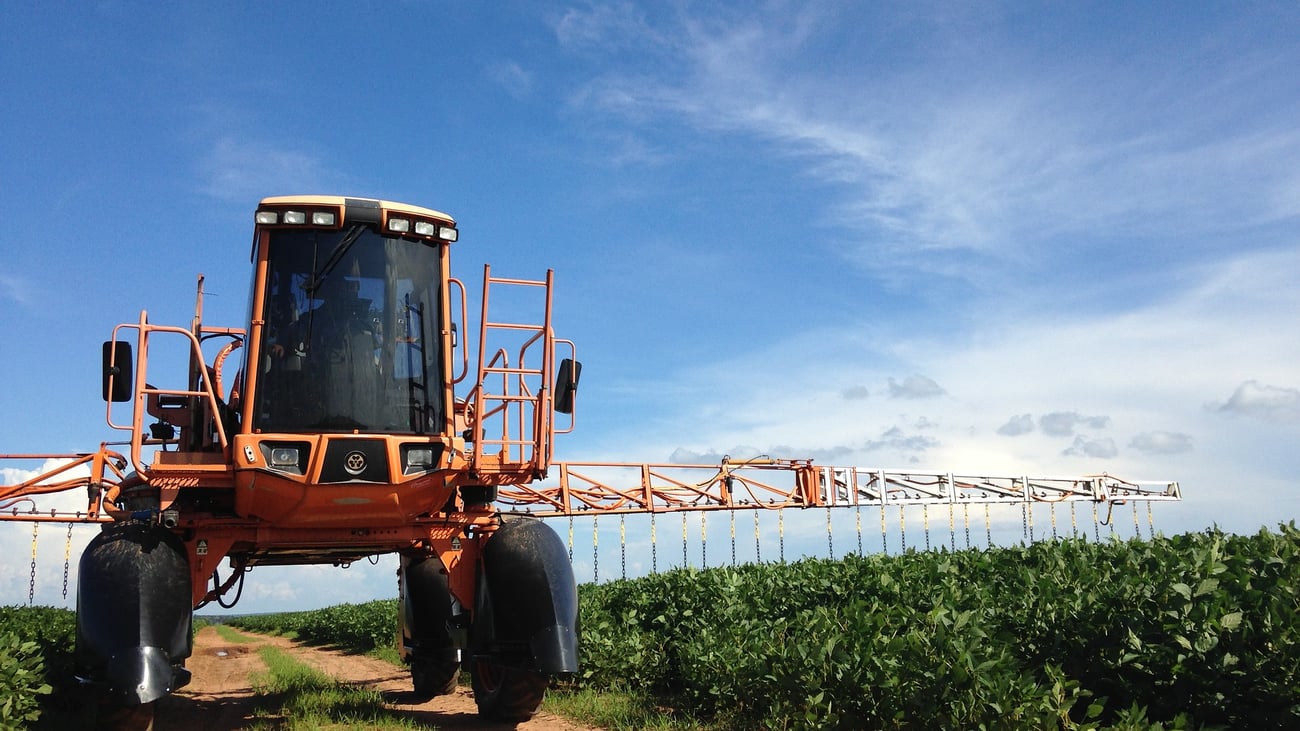
Glyphosate is the United States’ most-used herbicide, with annual use totaling over 300 million pounds.
In the executive order, Trump wrote that elemental phosphorus is “pervasive in defense supply chains” and a key ingredient in smoke, illumination and incendiary devices, the semiconductors used in radar, solar cells, sensors and optoelectronics as well as in lithium-ion batteries used in multiple weapons systems.
“Ensuring an adequate supply of elemental phosphorus and glyphosate-based herbicides is thus crucial to the national security and defense, including food-supply security, which is essential to protecting the health and safety of Americans,” Trump wrote. “Nonetheless, the United States’ ability to domestically produce those critical inputs are extremely limited. Indeed, there is only a single domestic producer of elemental phosphorous and glyphosate-based herbicides, and this producer does not meet our annual needs for those inputs.”
Bayer — which acquired herbicide giant Monsanto and its glyphosate-based weed killer Roundup in 2018 — is the single domestic producer. The day before Trump’s order was announced, Bayer proposed a $7.25 billion settlement to resolve current and future claims asserting its herbicides cause cancer, which would not include any admission of liability or wrongdoing.
The Center for Biological Diversity cited a March study by the Center for Food Safety, which found the government has consistently allowed pesticides with significant cancer risks to go to market, including when the pesticides carry risks as high as 1 in every 100 people exposed. The Environmental Protection Agency’s benchmark is 1 in a million individuals.
Trump’s February executive order was one of 13 to invoke the Defense Production Act, but is unique for granting immunity to the relevant chemical companies if they were to take any illegal actions to comply with the executive order.
Congress passed the statute in 1950 in response to the Korean War, but it has since been expanded beyond U.S. military preparedness and now can be used to enhance and support domestic preparedness, response and recovery from natural hazards, terrorist attacks and other national emergencies.
According to the center, the executive order included language that suggests it was written partially by an artificial intelligence chatbot, specifically referring to the total amount of imported glyphosate as “6,000,000 kilograms.”
The group asserts the Feb. 18 order is the “only executive order in the history of the nation to use the word ‘kilogram.’”
“Everyone knows that Trump doesn’t write, let alone often read, the executive orders he signs,” Hartl said. “But the chatbot slop that makes up the majority of this executive orders shows that virtually anything can reach the president’s desk if the right levers of power are pulled around Trump and his cronies.”
The Agriculture Department declined to comment, citing the litigation’s pending status.
 Follow @Ryan_Knappy
Subscribe to our free newsletters
Our weekly newsletter Closing Arguments offers the latest about ongoing trials, major litigation and rulings in courthouses around the U.S. and the world, while the monthly Under the Lights dishes the legal dirt from Hollywood, sports, Big Tech and the arts.