
 Search Articles


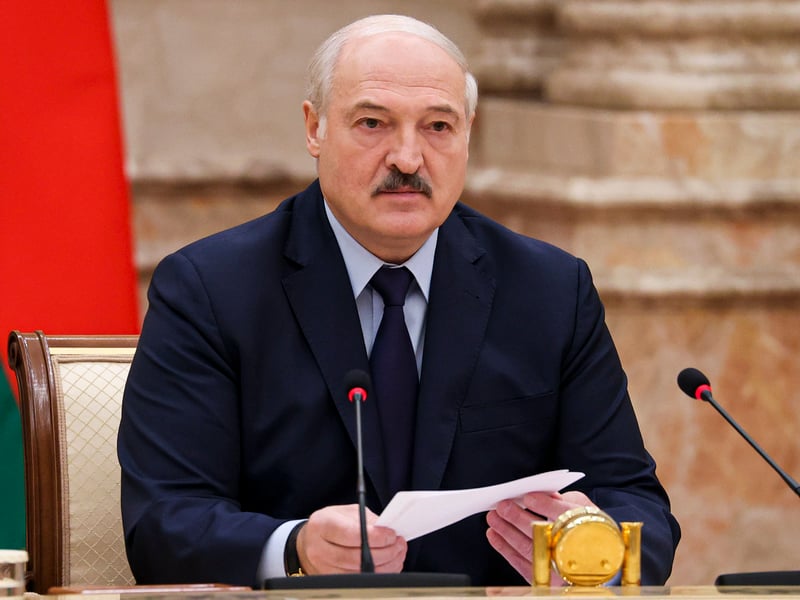
(CN) — The European Court of Justice dismissed an appeal Thursday by two chemical plants in Belarus to be removed from sanctions, emphasizing the significant financial exchanges between the plants and sanctioned President Aleksandr Lukashenko.
“‘Lukashenk[o] described it as ‘a very important enterprise, a strategic one,’” the judges wrote in the ruling, citing the European Commission’s sanction list. “‘Grodno Azot and its Khimvolokno Plant are a source of substantial revenue for the Lukashenk[o] regime … . Grodno Azot is therefore supporting the Lukashenk[o] regime.’”
The Court of Justice agreed, upholding the companies’ inclusion on the sanctions lists.
The state-owned Grodno Azot plant produces nitrogen compounds and fertilizers, and owns the Khimvolokno plant, which makes polyamide, polyester and composite materials. On its website, Grodno Azot calls itself one of the largest enterprises of the Republic of Belarus.
In recent years, the EU has been hardening its sanctions on Belarus, largely in protest against Lukashenko. The president is widely viewed as a totalitarian leader who continuously violates human rights laws, represses the opposition and rigs elections to keep himself in power. The EU also officially recognizes Belarus as complicit in Russia’s full-scale invasion of Ukraine.
In 2012, the EU adopted restrictive measures against Belarus, saying that all funds connected to people and enterprises that violate human rights, or repress civil society and democratic opposition — or entities benefitting from or supporting the Lukashenko regime — would be frozen.
It included these chemical plants on its sanctions list in 2021. The lower General Court upheld the plants’ inclusion, but the companies appealed the decision to the Court of Justice.
Yuliya Miadzvetskaya, a doctoral researcher at the Université Libre de Bruxelles Centre for European Law, told Courthouse News that the outcome of this case was aligned with most other cases of this sort in Belarus. What was more interesting, she explained, was that Grodno Azot was arguing that the council didn’t provide any evidence that the company supports the Belarusian regime. Maria Krestiyanova and Nicoleta Montag were the lawyers for the defense.
“Grodno Azot was claiming that ‘yes, we are paying taxes, we are paying dividends, but this is something that everyone is paying,” she explained. “This cannot be viewed as providing support to the regime of Alexandr Lukashenko, and it’s even an obligation under Belarusian law."
But the court found that Grodno Azot paid dividends to Belarus amounting to roughly $23.5 million from 2017-2020, constituting a significant source of revenue for the regime. The state is also the company’s only shareholder, which gives it control over the distribution of profits.
“Grodno Azot was not targeted solely because it’s a state-owned company, but because it was established by the council that it’s a state-owned company, but it’s also a company which provides part of their profits to the state of Belarus,” Miadzvetskaya explained. “And that’s why it can be included on the EU sanctions list.”
The judges wrote that Lukashenko visited the company, met with representatives and promised a loan for the construction of a new plant, leading the court to believe that “Grodno Azot is therefore benefitting from the regime.”
In addition, they mentioned that employees who peacefully demonstrated against the regime were dismissed and threatened by management, making the company “therefore responsible for the repression of civil society.”
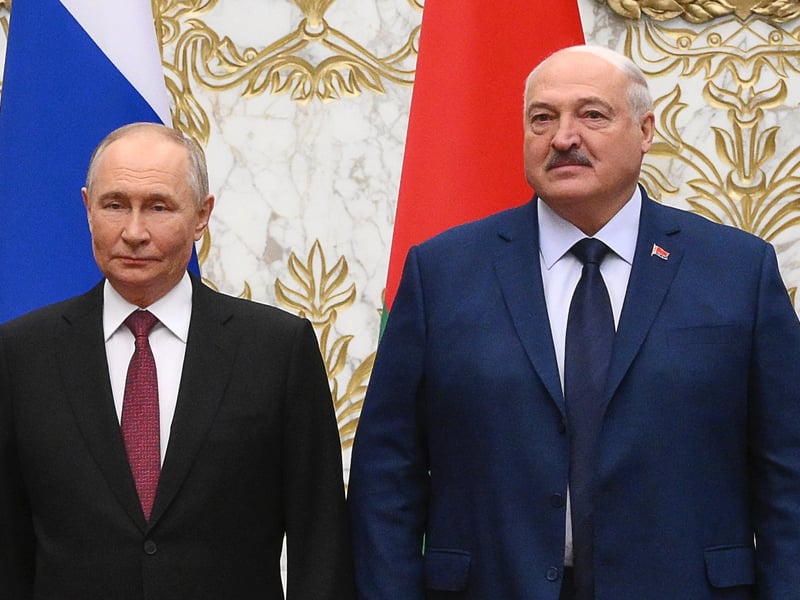
According to Ryhor Nizhnikau, a senior research fellow at the Finnish Institute of International Affairs specializing in Russia and Eastern Europe, sanctions became the cornerstone of the EU’s approach toward Belarus after what he calls the “triple crisis”: The Belarusian revolution of 2020, the 2021 forced landing of a Ryanair flight from Athens to Vilnius and the removal of a Belarusian journalist, and the Russian-Belarusian aggression against Ukraine.
“Basically the core sectors of Belarusian economy, and also the key actors of the Belarusian political regime today, are under sanctions as the common EU response to the Belarusian regime participation in criminal activities against Ukraine,” he told Courthouse News.
But Nizhnikau argues that generally, the impact of the sanctions from a business perspective has been somewhat of a “double-edged sword”; on the one hand, the sanctions work because they represent core revenues of its economic regime, which is export-oriented. But even though exports to the EU have largely disappeared, Russia has stepped up to pick up the slack.
“Russia compensated, so we cannot say that [sanctions] put the Belarusian economy on the brink of collapse,” Nizhnikau said. “Moscow rewarded for loyalty, Moscow offered access to its market.”
The court dismissed the appeal and ordered Grodno Azot AAT and Khimvolokno Plant to “bear their own costs, and pay those incurred by the Council of the European Union.”
 Follow @lilyradz
Subscribe to our free newsletters
Our weekly newsletter Closing Arguments offers the latest about ongoing trials, major litigation and rulings in courthouses around the U.S. and the world, while the monthly Under the Lights dishes the legal dirt from Hollywood, sports, Big Tech and the arts.