
 Search Articles


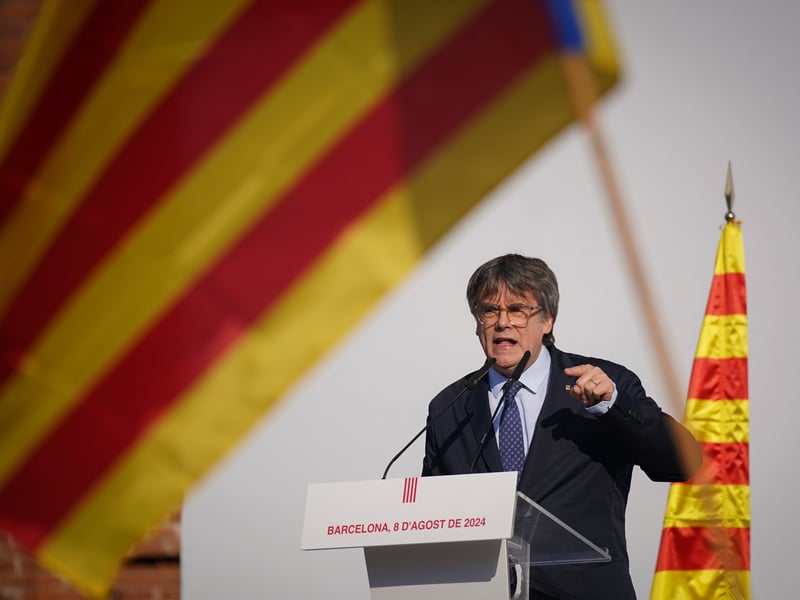
(CN) — The bid to strip Catalan independence leader Carles Puigdemont of his EU immunity came apart on Thursday at Europe’s highest court, after judges concluded the process was skewed in a way that fell short of basic fairness.
Rather than stepping into Spain’s criminal case, the Court of Justice of the European Union kept its sights firmly on Brussels. The problem, judges said, was not whether the European Parliament can lift immunity, but how it went about doing so. That power, they stressed, comes with strict procedural constraints.
Seen through that lens, immunity is not just an internal housekeeping exercise for lawmakers, but a democratic safeguard with real consequences.
The court stressed that immunity requests also touch on “the proper functioning of the Parliament as a whole” and therefore “must be examined in the light of the rights of the individual concerned and the principles of representative democracy and of the separation of powers, and not by reference to political guidelines.”
The ruling knocks out both a 2023 decision by the EU’s General Court and the European Parliament’s 2021 vote, breathing new life into a dispute that traces back to Catalonia’s independence drive.
Process over politics
The judges were careful to spell out what the case was not about. They did not rule on whether Spain was right to prosecute Puigdemont, revisit the criminal charges tied to Catalonia’s 2017 independence referendum or weigh in on whether those proceedings were politically motivated. They also left untouched the design of the EU’s immunity rules themselves.
Instead, the court zeroed in on one narrow but decisive question: Whether the process Parliament followed met the EU’s own standards for impartiality and good administration.
That inquiry quickly led to the role of the rapporteur, the lawmaker responsible for steering the immunity procedure. Parliament argued that political groups in Strasbourg are loose coalitions of national parties, and that sharing a group with a party involved in domestic proceedings was too distant a connection to undermine neutrality.
The judges were not convinced. “The court cannot accept the Parliament’s argument that the links between its members, who come from various national political parties and come together to form a political group within the Parliament, are not sufficiently close to be capable of adversely affecting the objective impartiality” of a rapporteur, they said.
In Puigdemont’s case, the rapporteur belonged to a political group that included members of a Spanish party which had initiated criminal proceedings at national level.
That link, the court found, was enough to cast legitimate doubt on the fairness of the process. The judges also rebuked the lower court for overlooking that point, saying it had ignored a factor that was particularly relevant to assessing whether impartiality had been compromised.
For Marco Mauer, a researcher in EU constitutional law at the European University Institute, the court’s approach was deliberate. The ruling, he said, “takes a decidedly procedural approach when dealing with the delicate issue of parliamentary immunities.”
Parliament still has the authority to decide whether immunity should be lifted, Mauer explained, but it no longer has leeway to cut corners on how those decisions are made. The court has now “developed clear criteria for procedural fairness and enforces them strictly.”
The trade-off is that some questions remain unresolved. By focusing on process, the judges avoided ruling on whether Spain’s prosecution was intended to weaken Puigdemont’s political activity. That debate is still open, even as the court redraws the procedural boundaries Parliament must respect going forward.
The face of secession
Carles Puigdemont did not begin as a European symbol of separatism. He emerged from Catalan regional politics in a part of Spain with its own language, culture and long-running demands for greater autonomy. Those tensions intensified after the 2008 financial crisis, when disputes over taxes and limits on regional powers helped push Catalonia’s independence movement into the political mainstream.
Puigdemont was thrust to the forefront in October 2017. As Catalonia’s regional president, he pressed ahead with an independence referendum despite a clear ban from Spain’s Constitutional Court. Madrid declared the vote illegal and launched criminal cases against Catalan officials accused of defying the constitution and misusing public funds.
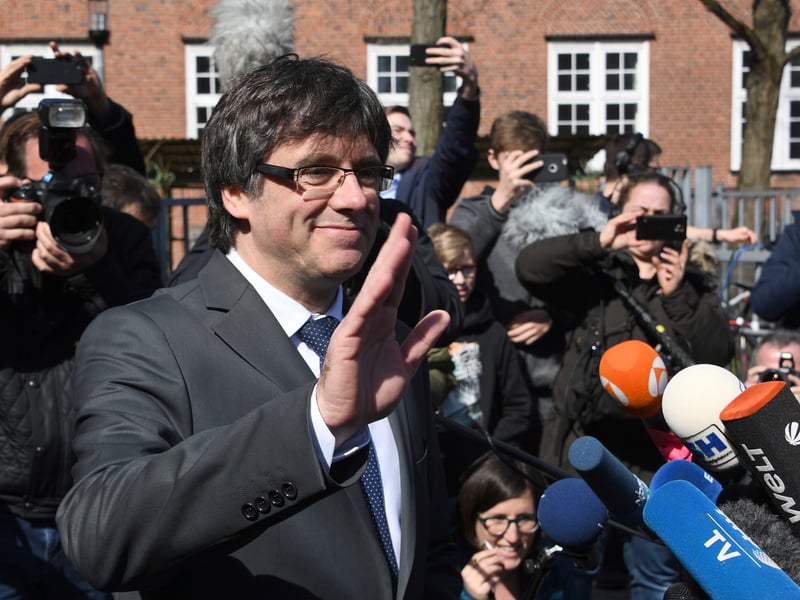
The fallout split the movement. Some leaders were jailed and later pardoned while others returned to politics under altered charges. Puigdemont chose exile, fleeing to Belgium, where he remained outside Spain’s reach.
His election to the European Parliament in 2019 changed the terrain. Parliamentary immunity shields lawmakers from arrest and prosecution to protect the independence of the legislature, but it can be lifted at a member state’s request. Spain sought that step in 2021, and after closed-door deliberations in Parliament’s Legal Affairs Committee, lawmakers voted to strip Puigdemont, along with Antoni Comín and Clara Ponsatí, of their immunity.
The trio challenged the move as politically tainted. The EU General Court rejected that claim in 2023. Europe’s highest judges took a different view — reopening a case that sits at the crossroads of Catalonia’s independence drive and the EU’s own rules on democracy and due process.
A check on Brussels
Legal scholars said the ruling delivers a pointed message inward, tightening the standards EU institutions must follow themselves.
Peter Van Elsuwege, a professor of EU law at Ghent University, said the court treated impartiality as a baseline requirement of fair administration, not a political option.
“The appointment of a rapporteur who is a member of a political group which includes members of the party that instigated the criminal procedures violates this right,” he said.
What makes the decision notable, he added, is that the court trained that rule-of-law lens on the European Parliament itself, rather than on a member state.
Alberto Di Chiara, a constitutional law researcher at LUISS Guido Carli University, struck a similar note. The judges, he said, carried out “an extremely thorough review of compliance with the principles and criteria governing the rule of law,” even in an area like parliamentary immunity that is often treated as overtly political.
The takeaway, in his words, is that “decisions in this area must also be based on legal rather than political grounds.”
From Puigdemont’s legal team, the ruling was also read through a political prism. Gonzalo Boye, one of Puigdemont’s lawyers, argued it exposes how Spain’s domestic clash over Catalonia spilled into Brussels, pulling EU procedures into a national power struggle. In his view, that drift away from neutrality shows how fragile institutional safeguards can be when national loyalties creep into EU decisionmaking.
Simon Bekaert, another member of the defense team, said the court’s message for the future is blunt. The European Parliament, he said, “cannot treat immunity proceedings as a political formality,” and must conduct them under standards “beyond any reasonable doubt as to fairness and neutrality.”
Warning shot for Parliament
Others said the ruling has consequences well beyond Puigdemont’s case, spelling out how far the EU’s legislative body must go to police itself.
Jed Odermatt, a reader in public international law at City St George’s, University of London, said the decision confirms that even a political body is bound by fundamental rights when it steps into a quasi-judicial role.
While the judges did not explicitly cite international standards on judicial bias, he noted, their reasoning “is fully in line with established case law on perceived bias.” In short, Parliament does not get a free pass simply because its decisions are political in context.
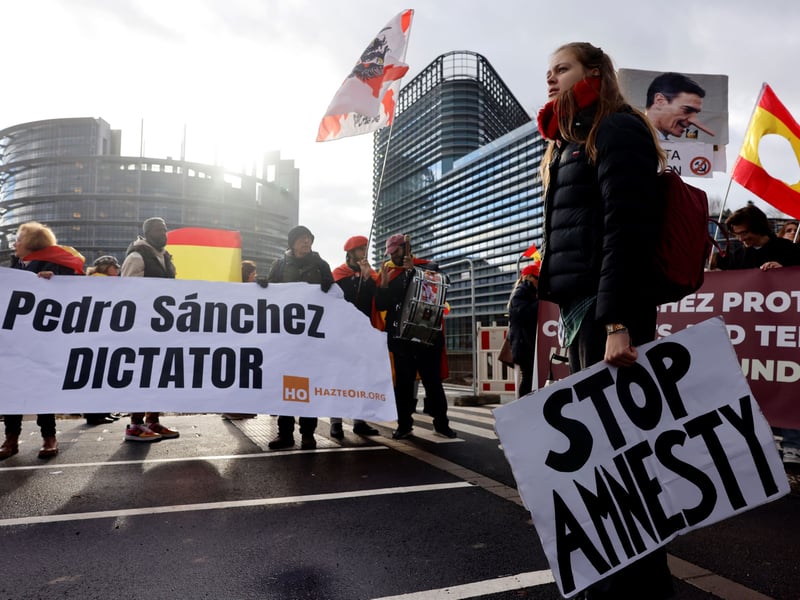
The judgment also lands against a shifting backdrop in Spain. In 2024, the government pushed through a highly contentious amnesty law aimed at easing tensions after the 2017 Catalan independence crisis.
The law wipes out criminal liability for many politicians and activists involved in the referendum, a move championed by Prime Minister Pedro Sánchez as a way to stabilize his minority coalition and defuse a long-running territorial conflict, but condemned by the conservative opposition as an attack on the rule of law.
Puigdemont, however, remains outside its scope. Spanish courts have ruled that some of the charges against him fall beyond the amnesty’s reach, a decision he has appealed to Spain’s Constitutional Court. That challenge is still pending, leaving his legal position unresolved even as the EU court resets the parliamentary side of the dispute.
The European Parliament, for its part, said it’s analyzing the judgment and declined to comment further.
What comes next
The ruling does not shut down Spain’s criminal case, and it does not permanently restore Puigdemont’s immunity. What it does is erase the EU’s 2021 decision because it was reached through a flawed process.
That leaves the situation reset. Right now, there is no valid parliamentary vote lifting the immunity of Carles Puigdemont, Antoni Comín or Clara Ponsatí.
The case does not head back to a lower EU court. It lands back in the European Parliament’s hands. Lawmakers can reopen the immunity procedure, but only by starting over and following the court’s impartiality rules.
Until that happens, Spain cannot rely on the scrapped 2021 vote. Any European arrest warrants tied to that decision are left without a valid parliamentary waiver, for now.
Courthouse News reporter Eunseo Hong is based in the Netherlands.
Subscribe to our free newsletters
Our weekly newsletter Closing Arguments offers the latest about ongoing trials, major litigation and rulings in courthouses around the U.S. and the world, while the monthly Under the Lights dishes the legal dirt from Hollywood, sports, Big Tech and the arts.