
 Search Articles


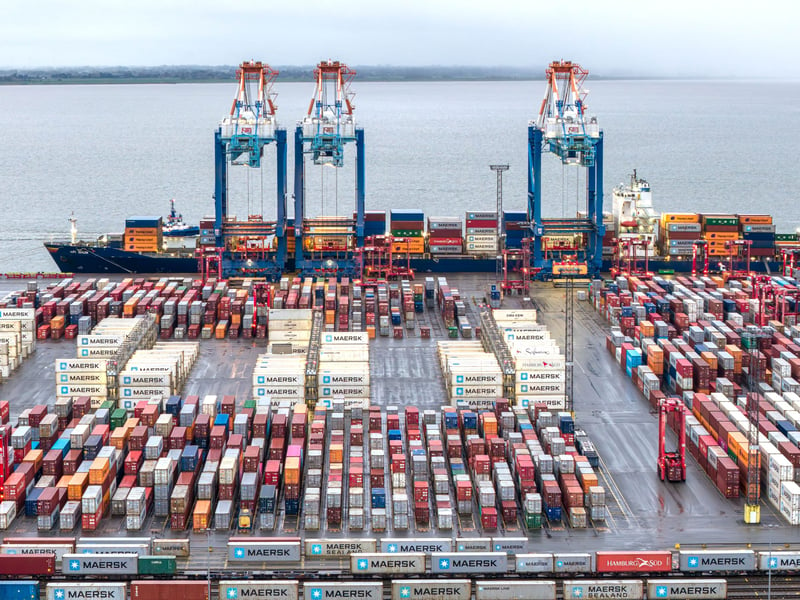
BRUSSELS (CN) — European Union inflation accelerated to 2.6% in September, data released Friday showed, capping a week of mixed economic signals that included shrinking industrial production and a vanishing trade surplus.
The data painted a picture of an economy caught between persistent price pressures and weakening growth. Inflation edged higher across the 27-nation bloc, driven by sticky services costs. The EU’s trade balance flipped from an 11.4 billion-euro ($12.3 billion) surplus to a 5.8 billion-euro deficit in just one month as exports to the U.S. nosedived. Meanwhile, factories across Europe posted their worst monthly performance since early in the year, with Germany’s industrial output collapsing 5.2%.
The numbers in detail
The September inflation rate edged up from 2.4% in August, according to Eurostat, moving further above the European Central Bank’s 2% target. The eurozone countries that use the euro saw a smaller increase to 2.2% from 2.0%. Services prices, rising 3.2% year-over-year, continue to run hotter than other sectors.
The 2.6% EU rate compares to 2.9% U.S. inflation in August, with American September data delayed by the government shutdown.
Romania faces the worst pressure at 8.6% inflation. Cyprus recorded zero price increases, France kept inflation at 1.1%, while Germany — Europe’s largest economy — saw its rate tick up to 2.4%. Ireland jumped to 2.7%, with Denmark, Poland and others hovering near 3%. Food prices rose 3.0% across the bloc, squeezing household budgets everywhere.
Thursday brought worse news: The EU swung from an 11.4 billion-euro trade surplus in July to a 5.8 billion-euro deficit in August — a nearly $20 billion reversal in just one month, according to Eurostat data.
Exports to the United States nosedived 22.2% year-over-year. The machinery and vehicles sector saw its surplus slashed in half, tumbling from 20.7 billion euros in July to just 7.2 billion euros. Even chemicals, typically a European strength, saw its surplus shrink from 20.6 billion euros to 15.3 billion compared to last year.
German exports to the United States plunged 20% year-over-year in August, hitting a four-year low, according to Germany’s Federal Statistical Office.
The squeeze comes from multiple directions: U.S. tariffs make German goods more expensive in America, while Chinese products — blocked from U.S. markets — increasingly compete in Europe and third countries where German exporters once dominated. European officials announced Oct. 7 they would slash duty-free steel imports by 47% and impose 50% tariffs on excess shipments, scrambling to protect the bloc’s steel industry.
The EU’s trade deficit with China remained massive at 28.8 billion euros, though it maintained a 13.4 billion-euro surplus with the U.K. Energy imports improved slightly, with the deficit narrowing to 23.7 billion euros from 29.2 billion a year earlier. Trade within the EU itself rose 1.4% to 1.73 trillion euros in the first eight months of the year, suggesting the internal market remains resilient despite external pressures.
Wednesday’s industrial production data completed the mixed picture, with output falling 1% across the EU in August compared to July, Eurostat reported. Germany took the biggest hit with a 5.2% monthly collapse.
The German decline reflected not just structural problems but also the impact of increased U.S. tariffs on EU imports, according to a Bundesbank report also released Wednesday. The automotive sector, long the crown jewel of German exports, faces particular pressure with cars and parts subject to the full 15% rate set in July. For context, Germany exported 175 billion euros worth of goods to the U.S. in 2024, making it its largest export market.
Ireland bucked the trend with production surging 9.8%, while Greece fell 4.5% and Austria dropped 3.1%.
Year-over-year, EU industrial production managed only a 1.1% gain. Several sectors contracted, with intermediate goods down 1.3% and durable consumer goods off 1.9%. Non-durable consumer goods provided a rare bright spot, jumping 6.5%. Capital goods production tumbled 2.2% in August alone, suggesting businesses are pulling back on investment. Among the worst performers annually: Bulgaria’s production fell 8.6%, Slovakia dropped 6.3%, and Denmark declined 5.0%.
The combination of rising inflation and weakening production presents a challenging economic picture for the European Central Bank, which kept rates unchanged at 2.0% at its Sept. 11 meeting after cutting eight times since June 2024. The ECB meets again October 30, with markets expecting no change.
Europe’s 450 million consumers are seeing prices rise faster than policymakers would like, particularly for services, which account for 45.7% of household spending. Meanwhile, weakening industrial production threatens employment, and the shift to a trade deficit signals Europe is losing ground in global markets.
The eurozone specifically showed similar patterns — 2.2% inflation, a trade surplus that shrank to just €1 billion from €12.7 billion in July, and a 1.2% production decline.
For U.S. companies and investors, the data underscores Europe’s uneven recovery — inflation that’s creeping up but not yet alarming, manufacturing that’s struggling but not collapsing, and trade flows that are weakening but still substantial. Third-quarter GDP figures, due Oct. 30, will likely show the eurozone economy barely growing, with economists projecting around 1% growth for the full year.
Courthouse News correspondent Yuval Molina is based in Brussels.
Subscribe to our free newsletters
Our weekly newsletter Closing Arguments offers the latest about ongoing trials, major litigation and rulings in courthouses around the U.S. and the world, while the monthly Under the Lights dishes the legal dirt from Hollywood, sports, Big Tech and the arts.