
 Search Articles


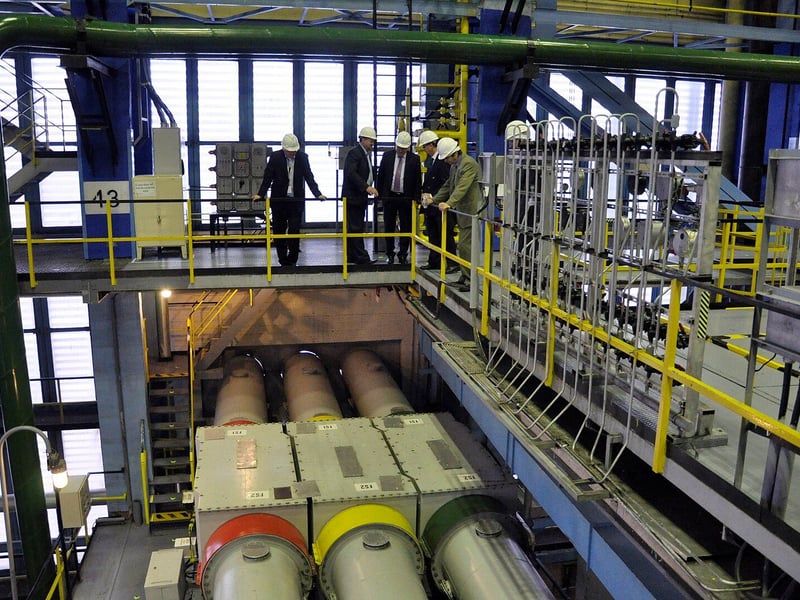
(CN) — Hungary’s plans for two new Russian-built nuclear reactors hit a wall Thursday, after Europe’s highest court sided with Austria and struck down Brussels’ green light for the Paks II subsidies, ruling that the way the project was awarded was too big to sweep under the rug.
The European Court of Justice judges said Brussels went wrong by brushing aside how Hungary handed out the construction deal: Since the money and the construction of the reactors are part of the same package, they cannot be treated as separate issues. In this case, the decision to hand the work straight to a Russian company without bidding had to be treated as an integral part of the subsidy.
The story goes back to 2014, when Hungary cut a deal with Russia to expand its lone nuclear plant, which supplies about half the country’s electricity. Moscow promised a 10-billion-euro ($11.7 billion) loan to bankroll most of the work, while Budapest chipped in 2.5 billion euros. Instead of holding an open tender, Hungary handed the construction to a Russian firm, JSC NIAEP.
When Hungary sent the plan to Brussels in 2015, the backlash was swift. Austria — which has long taken a hard line against nuclear power — blasted the no-bid contract for a single Russian builder as both illegal and a threat to fair competition in Europe’s energy market. Even so, by 2017 the European Commission stamped its approval on the project on the Danube, declaring the subsidies in line with EU state aid rules.
Austria lost its initial case in 2022.
The commission downplayed the procurement issue, saying Hungary’s no-bid process didn’t really affect competition and noting it had already examined the matter in a separate infringement case.
The judges saw it differently Thursday. They pointed out that bidding rules can shape how big a subsidy is and whether it’s kept in check. In their words, “A possible breach, through this inseparable modality of the aid measure in question, of provisions or general principles of European Union law” could have stopped the aid from ever being cleared for the internal market.
The fallout was sweeping. The court wiped out not only the 2022 ruling that had backed the subsidies but also the commission’s original 2017 approval, and it told Brussels to pick up Austria’s legal tab.
Commission officials acknowledged that the court found procurement procedures were “inextricably linked” to the state support, adding that they will “carefully study the judgment and reflect on next steps.”
The Hungarian government did not immediately respond to a request for comment. But according to multiple Hungarian outlets including Telex, EU Affairs Minister János Bóka told a government briefing the ruling did not say the project broke procurement rules, only that the commission had failed to explain its stance.
“As in the past,” he said, Hungary “will continue to act in accordance with EU law and the principles of loyal cooperation.” He added that Budapest would support Brussels in adopting a new decision that could withstand court scrutiny, noting that “the court did not find either the system of state aid or the public procurement procedure to be unlawful.”
Austrian media meanwhile reported that Environment and Climate Minister Norbert Totschnig welcomed the judgment as “pleasing,” saying it sent “a strong signal for transparency, the rule of law and fair competition in the EU.”
The battle over Paks II has always carried heavy political weight. For Hungary, the new reactors are about shoring up energy security, with Prime Minister Viktor Orbán pitching nuclear power as a way to cut reliance on imports.
For Austria, which banned nuclear power in the 1970s and has fought it ever since in EU debates, the plant next door is a red line. Vienna calls nuclear unsafe, too costly and a dangerous distraction from renewables.
The case also shines a light on Russia’s tangled footprint in Europe’s energy mix. Back in 2014, when the deal was signed, Russian firms were still key suppliers of fuel and technology across the continent. The multibillion-euro loan for Paks II locked Hungary into Russian money and know-how, a reliance that has only grown more controversial since Moscow’s 2022 invasion of Ukraine.
Thursday’s ruling doesn’t scrap Paks II altogether. Hungary can still push ahead, but only if it wins new approval from the commission under tougher scrutiny. That means proving the subsidies meet not just competition rules in the energy market but also procurement standards, with contracts awarded openly and fairly.
For Austria, the victory cements its place as the EU’s loudest nuclear critic.
The commission now faces the task of revisiting its decision under the court’s instructions. With billions at stake, the political reverberations in Budapest, Vienna and Brussels are only just beginning.
The judgment is final at this level, though the commission could seek a way forward by reassessing the aid package. Hungary, meanwhile, has little choice but to resubmit its plan if it wants Paks II to move ahead.
Courthouse News reporter Eunseo Hong is based in the Netherlands.
Subscribe to our free newsletters
Our weekly newsletter Closing Arguments offers the latest about ongoing trials, major litigation and rulings in courthouses around the U.S. and the world, while the monthly Under the Lights dishes the legal dirt from Hollywood, sports, Big Tech and the arts.