
 Search Articles


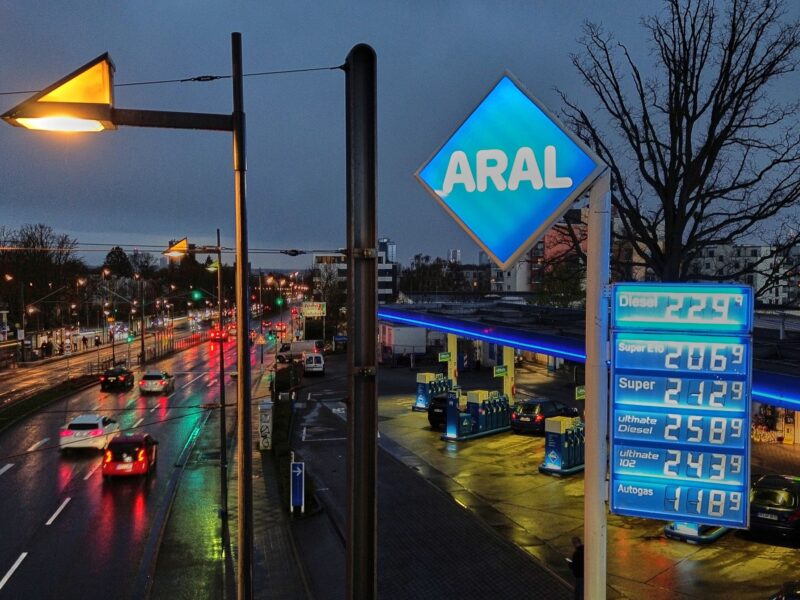
BRUSSELS (CN) — Euro area inflation jumped from 1.9% to 2.5% in March 2026, its steepest rise since Russia’s invasion of Ukraine in 2022, driven almost entirely by energy prices following Iran’s closure of the Strait of Hormuz.
The reading smashed through the European Central Bank’s 2% target and came in just below analyst forecasts of 2.6%, and the bank’s own projections indicate further pressure ahead. But the United States, who along with Israel launched the strikes that triggered the conflict, has offered little sympathy.
“Buy from the U.S., we have plenty,” President Donald Trump, posting to Truth Social on Tuesday, told European countries struggling to secure energy supplies. “Build up some delayed courage, go to the strait, and just TAKE IT,” he added.
Energy prices rose 4.9% year-on-year in March — swinging more than eight percentage points from February’s -3.1% — after Iran blocked the strait on March 4, a chokepoint carrying roughly a fifth of the world’s daily oil supply.
Brent crude surged to nearly $120 a barrel before easing to around $110 by Tuesday. The closure also halted exports from Qatar, one of Europe’s key liquefied natural gas suppliers alongside the United States.
Underlying inflation, which strips out energy and food, held steady at 2.3%, confirming the broader price pressures the ECB watches most closely have not yet materialized.
One month in
Gas prices in the EU have risen around 70% since the conflict began and oil around 60% — adding up to an extra 14 billion euros ($16 billion) on the bloc’s fossil fuel import bill in just 30 days, EU energy chief Dan Jørgensen said Tuesday.
Speaking after an emergency video conference of EU energy ministers, he said supply was not at immediate risk but urged governments to cut fuel use in the transport sector and defer nonessential refinery maintenance. “Better to be prepared than to be sorry,” he said.
The ECB held rates unchanged March 19, revising its 2026 inflation forecast up to 2.6% and cutting growth to 0.9%. Its own projections see inflation peaking at 3.1% in the second quarter — Tuesday’s reading suggests that’s already on track.
The problem for ECB President Christine Lagarde is that a rate rise to curb inflation could deepen a slowdown already underway. But leaving rates unchanged risks letting expectations become entrenched — a commission survey shows household price expectations jumping to 43.4 in March from 25.8 in February, a surge comparable only to the early 1990s and the surge in prices that followed Russia’s invasion of Ukraine.
Speaking in Frankfurt on March 25, Lagarde said the worst is still ahead — the last Gulf tankers loaded before the war are only now arriving, and a March 18 Iranian strike cut Qatar’s gas capacity by 17%, with repairs taking three to five years. She drew a contrast with the energy shock that followed Russia’s invasion of Ukraine in 2022: no labor shortages, no post-pandemic surge, rates already at neutral. But firms remember how to reprice fast, she warned, and workers won’t be as slow to demand compensation as last time.
That said, the confidence drop — if it translates into precautionary saving — could itself brake inflation by reducing firms’ pricing power and workers’ leverage. “So far, consumer confidence has fallen more sharply in Europe than following the 9/11 attacks and the war in Kuwait in 1990, but not as steeply as following the Russian invasion of Ukraine,” she said.
“We will not act before we have sufficient information,” she said. “But we will not be paralyzed by hesitation.”
BNP Paribas economists said Monday that business surveys point to a rebound in input prices but do not currently suggest an increase in selling prices in the second quarter — a key distinction from 2022, when the inflationary spiral had already spread well beyond energy. They forecast the ECB will begin tightening in June, with 75 basis points of cumulative hikes by autumn.
ABN AMRO went further, calling for a first hike as early as April 30 — not to cool demand, but as a signal to firms and workers that the ECB won’t allow inflation expectations to become entrenched. The Dutch bank sees two hikes in total over coming months.
Europe faces no immediate shortage. But with Qatari LNG offline, European buyers must compete with Asian economies for scarce spot cargoes — driving up prices regardless of where the gas physically originates.
Oxford Economics said Wednesday that March is likely just the first wave — energy costs hit consumers fast, but disruptions to shipping take closer to a year to fully show up in prices.
With gas storage at just 28% of capacity — a five-year low — Europe has little cushion. Brussels is preparing a toolbox of support measures — grid tariff reforms, electricity tax cuts, expanded state aid — with a windfall tax on energy companies not ruled out. The ECB’s next rate decision is due April 30.
Whatever it decides, Jørgensen was blunt: “Even if there was a peace tomorrow, we will not go back to normal in the foreseeable future.”
Courthouse News correspondent Yuval Molina is based in Brussels.
Subscribe to our free newsletters
Our weekly newsletter Closing Arguments offers the latest about ongoing trials, major litigation and rulings in courthouses around the U.S. and the world, while the monthly Under the Lights dishes the legal dirt from Hollywood, sports, Big Tech and the arts.