
 Search Articles


(CN) — A family is suing ChatGPT maker OpenAI, claiming the company saw signs that one of its users was a threat but decided not to act on it before a mass shooting at a British Columbia school in February.
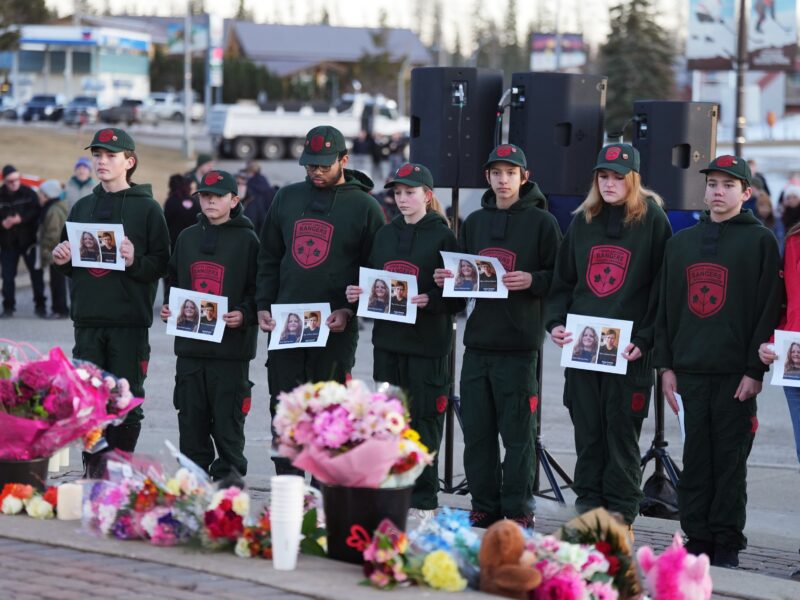
Jesse Van Rootselaar killed eight people on Feb. 10 in the northern British Columbia community of Tumbler Ridge, including five children aged 12 to 13, an educational assistant, her mother, and her 11-year-old half-brother. It was among the worst mass shootings in the country’s history.
She also shot Maya Gebala three times at close range while the 12-year-old was trying to lock the library door, according to a press release issued by Rice Parsons Leoni & Elliott LLP, the law firm representing the family. That includes one shot in the head and once in the neck, with a third bullet grazing her check and earlobe.
Maya was rushed to the British Columbia Children’s Hospital in Vancouver by air ambulance, where she is still stabilizing, she says in the lawsuit, filed in British Columbia Supreme Court Monday. Her younger sister, Dahlia Gebala, and their mother, Cia Edmonds are also named as plaintiffs.
After the shooting, the Wall Street Journal reported OpenAI had banned Van Rootselaar’s ChatGPT account months before the shooting but decided not to contact police about violent messages she’d written to the AI large language model (LLM).
The plaintiffs claim in their lawsuit that the spring 2025 release of GPT-4o, the large language model’s most recent iteration, came with a number of features designed to make users psychologically dependent on the program.
That includes a memory that allows ChatGPT to recall past conversations with users, an increased tendency to parrot back to users what they want to hear without adequate safeguards, and a more human-like tone.
The plaintiffs claim OpenAI should have known that people, including the shooter, were using ChatGPT for pseudo-counselling and support for mental health.
While ChatGPT isn’t supposed to be available to children aged 13 to 18 without parental permission, the plaintiffs say OpenAI didn’t have an age verification process in place to force the shooter to get her parent’s permission.
By early summer 2025, Van Rootselaar had talked to ChatGPT for several days about gun violence, and the large language model’s monitoring system had flagged the shooter’s comments for human moderators to review, the plaintiffs claim.
About a dozen OpenAI employees saw the comments as signs of “an imminent risk of serious harm to others” and suggested contacting Canadian police, the plaintiffs claim, adding that those recommendations were brought to the company’s leadership, who turned them down.
“Instead, the only step the OpenAl Defendants took in response to the gun violence ChatGPT posts was to ban the Shooter’s first OpenAl account,” the plaintiffs say in the lawsuit.
That didn’t stop the shooter, however, as she made a second account, according to both the plaintiffs and media reports.
“The shooter used their second OpenAl account to continue planning scenarios involving gun violence, including a mass casualty event like the Tumbler Ridge mass shooting, with ChatGPT, and to receive mental health counseling and pseudo-therapy from ChatGPT,” the plaintiffs say in the lawsuit.
The claims haven’t been proven in court.
In an emailed statement, OpenAI called the Tumbler Ridge mass shooting an “unspeakable tragedy.”
“Our thoughts remain with the victims, their families, and the entire community. OpenAI remains committed to working with government and law enforcement officials to make meaningful changes that help prevent tragedies like this in the future,” the company said.
Subscribe to our free newsletters
Our weekly newsletter Closing Arguments offers the latest about ongoing trials, major litigation and rulings in courthouses around the U.S. and the world, while the monthly Under the Lights dishes the legal dirt from Hollywood, sports, Big Tech and the arts.