
 Search Articles


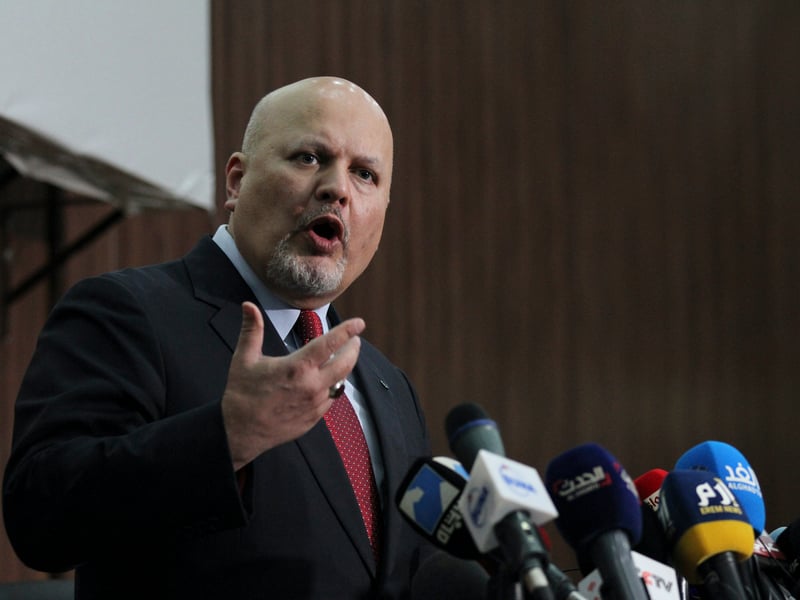
THE HAGUE, Netherlands — The International Criminal Court says chief prosecutor Karim Khan is stepping back from its Venezuela investigation. The decision comes after months of questions about his family ties to a lawyer for the government, and it shows how sharply the court reacts to even the hint of bias.
Inside the court, the case is known as Venezuela I. It looks at claims that security forces loyal to President Nicolás Maduro carried out torture, killings and arbitrary detentions during a 2017 crackdown on political opponents. Victims and human rights groups have been pressing for justice ever since, and in November 2021, Khan announced the opening of a full investigation, later confirmed by the chamber in June 2023 — the first of its kind in Latin America.
Khan took office as ICC prosecutor in 2021, taking on the Venezuela file along with other politically charged dockets like Afghanistan and Palestine. A barrister from the U.K., he had spent years in international tribunals, sometimes defending and sometimes prosecuting those accused of serious crimes. His election was billed as a chance to steady the court after years of criticism for slow progress and constant political headwinds.
His tenure has been anything but quiet. He grabbed headlines with arrest warrants for Russian President Vladimir Putin and Israeli Prime Minister Benjamin Netanyahu, and he landed on a U.S. sanctions list after Washington bristled at the court’s actions. Supporters say he raised the ICC’s profile, while critics warn he steered it onto a direct collision course with powerful states.
That backdrop made the Venezuela probe even more delicate. Khan’s sister-in-law, Malaysian lawyer Venkateswari Alagendra, turned up on Venezuela’s legal team during appeals proceedings. Her presence raised immediate questions about impartiality and set off concerns about a conflict of interest.
The issue landed before the ICC’s Appeals Chamber twice this year. In February, judges threw out an attempt by outside actors to have Khan removed, but they reminded him that under the court’s rules, he had a duty to step back if a conflict appeared.
By August, their tone had shifted. The chamber said Khan’s family and past professional ties to Alagendra created an appearance of bias, and it ordered him to step aside from the Venezuela I investigation.
Khan complied on Aug. 18 and formally asked to be excused. On Tuesday, a special three-judge panel of the ICC’s leadership, known as the presidency, granted his request. In its decision, the panel concluded that “a fair-minded and reasonable observer, properly informed and having considered all facts and circumstances would reasonably apprehend bias.”
The judges stressed that impartiality at the ICC isn’t only about real conflicts but also how things look from the outside. They pointed out that Khan had once worked with Alagendra in another case, where she was in a subordinate role. Her part may have been limited, but the prior link still added to the concerns. As the decision put it, “transparency and disclosure are key,” and the fact that Khan failed to flag the family tie earlier weighed against him.
Khan pushed back in his filings, saying it was a stretch to claim a past working relationship could be grounds for disqualification. He argued that after decades in international law, he had inevitably crossed paths with many lawyers, and those connections shouldn’t automatically force him aside whenever the same names turned up in new cases. The presidency, however, decided that in this situation, the overlap of family and professional ties was enough to undermine confidence.
The decision itself is narrowly drawn and applies only to the Venezuela case. On paper, it doesn’t affect Khan’s work on other ICC cases, from Russian war crimes in Ukraine to atrocities in Sudan. In reality, though, Khan is already on leave from all duties amid an unrelated misconduct inquiry, so deputies are handling day-to-day management.
The controversy underscores the tricky balance the ICC has to strike. It needs to protect its credibility by steering clear of even the appearance of bias. Yet it also works within a tight-knit legal world where the same lawyers often move between defense, prosecution and government roles.
For victims in Venezuela, the spotlight now shifts back to the investigation. The court says it is examining whether authorities systematically went after civilians during anti-government protests. The government rejects those claims and insists its own justice system can deal with any abuses.
It is still unclear whether Khan’s recusal will slow the process or change its course. What is clear is that the court treats even the appearance of bias as enough for its top officials to step aside.
Subscribe to our free newsletters
Our weekly newsletter Closing Arguments offers the latest about ongoing trials, major litigation and rulings in courthouses around the U.S. and the world, while the monthly Under the Lights dishes the legal dirt from Hollywood, sports, Big Tech and the arts.