
 Search Articles


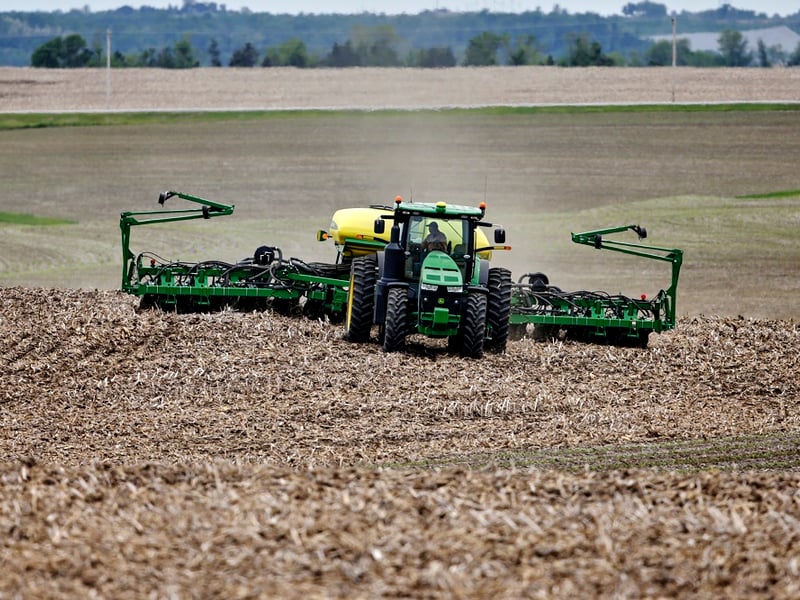
(CN) — A coalition of farmers and conservation groups is challenging an order from the Trump administration’s Environmental Protection Agency granting unconditional new use registration for the controversial herbicide dicamba.
The plaintiffs — the National Family Farm Coalition, Center for Food Safety, Center for Biological Diversity and Pesticide Action & Agroecology Network — accuse the EPA and Administrator Lee Zeldin of authorizing over-the-top spraying of dicamba on genetically engineered cotton and soybeans. The groups filed the lawsuit directly with the Ninth Circuit.
“EPA’s re-registration of dicamba flies in the face of a decade of damning evidence, real-world farming know-how and sound science, and, oh-by-the-way, the law,” said George Kimbrell, legal director of the Center for Food Safety and counsel in the case. “In reality, the Trump administration has once again betrayed farmers and poisoned the environment to pad corporate pesticide profits.”
Dicamba has been used as a pesticide since the 1960s, but over-the-top applications began in 2016. It is used to control weeds in several food and feed crops, with some products approved for spraying over-the-top of genetically engineered soybeans and cotton after they sprout.
The groups said the EPA’s reapproval of dicamba is more permissive than past approvals, despite Zeldin’s promise that new restrictions would limit pesticide drift. The approvals allow spraying in July and August and eliminate a 100-foot buffer meant to protect endangered species and their habitat.
“Lee Zeldin’s hollow promises that new restrictions on dicamba will prevent damaging drift to nearby farms and backyard gardens is totally unsupported by the facts or common sense,” said Nathan Donley, environmental health science director at the Center for Biological Diversity.
The groups said Zeldin recklessly reapproved the pesticide while claiming he is working closely with the “Make America Healthy Again” movement to make pesticides safer.
“No one in the healthy foods movement has been fooled by Zeldin’s pro-industry spin game,” Donley said.
In releasing the new regulations on Feb. 6, the EPA said it had established stringent protections for applying the herbicide on dicamba-tolerant cotton and soybean crops. The agency said its decision stemmed from farmers.
The plaintiffs say the herbicide has damaged millions of acres of farmland since it was first approved in 2016 due to its tendency to drift when applied.
The new lawsuit follows years of litigation over EPA approval of dicamba. In 2020, the Ninth Circuit vacated the approval, finding the agency failed to properly assess the risks of widespread chemical use.
A 2021 EPA inspector general investigation found the agency’s 2018 dicamba registration was shaped by political pressure and that senior officials altered staff scientists’ analyses without explanation.
Months after the 2020 ruling, the EPA again registered three dicamba products for the same use. In 2024, a federal judge in Arizona vacated those registrations, finding the agency violated the Federal Insecticide, Fungicide, Rodenticide Act’s notice and comment requirements.
“This is déjà vu all over again,” Jim Goodman, president of the National Family Farm Coalition, said in a statement. “Despite an extensive history of failed weed management in genetically engineered crops, thousands of complaints by farmers about crop damage caused by drift, and two prior court bans, EPA is once again re-registering dicamba.”
Goodman accused the EPA of only approving the herbicide to boost the bottom line of the agri-chemical industry.
Rob Faux, an Iowa farmer and communications manager at Pesticide Action & Agroecology Network, said his vegetable farm saw a significant decline in marketable produce from dicamba damage after it was registered for over-the-top spraying.
“A new dicamba registration will, once again, pit farmer against farmer, and some of us will be forced to exit food production,” Faux said in a statement.
In response to the lawsuit, the EPA said it conducted a comprehensive review of available science and imposed “unprecedented safeguards,” like cutting application amounts in half, doubling required safety agents, restricting use during hot weather, and requiring conservation measures to protect endangered species.
“President Trump has consistently stood with America’s farmers and rural communities — the backbone of our food system,” an EPA spokesperson said in an emailed statement. “EPA has temporarily authorized over-the-top use on cotton and soybeans for only two growing seasons, paired with the strongest environmental protections in agency history.”
Subscribe to our free newsletters
Our weekly newsletter Closing Arguments offers the latest about ongoing trials, major litigation and rulings in courthouses around the U.S. and the world, while the monthly Under the Lights dishes the legal dirt from Hollywood, sports, Big Tech and the arts.