
 Search Articles


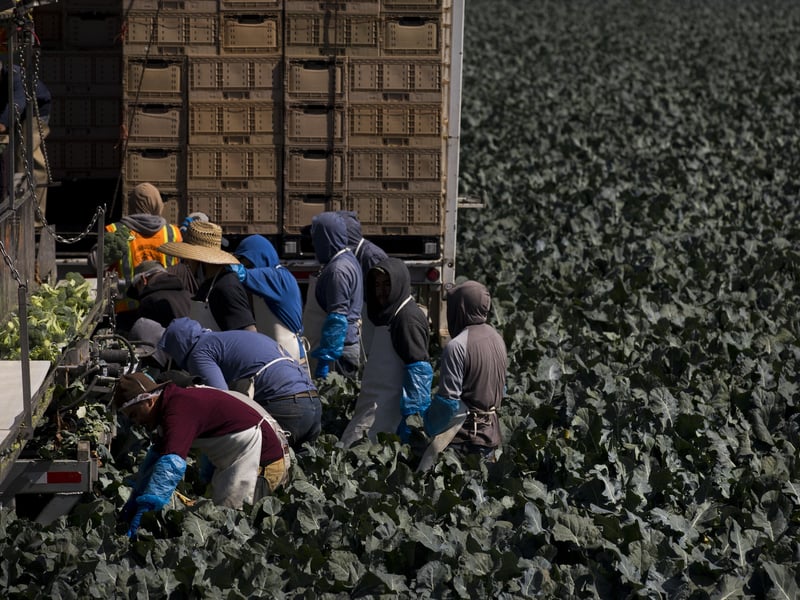
FRESNO, Calif. (CN) — A new rule issued by the U.S. Department of Labor drastically undercuts pay for foreign farmworkers, a move that in turn negatively affects U.S. workers doing the same job, the United Farm Workers claim in a federal suit filed Friday.
The Labor Department can allow U.S. employers to hire temporary, foreign workers. However, their wages can’t adversely affect U.S. farmworkers. Absent a minimum wage, American employers likely would pay foreign workers a lower amount, which would undercut wages for U.S. workers — precisely what the new rule does, the union claims in its lawsuit.
“By DOL’s own admission, DOL engineered the interim final rule to reduce wages paid to temporary foreign farmworkers and, in turn, U.S. workers — the precise workers whose wages and working conditions federal law protects,” the union says in its complaint. “In short, the interim final rule has created the ‘adverse effect’ that DOL is tasked with preventing.”
The union, which filed suit in the Eastern District of California, claims the rule is unlawful and asks a judge to set it aside.
First, the union says the rule conflicts with the Labor Department’s mandate in the law that H-2A workers’ wages can’t negatively affect U.S. farmworkers wages. Lowering the wages for foreign workers will put pressure on U.S. worker wages, it says.
Second, the new rule is arbitrary and capricious. The Labor Department didn’t consider how it would affect U.S. farmworkers. Those workers, some of whom already live in poverty, will have issues paying for housing, groceries and expenses like childcare, the union says.
“These wage cuts will also occur as inflation continues to rise, further magnifying the impact that this [rule] will have on farmworkers,” it adds.
And, lastly, the Labor Department didn’t abide by notice-and-comment requirements for the new rule, leading to wage reductions without forewarning. Instead, the department relied on “good cause” reasons, determining that a public notice process was unnecessary or contrary to public interest.
Those justifications don’t support that lack of public process, the union says.
“Emergency relief is required to stymie that impact and protect U.S. farmworkers from the irreparable harm they will suffer if they must work for sub-market wages,” the union says in the complaint.
The existing requirement that wages for foreign workers not adversely affect U.S. workers is essential. Without it, employers likely would seek out foreign workers at sub-market wages — farmworkers who would accept those wages given the costs and conditions of their home countries, the union says.
Foreign workers also are vulnerable, it adds. They have little bargaining power, depend on their employers for their visas and must keep those employers happy if they want to remain — another reason they won’t pursue more money, the union says.
That will lead to longer hours, the need for a second job or relocation under the new rule, the union says.
Farmworkers can command competitive wages, the union says, given they have a specific set of skills and withstand physical and demanding tasks, as well as deal with long hours and extreme weather.
However, U.S. farmworkers face a precarious situation. According to the union, studies have shown that before this new rule 23% of California farmworkers had incomes below poverty level. Between 47% and 82% of their households had food insecurity.
“These difficulties of being able to afford basic needs like food, rent, transportation, health care, and other basic necessities will be dramatically increased by the wage cuts of the interim final rule,” the union says.
The union wants a preliminary and permanent injunction against the rule, for a judge to declare it unlawful, and for the Labor Department to use a different methodology for setting a minimum wage.
Representatives for the Labor Department couldn’t be reached for comment by press time.
Subscribe to our free newsletters
Our weekly newsletter Closing Arguments offers the latest about ongoing trials, major litigation and rulings in courthouses around the U.S. and the world, while the monthly Under the Lights dishes the legal dirt from Hollywood, sports, Big Tech and the arts.