Search Articles


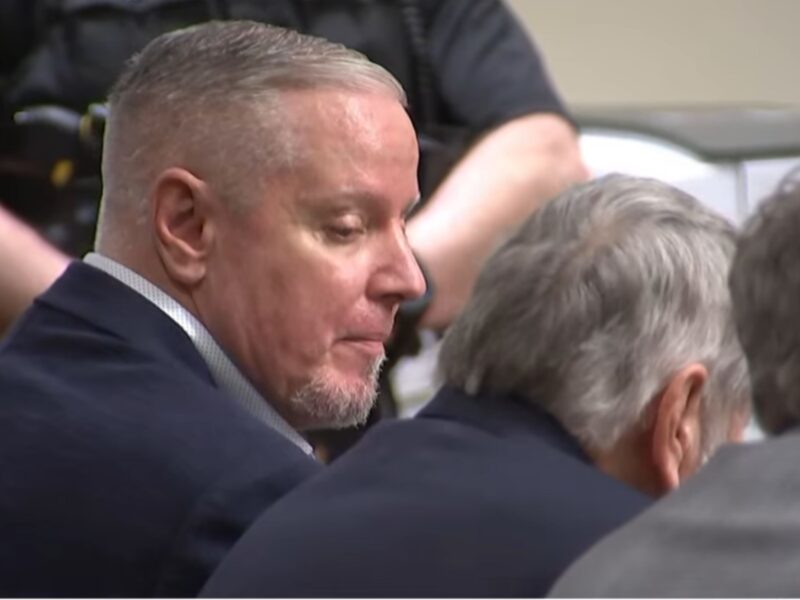
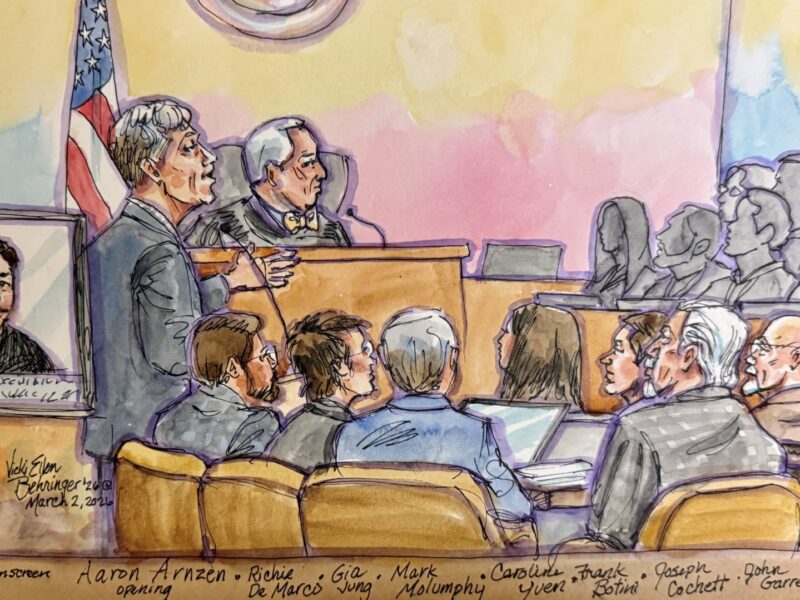
WINDER, Ga. (CN) — After 11 days of testimony, Colin Gray, the father of the Apalachee High School shooting suspect, was found guilty on all charges Tuesday.
After about two hours of deliberations, the jury found Colin Gray guilty on all 29 counts, including two counts of second-degree murder and two counts of involuntary manslaughter in connection with the Sept. 4, 2024, mass shooting that left four people dead and several others injured.
He is the first parent in the country to be convicted of second-degree murder for giving his 14-year-old son, Colt Gray, the assault rifle and ammunition he used in the fatal shootings.
The case marks only the second time in U.S. history a parent has been found guilty of involuntary manslaughter for their role in a school shooting, following the convictions of Jennifer and James Crumbley in 2021. The couple is serving 10-year prison sentences after their 15-year-old son, Ethan Crumbley, used a gun they purchased him to kill four students and wound others at Michigan’s Oxford High School.
The Apalachee High School shooting killed two teachers, 39-year-old Richard Aspinwall and 53-year-old Cristina Irimie, as well as students Mason Schermerhorn and Christian Angulo, who were both 14. Another faculty member and eight more students were wounded, seven of them hit by gunfire.
During closing arguments on Monday, Barrow County prosecutors said Colin Gray did not have to intend for anyone to die in order to be found guilty.
When a child dies in the commission of cruelty to children, then that is murder in the second degree, prosecutor Kristin Brooks told the jury.
She argued Colin Gray caused “cruel or excessive mental pain to a child through criminal negligence” and “consciously disregarded” a justifiable risk by allowing a minor he had custody over access to firearms and ammunition.
Brooks told jurors his actions played a substantial part in bringing about the deaths and that the deaths were foreseeable — something a reasonable person could see happening.
“He’s charged with these crimes because he shares the blame,” Brooks said.
Colin Gray gave his son, who was 13 at the time, a semiautomatic assault rifle and bought him ammunition after he received sufficient warning that he would harm someone, Brooks said. She depicted Colt as “a bomb just waiting to go off” and instead of disarming him, his father “gave him a detonator.”
One of the key pieces of evidence against Colin Gray was video footage of local police officers coming to his home a year before the shooting in response to an FBI tip that Colt made school shooting threats.
Other evidence highlighted his son’s behavioral issues, chronic absenteeism from school, a shrine above his computer for the gunman in the 2018 massacre in Parkland, Florida, and concerning texts from Colt that indicated he needed help for his deteriorating mental health.
“Who did this and how did this happen?” Brooks said during closing arguments. “Everyone wanted to know except for that man. He was not asking that question because he knew exactly who did this and how it happened.”
Jurors were shown body camera footage of Colin Gray’s reaction to deputies first arriving at his house two hours after the violence unfolded.
“God! I knew it, man. My little girl just texted me,” a seemingly distraught Gray told deputies in his driveway. “She’s in middle school. She said we’re in lockdown. I said, ‘God, almighty, please tell me your brother didn’t do something.’”
Prosecutors argued even Colin Gray’s now-14-year-old daughter, Jenni, saw it coming. They showed the text messages she sent her father that day, one of which read, “I think we are thinking the same thing,” when Colin Gray asked her if she had spoken to her brother.
To prove the cruelty to children charges, each of the student victims about their ongoing physical recoveries and the chronic anxiety they now live with after seeing their classroom shot up.
“What never enters your mind, as a parent who loves their child, is that they could plan to carry out a horrific shooting,” defense attorney Jimmy Berry told the jury during his closing arguments.
“We always want to see the best in our children,” he added.
Moreover, Georgia law does not require gun owners to lock them away from children or to have any kind of gun safe in their homes, Berry emphasized.
Defense attorneys also argued that the state failed to prove Colin Gray had “sufficient warning” that his son would harm someone because he was never explicitly told by Colt or anyone else that he was going to kill someone.
Berry described Colt as being secretive and manipulative enough to have done what he did on his own, even if his father didn’t purchase the weapons for him.
He noted that even Colt’s grandmother, Debbie, had once purchased ammunition for him.
“This is the person that needs to be punished,” Berry told jurors as he held up a picture of Colt. “He made a conscious decision to do this.”
“If he had been tried first, maybe we could get answers to some of the questions that still linger,” Berry argued.
Still awaiting his own trial, Colt was charged as an adult with a total of 55 counts, including murder in the deaths of four people and 25 counts of aggravated assault.
On the last day of testimony, Colin Gray took the stand in his defense as his only witness. He defended his gun purchase as an attempt to bond with his son through hunting and to get him outdoors and reduce his screen time.
The father also pointed to faults by his children’s mother, who lived three hours away and lost custody of them after failing a drug test ordered by the Department of Family and Children Services. Marcee Gray testified that after she completed a rehabilitation program, she urged her estranged husband to admit their son into a mental health facility and that she expressed concerns to him about Colt having a firearm in his bedroom.
Yet, Colin Gray portrayed himself as a single father struggling to care for three children while also working full time as a construction supervisor.
“He wanted them to be happy. He wanted Colt to be happy,” Berry said as he told the jury how Colin Gray would come home to his children every night after work and spend the weekends doing things with them.
Chief Judge Nicholas Primm did not immediately set a date for sentencing.
 Follow @Megwiththenews
Subscribe to our free newsletters
Our weekly newsletter Closing Arguments offers the latest about ongoing trials, major litigation and rulings in courthouses around the U.S. and the world, while the monthly Under the Lights dishes the legal dirt from Hollywood, sports, Big Tech and the arts.