
 Search Articles


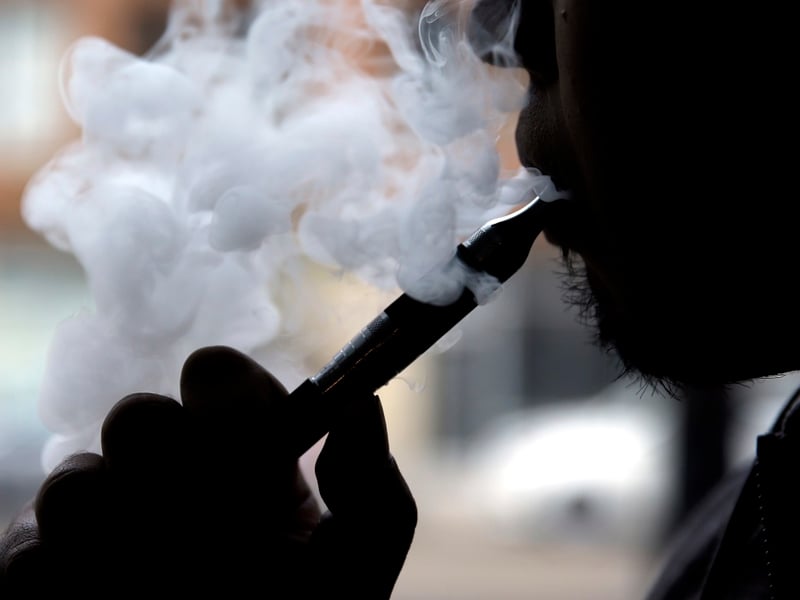
WASHINGTON (CN) — The Food and Drug Administration can block flavored nicotine e-liquids that may be attractive to children from going on the market, the Supreme Court ruled Wednesday, rebuffing e-cigarette makers challenging regulatory hurdles on tobacco products.
In a unanimous decision, the high court held that the FDA was right to deny authorization that would allow e-cigarette companies to market flavored vapes.
Justice Samuel Alito, a George W. Bush appointee, wrote in the court’s opinion that the FDA only gained the ability to regulate tobacco products in 2009 and received broad authority to regulate tobacco — just short of being able to ban all tobacco products outright.
Manufacturers can’t market any new product without FDA authorization and must show the product “would be appropriate for the protection of the public health” under the Family Smoking Prevention and Tobacco Control Act. It was passed when e-cigarettes were the ascendent product on the market — offering smokers a potentially safer alternative to cigarettes.
“But e-cigarettes carry their own health risks, and they come in a dizzying array of flavors, many of which, such as dessert, candy and fruit flavors, are particularly appealing to the young,” Alito wrote. “The surging youth demand for flavored products — and the prospect of a new generation of smokers — caught the FDA on its back foot.”
In 2016, the agency declared that e-cigarette manufacturers would need the same marketing authorization required for other tobacco products, which culminated in the mass denial of over a million applications in 2021.
In September 2020, the FDA received applications from more than 500 companies for more than 6.5 million e-cigarette products. Marketing plans touted third-party age verification technology, quantity limits and mandatory retailer compliance checks.
Several e-cigarette companies, including Wages and White Lion Investments, doing business as Triton Distribution, and Vapetasia, the two respondents in the case, pooled their resources to fund data collection efforts to support their applications.
In August 2021, the FDA denied applications for 55,000 flavored e-cigarette products. The agency concluded the manufacturers failed to provide adequate scientific evidence to show their products provided enough of a benefit to adult smokers to overcome the risk posed to young Americans.
On the respondents’ applications, the FDA deemed their products “misbranded” and “adulterated.”
Nicotine e-liquid maker Triton Distribution claimed the agency unlawfully denied its marketing authorization for flavored vape products like Pink Lemonade, Rainbow Road, Chewy Flouds Sour Grape and Jimmy the Juice Man Peachy Strawberry. Triton disputed its products’ appeal to children, arguing that the government was harming nicotine-addicted adults by keeping a cigarette alternative off the market.
A rift has emerged over the agency’s criteria for approving or denying those applications. According to the FDA, products are evaluated based on their impact on existing smokers and their risk of enticing new users.
Most flavored vapes have been blocked under the second prong.
E-cigarettes are the most widely used tobacco product by youth, the FDA says, with 19% of high school students and 4.7% of middle-school students having used vapes in 2020. A study found that 93% of young users’ first e-cigarette was flavored and 71% indicated they continued to vape because e-cigarettes came in flavors they liked.
Triton says that the FDA failed to review the company’s own scientific evidence, which demonstrates its flavored products were crucial to getting smokers to switch from combustible cigarettes to e-cigarettes. The Fifth Circuit sided with the e-cigarette maker, ruling that the agency’s rejection was arbitrary and capricious because the FDA relied on conflicting evidence requirements.
Oral arguments at the Supreme Court in November centered on whether the FDA standards are a policy position or a substantive rule imposed without notice and comment.
The Biden administration argued the standards fell into the policy bucket, pushing the court to give the agency deference to interpret its role under the Tobacco Control Act.
Alito noted that, while the FDA’s ultimate decision was correct, it seemed to be “feeling its way toward a final stance and was unable or unwilling to say in clear and specific terms precisely what applicants would have to provide.”
That did not make the agency’s actions arbitrary or capricious, but it did put the applicants in a difficult position.
Justice Sonia Sotomayor, a Barack Obama appointee, wrote in a concurring opinion that the FDA gave the manufacturers certain flexibility on what evidence to provide while sticking to its statutory duty.
“In light of the statutory text and the well-documented and serious risks flavored e-cigarette products pose to youth, it should have come as no surprise that applicants would need to submit rigorous scientific evidence showing that the benefits of their products would outweigh those risks,” Sotomayor wrote.
The vape manufacturers said they were disappointed with the ruling but indicated they’d continue to pursue their case.
“Triton and Vapetasia continue to believe in the great harm-reduction potential of their products for cigarette smokers,” said Eric Heyer, a Thompson Hine partner who argued the case in favor of the companies. “We look forward to further proceedings before the Fifth Circuit on the prejudicial error issue that the Supreme Court remanded.”
The Campaign for Tobacco-Free Kids praised the ruling as a major victory for the health of America’s kids. The advocacy group submitted an amicus brief with 10 other national public health, medical and community organizations in support of the FDA.
“This ruling is significant because the FDA has similarly denied marketing applications for over 26 million flavored e-cigarette products based on the overwhelming evidence that flavored products appeal to kids and pose significant risks to their health,” Yolonda Richardson, president and CEO for the Campaign for Tobacco-Free Kids, said in a statement.
Over 1.6 million children use e-cigarettes — nearly 90% of whom reporting use of flavored products — according to the 2024 National Youth Tobacco Survey. Other than nicotine, e-cigarettes can also contain chemicals like formaldehyde, lead and benzene.
“While the FDA has authorized the sale of only 34 e-cigarette products, manufacturers continue to flood the market with thousands of illegal, unauthorized products,” Richardson said. “To end this crisis, the FDA must deny marketing applications for flavored e-cigarettes and step up enforcement efforts to clear the market of illegal products. Today’s ruling should spur the FDA to act quickly to do so.”
 Follow @Ryan_Knappy
Subscribe to our free newsletters
Our weekly newsletter Closing Arguments offers the latest about ongoing trials, major litigation and rulings in courthouses around the U.S. and the world, while the monthly Under the Lights dishes the legal dirt from Hollywood, sports, Big Tech and the arts.