
 Search Articles


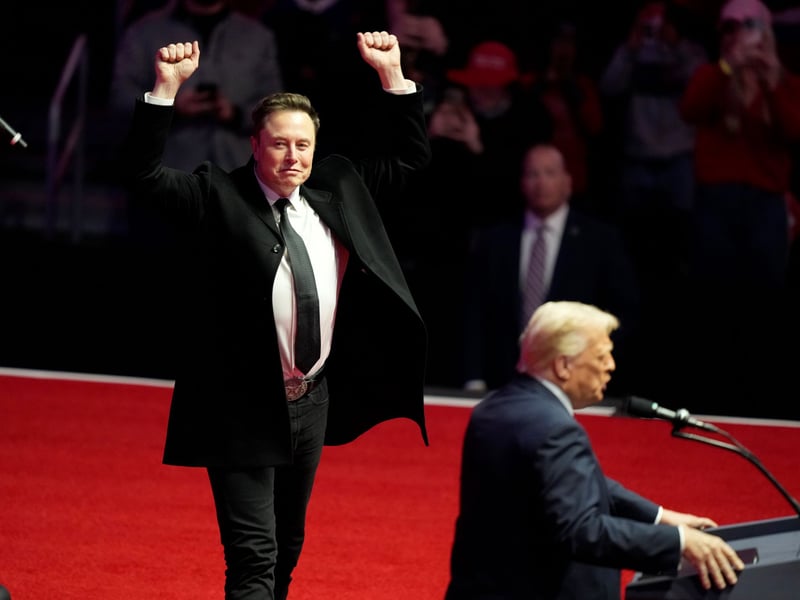
MANHATTAN (CN) — Shortly after midnight on Friday, U.S. District Judge Paul Engelmayer issued an emergency preliminary injunction blocking Elon Musk’s Department of Government Efficiency from accessing the Treasury Department payment system.
“The court’s firm assessment is that, for the reasons stated by the States, they will face irreparable harm in the absence of injunctive relief,” Engelmayer wrote in a four-page order. “That is both because of the risk that the new policy presents of the disclosure of sensitive and confidential information and the heightened risk that the systems in question will be more vulnerable than before to hacking.”
The ruling bars the Trump administration while the states’ lawsuit is pending from granting non-Treasury employees access to Treasury Department payment systems or any other data maintained by the Treasury Department that contains personally identifying information.
Additionally, Engelmayer ordered any staffers who had unauthorized access to the Bureau of Fiscal Services since President Donald Trump took office on Jan. 20 to “immediately destroy any and all copies of material downloaded from the Treasury Department’s records and systems.”
Elon Musk condemned Engelmayer’s intervention, repeatedly invoking the judge’s removal in several posts on his X.com social media platform the following night: “A corrupt judge protecting corruption. He needs to be impeached NOW!”
Engelmayer scheduled an in-person hearing in the case for Friday.
The case has been assigned to another judge, U.S. District Judge Jeannette A. Vargas, a Joe Biden appointee and former SDNY prosecutor.
New York Attorney General Letitia James led a coalition of 19 Democratic attorneys general who sued Trump on Friday to stop Musk’s Department of Government Efficiency from accessing Treasury Department records containing sensitive personal data such as Social Security and bank account numbers of millions of Americans.
The state prosecutors accuse the Trump administration in the 33-page civil complaint of allowing Musk’s DOGE team access to the Treasury Department’s central payment system in violation of federal law.
“As the richest man in the world, Elon Musk is not used to being told ‘no,’ but in our country, no one is above the law,” James said Friday. “President Trump does not have the power to give away Americans’ private information to anyone he chooses, and he cannot cut federal payments approved by Congress. Musk and DOGE have no authority to access Americans’ private information and some of our country’s most sensitive data."
The states seek a declaration that Treasury Department’s policy change is unlawful and unconstitutional, in addition to preliminary and permanent injunctive relief barring the Trump administration from continuing to implement Treasury’s new policy of allowing access its Bureau of Fiscal Services payment systems containing sensitive personal information.
The coalition says Trump administration’s efforts to dismantle government policies through expanded access to the sensitive data exceeds Treasury’s statutory authority, and violates the Administrative Procedures Act, separation of powers doctrine and the take care clause of the United States Constitution.
“Here, the states have suffered a ‘concrete, particularized’ injury because their sensitive bank account information and other sensitive financial data are stored on the Bureau of the Fiscal Service payment systems that are now accessible to an expanded group of people at Treasury who are not authorized to view this information under existing law, including DOGE special government employees,” the states say in the complaint.
“That expanded access, which includes the ability to alter code, constitutes a present injury because it tramples on the states’ reasonable expectation that their sensitive financial information will be securely held in accordance with governing law and basic cybersecurity principles, and puts state’s finances at an increased risk of interference, fraud, and unauthorized access,” they continue.
Arizona, California, Colorado, Connecticut, Delaware, Hawaii, Illinois, Maine, Maryland, Massachusetts, Minnesota, Nevada, New Jersey, North Carolina, Oregon, Rhode Island, Vermont and Wisconsin joined the action, filed in the Southern District of New York.
The states’ suit on Friday evening is the latest legal challenge to Musk staffers’ access to sensitive system containing personal and financial information of millions of Americans.
The University of California Student Association sued earlier in the day in D.C. federal court, claiming the Education Department unlawfully shared financial aid datasets with DOGE that include students’ names, Social Security numbers, dates of birth, contact information, demographic information and bank account information.
The students’ suit follows reporting that DOGE staffers accessed multiple internal systems within the Department of Education, potentially compromising the personal information of people enrolled in federal student aid programs — about 12.5% of the U.S. population.
Musk’s reportedly unfettered access to federal government operations has ignited widespread condemnation in the first weeks of President Trump’s second term. The administration also faces lawsuits for granting DOGE access to data from the Treasury and Labor departments.
Several unions representing federal employees sued the Treasury Department this week for granting Musk and the nongovernment agents of his Department of Government Efficiency access to the Bureau of the Fiscal Service over the preceding weekend.
Also this week, FBI agents sued Trump over a directive from the Department of Justice to suss out agents who were involved in investigating Trump over the Jan. 6, 2021, insurrection attempt.
Last week, a judge blocked Trump’s freeze on federal aid that risked devastating health research, education programs and other initiatives reliant on those funds to survive.
 Follow @jruss_jruss
Subscribe to our free newsletters
Our weekly newsletter Closing Arguments offers the latest about ongoing trials, major litigation and rulings in courthouses around the U.S. and the world, while the monthly Under the Lights dishes the legal dirt from Hollywood, sports, Big Tech and the arts.