
 Search Articles


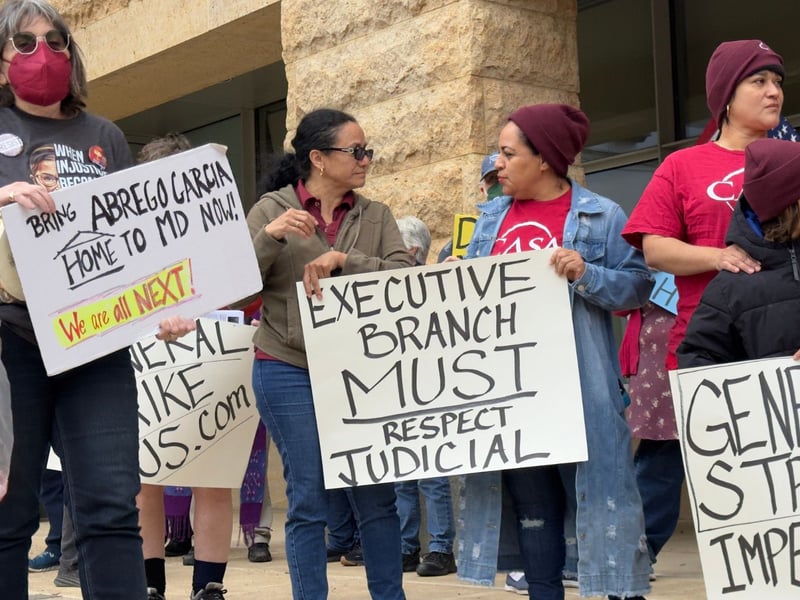
GREENBELT, Md. (CN) — The Trump administration argued in a filing Tuesday that a Maryland judge cannot intervene in Kilmar Ábrego García’s effort to block his potential deportation to Eswatini, saying only an immigration judge could hear his “unserious” claims.
The Justice Department walked back its previous position that Ábrego García would be deported to Uganda after he expressed fear of persecution or torture if he were sent there. It added Tuesday that it could hold Ábrego García for up to six months before taking any action to deport him.
The Justice Department said in its 29-page filing that the Immigration and Nationality Act creates a process for an immigrant to challenge a third-country removal by filing a motion to reopen and request a stay of removal from an immigration judge, which Ábrego García did here.
“Petitioner’s claims are both procedurally barred and meritless — even unserious,” the Justice Department wrote. “The INA does not permit — and indeed affirmatively bars — this collateral challenge to removal and detention. This court should therefore permit those administrative procedures to play out while respecting Congress’ prohibition on interference in those procedures by federal district courts.”
Tuesday’s filing, a response to Ábrego García’s habeas corpus petition, comes less than a month after he was released from criminal custody on Aug. 22 in Tennessee pending a trial on two immigration-related trafficking charges, then summarily taken into U.S. Immigration and Customs Enforcement custody three days later at a mandatory check-in in Baltimore.
U.S. District Judge Paula Xinis quickly barred the government from deporting Ábrego García to Uganda until further court proceedings after court filings in Tennessee revealed ICE officials tried to pressure him into pleading guilty, saying he’d be sent to Costa Rica rather than Uganda if he did not.
The Barack Obama appointee’s Aug. 25 ruling came a month after she previously ordered the government to provide a 72-hour window to challenge any removal efforts to a third country.
Ábrego García has expressed fear of any removal to 23 countries, including Costa Rica, which the Justice Department said “betray[s] a level of gamesmanship to remain in the United States,” noting that Costa Rica was listed as his preferred destination country in his reopened immigration proceedings.
In the government’s view, its March effort to deport Ábrego García to El Salvador — which a since-terminated Justice Department attorney called an “administrative error” — was meant to effectuate a 2019 final order of removal against him.
Xinis has repeatedly noted throughout the case’s proceedings that, while the immigration judge found Ábrego García was removable, the ruling also determined he had a credible fear of being returned to El Salvador and thus withheld his deportation there.
“Petitioner Kilmar Armando Ábrego García surreptitiously and unlawfully entered the United States and has no right to remain here,” the Justice Department said. “Petitioner is now back in the United States, and circumstances have returned to the status quo, as they existed prior to his removal. The government now seeks to lawfully remove petitioner to a third country because he remains subject to an order granting him statutory withholding of removal from El Salvador — and El Salvador only.”
The Trump administration’s mass deportation efforts have left judges scrambling to address the flouting of immigrants’ due process rights, something federal judges in Washington have found middling success in.
On Sept. 15, U.S. District Judge Tanya Chutkan said her “hands are tied” in the case of five West African men who were deported to Ghana, then quickly returned to their home countries of Nigeria or The Gambia, which they had fled for fear of persecution.
Chutkan determined the men were beyond her jurisdiction, and she could not order any foreign policy moves by the Trump administration or make demands of Ghana’s government. However, she lambasted the Trump administration’s conduct, expressing concern that the case could become a blueprint for skirting judicial review.
“In several cases, authorities have rounded up — often at night and with little or no notice — men, women and children being held in detention facilities, hastily put them on planes and transferred them to other countries, where they have no connections, do not speak the language, and are unable to contact family or counsel,” Chutkan wrote.
In a separate case where the Trump administration sought to deport several hundred unaccompanied Guatemalan children over Labor Day weekend, U.S. District Judge Sparkle Sooknanan, the emergency-duty judge that weekend, was able to quickly block the removal of five named plaintiffs.
She later extended the order to cover 609 children just before an emergency hearing, preventing any planes from taking off during the hearing, as was the case in Ábrego García’s and the 130 men sent to CECOT.
On Thursday, U.S. District Judge Timothy Kelly, a Donald Trump appointee who now presides over the case, upheld Sooknanan’s temporary rulings and issued a preliminary injunction barring the removal of the 609 children.
Ábrego García’s attorneys are set to reply to the Justice Department’s filing by Sept. 29, and Xinis has scheduled an evidentiary hearing for Oct. 6.
 Follow @Ryan_Knappy
Subscribe to our free newsletters
Our weekly newsletter Closing Arguments offers the latest about ongoing trials, major litigation and rulings in courthouses around the U.S. and the world, while the monthly Under the Lights dishes the legal dirt from Hollywood, sports, Big Tech and the arts.