
 Search Articles


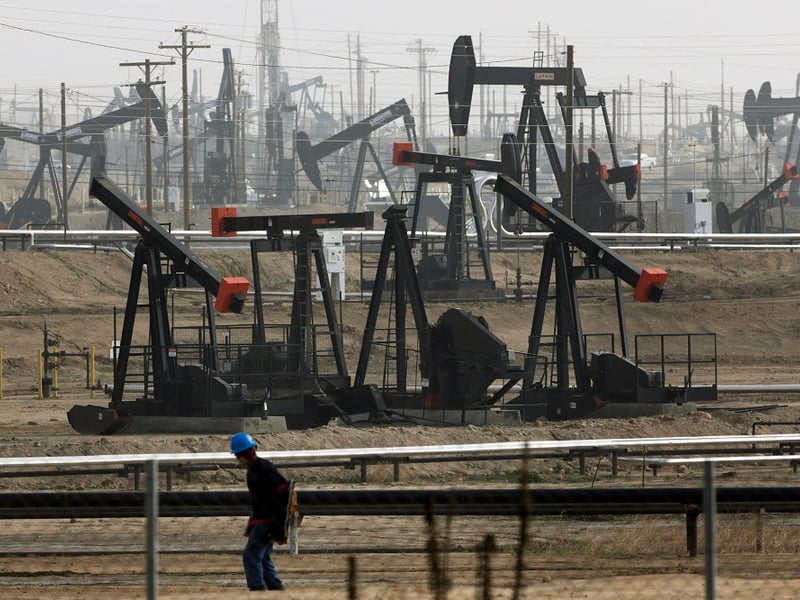
SACRAMENTO, Calif. (CN) — A judge on Tuesday ruled that a California law barring oil and gas drilling in some areas would remain intact, despite the federal government’s attempts to halt it.
The government had sought a temporary pause to Senate Bill 1137, which it said impacted its revenue and improperly infringed on federal sovereignty. Passed in 2022, the law prohibits the approval of new oil or gas wells, or reworking existing wells, in health protection zones. That excludes wells from being within 3,200 feet of residences, schools and hospitals.
In her ruling, U.S. District Judge Dena Coggins called the law a reasonable environmental regulation. It permits alternative methods of reaching oil and gas inside the protection zones, she said, and added that the government failed to show it would face irreparable harm if the law remained intact.
“Indeed, plaintiff alleges it is harmed by the loss of revenue due to SB 1137’s deterrent effect on prospective bidders who might not bid on oil and gas leases in California, but plaintiff admits it ‘paused’ its leasing program approximately ten years ago and has not issued leases since that time,” Coggins, a Joe Biden appointee, wrote.
The government sued California in January, saying federal law preempted the state statute and that the latter violated the intergovernmental immunity doctrine. It asked for the temporary stay to the law two days later, arguing the state law interfered with federal land-use policy and wasn’t an environmental regulation as California claimed.
There’s a distinction between land use and environmental laws, Coggins found, pointing to the 1987 U.S. Supreme Court case of California Coastal Commission v. Granite Rock Co.
“’Land use planning in essence chooses particular uses for the land,’” Coggins quoted from the high court’s decision. “Whereas ‘environmental regulation, at its core, does not mandate particular uses of the land but requires only that, however the land is used, damage to the environment is kept within prescribed limits.’”
The government needed to show that state law conflicted with its own — a bar it failed to meet, Coggins wrote.
The government argued only that state law prevented it from achieving an objective, not that it was impossible for someone to obey both state and federal law. It claimed the California law prohibits developing fossil fuels in the protection zones and acts as a de facto ban on new drilling.
But Coggins disagreed. The state law doesn’t ban all new oil and gas wells, she said; instead, the prohibition applies only to the protection zones.
“Against its own numbers and percentages, plaintiff’s characterization of SB 1137 as a de facto ban is a considerable stretch,” Coggins wrote. “At most, plaintiff’s ‘de facto ban’ characterization would apply to the 79 leases out of 616 (12.8%) that are located entirely within HPZ.”
Coggins also wrote that the government relied on inaccurate representations of the law when making its argument.
The government said a pipeline, which produces no emissions, is prohibited in a health zone. However, Coggins wrote that the law forbids new production facilities in the zones unless the operator has obtained a notice of intention from California.
“In other words, a new production facility can be constructed and operated within an HPZ if that facility is associated with a NOI that was approved by CalGEM,” the judge wrote, referring to the state Geologic Energy Management Division.
Additionally, no ban exists on accessing oil and gas within a protection zone. The state prohibits new wells on the surface. An operator could reach the resources through horizontal drilling, the judge wrote.
“In sum, plaintiff has not met its burden of showing it is likely to establish SB 1137 actually conflicts with federal law, as is required to obtain a preliminary injunction based on its preemption claim,” Coggins wrote.
The federal and California Justice Departments couldn’t immediately be reached for comment.
Subscribe to our free newsletters
Our weekly newsletter Closing Arguments offers the latest about ongoing trials, major litigation and rulings in courthouses around the U.S. and the world, while the monthly Under the Lights dishes the legal dirt from Hollywood, sports, Big Tech and the arts.