
 Search Articles


RICHMOND, Va. (CN) —The government argued that states lack the standing to challenge mass federal layoffs at the Fourth Circuit on Tuesday.
The hearing comes after a recent order from a Fourth Circuit panel granting the federal government’s motion for a stay of a preliminary injunction requiring the reinstatement of thousands of federal employees.
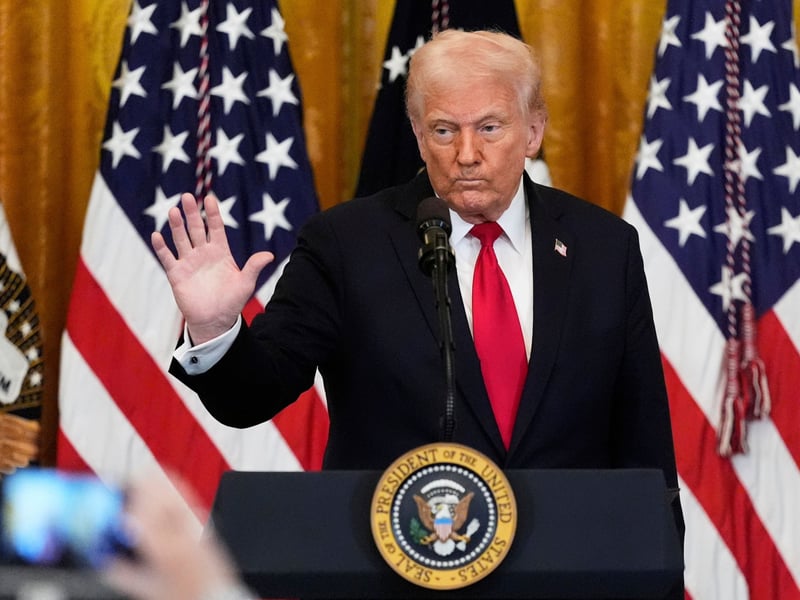
The 19 states and D.C. claim President Donald Trump’s breakneck mass firings of at least 24,000 probationary workers violated several legal procedures, including a provision requiring the government to give 60 days’ notice before any reduction in force. They sued 41 federal executive departments, their secretaries, other federal agencies and their heads.
U.S. Circuit Judge Harvie Wilkinson, a Ronald Reagan appointee, asserted that the employees, not the states, suffered a concrete injury.
“This is a case where the impact of the contested action falls heavily upon the employees and upon the employees’ families, and it forces an abrupt change of course in many a career, and that’s deeply unfortunate,” Wilkinson said. “The employees are not parties to the case, and yet they are the ones that suffer.”
The states argued the purge caused financial strain as they rushed to redeploy staff to bolster reemployment programs and address a flood of unemployment compensation and benefit requests that could have been mitigated by a 60-day notice at the very least.
“When we filed this complaint, there was a tsunami on the way,” Deputy Solicitor for D.C. Caroline Van Zile said.
Wilkinson pointed to the 2023 Supreme Court case United States v. Texas . In Texas , the state sought to overturn Joe Biden-era immigration guidelines that it argued put an unfair financial burden on it. The high court ruled that downstream harms to their state resources and budgets from the federal government’s personnel actions are indirect harms that are not cognizable injuries.
U.S. Circuit Judge DeAndrea Benjamin, a Biden appointee and the lone dissenter from the panel’s recent order staying the injunction, noted a key difference from Texas , where the state challenged a federal guideline. The present case concerns the government’s failure to follow statutory requirements triggered when it implemented reductions in force.
The government told the three-judge panel that the mass firings were not reductions in force, which triggers the 60-day notice mandate, but rather merit-based firings.
Wilkinson asked the government whether downstream economic harm could count as injury based on the breadth of the harm.
“Are we just categorically prohibited from considering downstream economic impacts?” Wilkinson asked.
Government attorney Sarah Welch answered in the affirmative.
“Courts have consistently been very skeptical of states’ attempts to raise those sorts of downstream generalized economic harms as a basis for standing,” Welch said. “That makes good sense because if that sort of state taxpayer standing could be sufficient, then states could challenge virtually any federal action.”
Wilkinson shared concerns about the implications of ruling in the states’ favor.
“If we were to recognize your claim, would we not be allowing the states to assert major control over the composition of the federal workforce?” Wilkinson asked Van Zile. “The remedy has to be tailored to the violation, and here the remedy is very broad.”
Van Zile said the extraordinary action taken by the government warranted extraordinary injunctive relief.
Wilkinson asked the states how the preliminary injunction reinstating the employees remedied their grievance that the government failed to give proper notice. U.S. Circuit Judge Allison Rushing, a Trump appointee, echoed Wilkinson’s point, asking the states why they didn’t request the government release the sought-after specifics rather than a mass reinstatement.
“If you just want the notice and you’re here complaining about lack of notice, why didn’t you ask for an injunction to provide the notice?” Rushing asked.
The firings, which were helped by White House adviser Elon Musk and the Department of Government Efficiency, focused on probationary employees who typically worked for less than a year. Unlike federal civil servants, who can only be terminated for poor job performance or misconduct, probationary employees lack job protections.
The plaintiff states include Maryland, Minnesota, Arizona, California, Colorado, Connecticut, Delaware, Hawaii, Illinois, Massachusetts, Michigan, Nevada, New Jersey, New Mexico, New York, Oregon, Rhode Island, Vermont and Wisconsin. Four of the 19 states voted for Trump in the 2024 election.
Attorneys representing the state and federal governments did not respond to requests for comment. Wilkinson indicated that the best course of action may be to allow the voters to decide whether they agree with these mass firings, come election season.
Subscribe to our free newsletters
Our weekly newsletter Closing Arguments offers the latest about ongoing trials, major litigation and rulings in courthouses around the U.S. and the world, while the monthly Under the Lights dishes the legal dirt from Hollywood, sports, Big Tech and the arts.