
 Search Articles


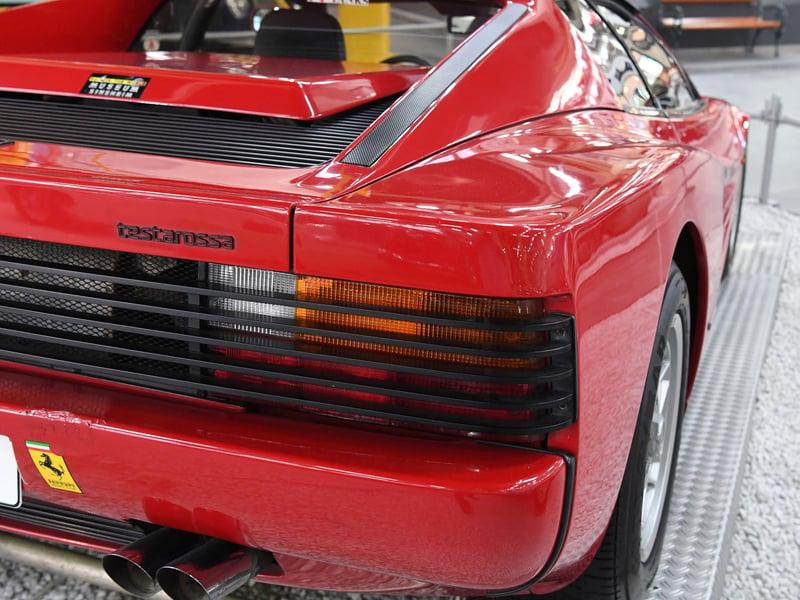
THE HAGUE, Netherlands (CN) — The European Union’s General Court on Wednesday annulled twin decisions by the EU Intellectual Property Office that had stripped Ferrari of its rights to the “Testarossa” trademark, finding that the luxury carmaker had demonstrated continued use of the iconic mark through the resale of certified vehicles, parts and even licensed scale models.
Ferrari had registered the word mark Testarossa for various goods including automobiles, vehicle parts and toys, following an international registration in 2006. But in 2014 and 2015, German resident Kurt Hesse, a board member of a toy and model car company, initiated proceedings before the intellectual property office to revoke those rights, arguing that the mark had not been put to “genuine use” in the EU for five consecutive years.
The office sided with Hesse and annulled Ferrari’s rights, concluding that the company had failed to demonstrate genuine use of the mark within the relevant period — a requirement under EU law, which obliges trademark owners to show real and consistent use in the marketplace, not just token gestures or passive presence.
The court pushed back, finding that Ferrari maintained commercial activity under the Testarossa name through resale channels and its certificate of authenticity program verifying key components. This reasoning echoes a 2020 ruling by the European Court of Justice, which held that such activities, including the resale of vintage cars and authentication services, can constitute genuine use of a trademark.
In its ruling, the court also stressed that on the luxury vintage car market, such authorization can significantly influence consumer perception and help preserve market share. “The fact that a secondhand car bearing the TESTAROSSA mark is sold by a dealer or distributor authorized by the proprietor of the contested mark constitutes an indication that the sale is conducted with the consent, albeit implied, of the proprietor,” the court found.
“This form of reassurance, by authorized dealerships, was all the more important in the luxury secondhand car market,” said Dev Gangjee, professor of intellectual property law at the University of Oxford. “In providing an ongoing guarantee as to quality — via relations with authorized dealerships — Ferrari was continuing to use its mark in a relevant, commercial way.”
On the issue of scale model cars, judges emphasized in the ruling that the appearance of the “Ferrari Official Licensed Product” mark on toys showed that the Testarossa name was used with Ferrari’s approval.
“By virtue of that wording, the relevant public will make a link between the applicant — the proprietor of the contested mark — and the toy manufacturers marketing the goods in question under that mark,” the court wrote, rejecting the intellectual property office’s decision that the mark had lost its origin-indicating function.
“Before today’s rulings, the Testarossa saga seemed to go to the heart of whether a famous but unused trademark could still be protected under EU law,” said Eleonora Rosati, professor of intellectual property law at Stockholm University. “The General Court’s decision to uphold Ferrari’s rights confirms that historical brands can remain valid even without active production, as long as there is genuine use in the market.”
Ferrari originally launched the Testarossa in 1984. With its wedge-shaped design and rear-mounted V12 engine, the car became a symbol of 1980s luxury and performance, appearing prominently in pop culture and television. Production ceased in the mid-1990s, but the model remains prized among collectors and enthusiasts.
Testa rossa means “red head” in Italian and refers to the red-painted covers on the car’s engines.
By annulling the earlier decisions, the General Court confirmed that Ferrari’s trademark rights remain valid across both categories — cars and related parts, and toy scale models — clarifying how EU trademark law treats continued brand presence through resale and licensing, especially for legacy products.
Commenting on the decision, Gangjee noted, “Even after 30 years of non-use on new Testarossas, the presence of authorized distributors servicing the secondhand market was enough to keep Ferrari’s iconic marks alive. This case underscores that express or implied consent to third-party commercial use is critical in resisting non-use challenges under EU trade mark law.”
The intellectual property office may still seek to appeal the decisions to the Court of Justice of the EU, but only on points of law and with the court’s permission.
Subscribe to our free newsletters
Our weekly newsletter Closing Arguments offers the latest about ongoing trials, major litigation and rulings in courthouses around the U.S. and the world, while the monthly Under the Lights dishes the legal dirt from Hollywood, sports, Big Tech and the arts.