
 Search Articles


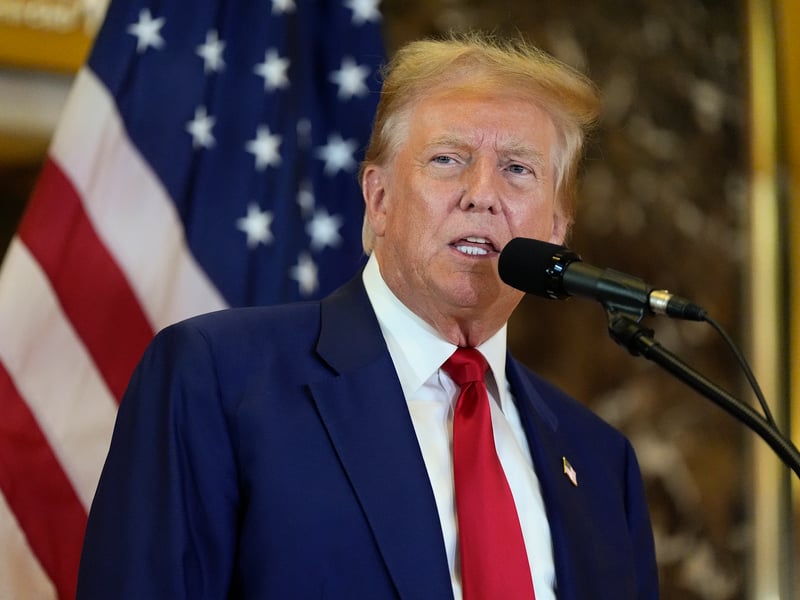
(CN) — Attorneys are preparing for a free-speech fight in the classified documents case after the special counsel’s office requested a gag order for Donald Trump.
U.S. District Judge Aileen M. Cannon ordered defense attorneys to respond by June 14 to accusations Trump made false claims that endangered the lives of federal agents who executed a search warrant in 2022 at his resort in Palm Beach, Florida.
Special counsel Jack Smith first raised the issue in a May 24 motion to modify Trump’s conditions of release. Cannon, a Trump appointee, dismissed the motion on procedural grounds before prosecutors refiled it Friday evening.
Smith points to claims Trump recently made on social media that FBI agents were authorized to use deadly force against him while executing the Aug. 8 warrant at Mar-a-Lago. The former president was referring to a boilerplate use-of-force statement contained in a recently unsealed FBI document, which specifically prohibited the use of deadly force, except to stop dangerous or fleeing suspects.
“As Trump is well aware, the FBI took extraordinary care to execute the search warrant unobtrusively and without needless confrontation,” Smith wrote, including coordinating with Trump’s attorney about the property search and conducting it while Trump and his family were absent.
Smith asked Cannon to issue an order prohibiting the former president from making statements that pose a “significant, imminent and foreseeable danger to law enforcement agents” involved in the case.
It’s not the first time federal prosecutors have accused the fire-breathing former president of using his political platform to intimidate witnesses and influence the judicial process.
Trump remains subject to a gag order in New York while he awaits sentencing on 34 felony counts of falsifying business records. In the election interference case in Washington, U.S. District Judge Tanya Chutkan barred Trump from making statements that “target” Smith and his staff, court personnel or possible witnesses.
Chutkan, an appointee of Barack Obama, issued the three-page order in October after Trump warned on social media in all capital letters, “If you go after me, I’m coming after you!”
He characterized the prosecutors in other social media posts as “deranged,” “thugs” and “lunatics,” while calling the judge a “radical Obama hack.”
The D.C. Circuit Court of Appeals narrowed Chutkan’s restrictions, permitting Trump to criticize Smith, but otherwise left the order intact.
“Threats of physical harm, stalking or doxing almost inevitably will slow or temporarily halt work on the criminal proceeding as personnel are distracted addressing threats to their or their families’ safety, or the security of courthouse and office premises,” the court wrote.
Trump’s team has appealed the decision to the U.S. Supreme Court.
While constitutional, gag orders remain a controversial method for protecting judicial proceedings from outside influence. The orders invoke two disfavored forms of speech limitations, prior restraint and content-based restriction, while threatening to squelch legitimate criticism of the judicial system.
In a May 20 legal review, Gregory Germain, a Syracuse University law professor, criticized the courtsfor paying mere “lip service” to Trump’s free speech claims before issuing gag orders.
Germain acknowledged that Trump’s rhetoric has caused some supporters to respond with threats and harassment, most notably during the Capitol riot, but the former president has never explicitly called for violence. Such risk exists in every case, particularly high-profile ones, Germain wrote, but the courts should rely on law enforcement to protect participants rather than gag orders.
“The concern for the response of supporters is not a legitimate basis for infringing on Trump’s constitutionally protected speech right,” he wrote.
The American Civil Liberties Union, a stalwart opponent of Trump’s policies, filed an amicus brief in the election interference case opposing the gag order, arguing it was overly broad in the speech it curtailed and vaguely worded.
 Follow @SteveGarrisonPC
Subscribe to our free newsletters
Our weekly newsletter Closing Arguments offers the latest about ongoing trials, major litigation and rulings in courthouses around the U.S. and the world, while the monthly Under the Lights dishes the legal dirt from Hollywood, sports, Big Tech and the arts.