
 Search Articles


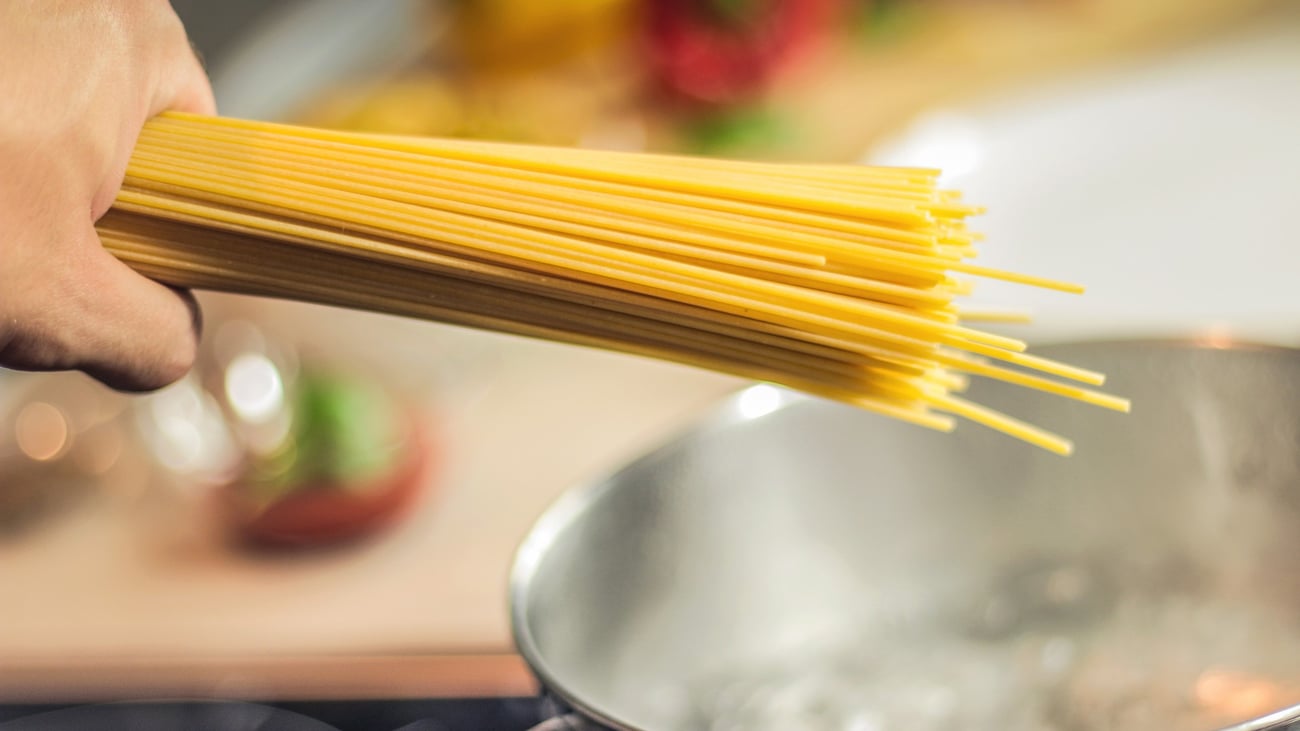
SAN FRANCISCO (CN) — A federal magistrate judge said Wednesday he was inclined to grant summary judgment in favor of pasta giant Barilla in a class action brought by consumers over the phrase “Italy’s #1 brand of pasta.”
Magistrate Judge Ajay S. Krishnan told the plaintiffs it would be “quite impossible” to proceed with their claims that the phrase “Italy’s #1 brand of pasta” is false and deceptive advertising because the statement is ambiguous, and thus cannot continue under the standard set by the Ninth Circuit in McGinity v. Procter & Gamble Co.
In McGinity, the Ninth Circuit**found that when “a front label is ambiguous, the ambiguity can be resolved by reference to the back label.”
“This may all just come down to the Ninth Circuit’s McGinity case,” Krishnan said. “It strikes me that that case is likely dispositive of plaintiffs’ claims, and I say that with sympathy because this case has been litigated for quite some time.”
Plaintiffs Matthew Sinatro and Jessica Prost say they purchased multiple boxes of Barilla spaghetti and angel hair pasta last year because they thought the products were made in Italy from authentic Italian ingredients — a belief reinforced by the replication of the green, red and white colors of the Italian flag on its signature blue box.
The company originated in the 19th century as a bread and pasta shop in Parma, Italy, and maintains its corporate headquarters in the Italian town. However, Barilla America’s corporate offices are in Illinois, and its pastas are made in Iowa and New York with durum wheat sourced from countries other than Italy.
In their class action filed in 2022, Sinatro and Prost say Barilla took advantage of their readiness to pay more for pasta products that look and sound authentically Italian and falsely tout their products as such while “cutting costs and reaping the financial benefits of manufacturing the products in the United States of America.” Barilla’s ad campaign features a website, Barilla Historical Archive, a Barilla Pasta Museum and Barilla Academy, which Sinatro and Prost contend were “all designed to promote the brand and company’s Italian identity.”
At Wednesday’s hearing over Barilla’s motion for summary judgment, Krishnan questioned the plaintiffs on whether the phrase “Italy’s #1 brand of pasta” was ambiguous, harping on an survey conducted by plaintiffs’ expert Dr. J. Michael Dennis, which showed 57% of respondents perceived the phrase “Italy’s #1 brand of pasta” to mean the product’s ingredients are solely sourced from Italy.
“Your expert doesn’t seem to opine one way or another on whether labeling is ambiguous. If anything, your expert seems to land on the idea that it is ambiguous,” he said. “If 57% of people would interpret the phrase one way, a wide group of people interprets it another way.”
The plaintiffs argued that the phrasing having multiple interpretations does not make it ambiguous, explaining that survey participants were allowed to inspect an entire box of Barilla pasta containing the phrase “Italy’s #1 brand of pasta” on the front, as well as statements on the side panel and back of the box indicating the product was “Made in the U.S.A. with U.S.A. and imported ingredients.”
“When defining ambiguity, 57% of consumers understood the product label as the product is sourced from Italy. They were exposed to all sides of the product. Even with that, they believed the label to mean the ingredients were sourced from Italy. Other cases have found that that is enough,” plaintiffs’ attorney Bahar Sodaify of Clarkson said.
Krishnan pushed back, saying McGinity only requires the front label of a product to be ambiguous.
“McGinity says you look at the front label, look at the claim, and is that claim susceptible to multiple interpretations? They are not saying look at the front and side at the same time,” he said.
The judge added that the survey’s inclusion of all of Barilla’s packaging was not enough to conclude the phrase was unambiguous, telling Sodaify that, if anything, it suggests ambiguity.
“That 57% of people think one thing does not tell me anything one way or another,” he said, continuing, “I don’t get how your expert findings get you there to lack of ambiguity.”
Tyler Young of Faegre Drinker Biddle & Reath, an attorney for Barilla, argued the phrase was ambiguous because consumers would need more information before assigning a meaning to the statement.
Young went on to say that the plaintiffs couldn’t prove the phrase “Italy’s #1 brand of pasta” is unambiguously deceiving consumers that the product’s ingredients are sourced from Italy because the phrase does not refer to or mention anything about the ingredients of the product.
“The statement does not say anything about ingredients. That word is not used. It’s a matter of inference and interpretation to get there,” he said.
In rebuttal, Sodaify said it would be reasonable for customers to assume the ingredients were from Italy because of the possessive use of the word “Italy,” as well as Barilla’s marketing of its products as “authentic Italian pasta.”
She added that the question of whether or not Barilla was being deceptive should be up to a jury, and summary judgment requires no genuine issues of material fact.
However, Krishnan expressed doubts over whether Barilla deceived customers just because it advertised its Italian connections.
“I don’t know that it really advances the argument that they spent a lot of time and effort bumping up their Italianness. I don’t know if that is deceptive, going around touting their Italian roots,” he said.
The judge did not indicate when he would release a ruling, but told the parties it would be soon, so they could adjust their expectations of whether there would be a trial.
“I’m still leaning against you on the McGinity issue, and I don’t want you to spend time and resources on trial if it’s not going to go forward,” he told the plaintiffs. “If I end up going your way on McGinity, I’m going to have to decide a number of things not discussed today.”
Representatives for either party did not immediately respond to a request for comment.
 Follow @mhattridge_
Subscribe to our free newsletters
Our weekly newsletter Closing Arguments offers the latest about ongoing trials, major litigation and rulings in courthouses around the U.S. and the world, while the monthly Under the Lights dishes the legal dirt from Hollywood, sports, Big Tech and the arts.
Additional Reads
 Elon Musk claims Sam Altman 'stole a charity' in OpenAI feud April 29, 2026
 Fashion Nova faces class action over urgent sale emails April 29, 2026
 Oil company appeals drillers’ pay dispute April 29, 2026