
 Search Articles


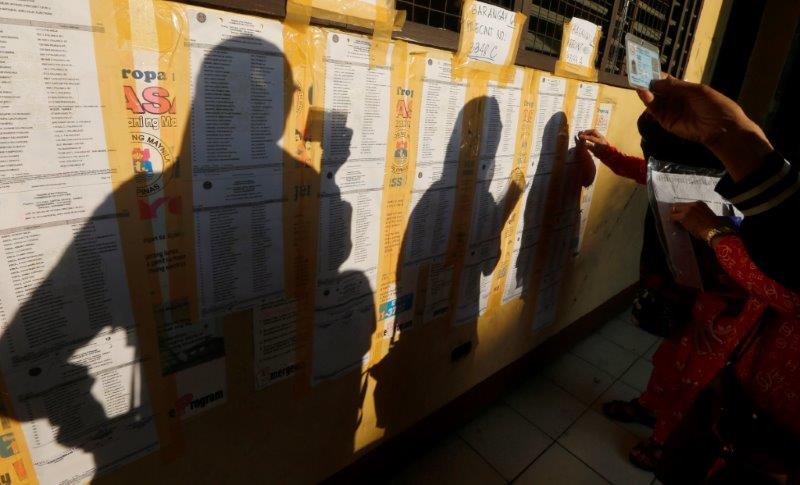
MANILA, Philippines (AP) — Filipinos voted Monday in midterm elections highlighted by a showdown between President Rodrigo Duterte’s allies who aim to dominate the Senate and opposition candidates fighting for checks and balances under a leader they regard as a dictator.
Nearly 62 million Filipinos have registered to choose among 43,500 candidates vying for about 18,000 congressional and local posts, including 81 governors, 1,634 mayors and more than 13,500 city and town councilors in 81 provinces, in one of Asia’s most rambunctious democracies.
Final results are expected to be declared in about a week for national posts and a few days for local positions unless specific outcomes come under protest.
Many see the elections as a crucial referendum on Duterte’s rise to power and his brutal crackdown on illegal drugs that has left thousands dead, his unorthodox leadership style, combative and sexist joke-laden outbursts and contentious embrace of China.
“President Duterte’s name is not on the ballot but this is very much a referendum on his three years of very disruptive yet very popular presidency,” Manila-based analyst Richard Heydarian said.
The outcome will show whether the Filipino populace affirms or rejects Duterte’s authoritarian leadership in an Asian bastion of democracy, Heydarian said.
The most crucial races are for 12 seats in the 24-member Senate, which Duterte wants to fill with allies to bolster his legislative agenda. That includes the return of the death penalty, lowering the age for criminal liability of child offenders and revising the country’s 1987 constitution primarily to allow a shift to a federal form of government, a proposal some critics fear may be a cover to remove term limits.
Military and police forces were on alert to respond to any violence, especially in security hotspots that include the entire southern region of Mindanao, and to help prevent cheating amid intense local political rivalries.
Three explosions were reported in southern Maguindanao province, including one grenade blast shortly before voting started at 6 a.m. There were no reported injuries from the blasts.
Commission on Elections spokesman James Jimenez said the campaign has been relatively peaceful compared to past years. Nonetheless, police said 20 people have died in poll-related violence.
In Manila’s financial district of Makati, former Vice President Jejomar Binay protested after his ballot was rejected by an automated counting machine, one of 400 to 600 incidents of malfunctioning machines, Jimenez said.
“It’s not really a show-stopper,” Jimenez said, adding that it was a fraction of about 85,000 machines being used in the elections.
At least two mayoral candidates were put in police custody elsewhere, including one for alleged election fraud. In southern Sulu province, gunfire outside a polling center wounded five people and two vehicles were burned, police said.
Opposition aspirants consider the Senate the last bastion of checks and balances given the solid dominance of Duterte’s loyalists in the lower House of Representatives. Last year, opposition senators moved to block bills they feared would undermine civil liberties.
Duterte’s politics and key programs, including his drive against illegal drugs that has left more than 5,200 mostly poor urban suspects dead, have been scrutinized on the campaign trail and defended by close allies running for the Senate, led by his former national police chief Ronald dela Rosa, who enforced the crackdown when Duterte took office in mid-2016.
Aside from the drug killings, Duterte’s gutter language and what nationalists say is a policy of appeasement toward China that may undermine Philippine territorial claims in the South China Sea have also been the cause of protests and criticism.
A May 3-6 survey by independent pollster Pulse Asia showed 11 Duterte-backed senatorial candidates and four other aspirants in the winning circle, but only one from the opposition. The survey showed some favorites had narrow leads and a considerable number of voters were undecided, indicating a chance the results could change. The survey of 1,800 respondents had a margin of error of 2.3%.
Duterte himself remains hugely popular based on independent ratings surveys.
Divided, cash-strapped and without a unified leader, opposition aspirants are fighting an uphill battle to capture the few Senate seats they need to block hostile legislation.
Many Filipinos seem more open to authoritarianism due to failures of past liberal leaders, Heydarian said. Such a mindset has helped the family of former dictator Ferdinand Marcos make a political comeback.
Among many poor Filipinos, however, the concern is day-to-day survival.
“Martial law is scary but we’re more afraid of dying in hunger,” Arturo Veles, a jobless father of six, told The Associated Press.
Wiping away tears, Veles spoke outside his family’s shanty in the humid squalor atop Smokey Mountain, a long-closed dumpsite in Manila’s Tondo slum that remains a symbol of the country’s appalling poverty. His asthma-stricken wife, Agnes, said not one congressional candidate has treaded the fly-strewn and trash-littered path to their cluster of crumbling huts, probably because of the smell and filth.
Arturo Veles said the poor always suffer the most, indicating that he and his wife would not vote for administration candidates. “They only see the poor, those using and selling drugs. That’s the only thing they see, not the depth of our poverty.”
Village guard Jose Mondejar, who lives in a Tondo community heavily festooned with election streamers and posters, backed Duterte’s anti-crime campaign, saying it has reduced crime, including daytime robberies by drug addicts of passing cargo trucks, by about 70% in his neighborhood.
Subscribe to our free newsletters
Our weekly newsletter Closing Arguments offers the latest about ongoing trials, major litigation and rulings in courthouses around the U.S. and the world, while the monthly Under the Lights dishes the legal dirt from Hollywood, sports, Big Tech and the arts.