
 Search Articles


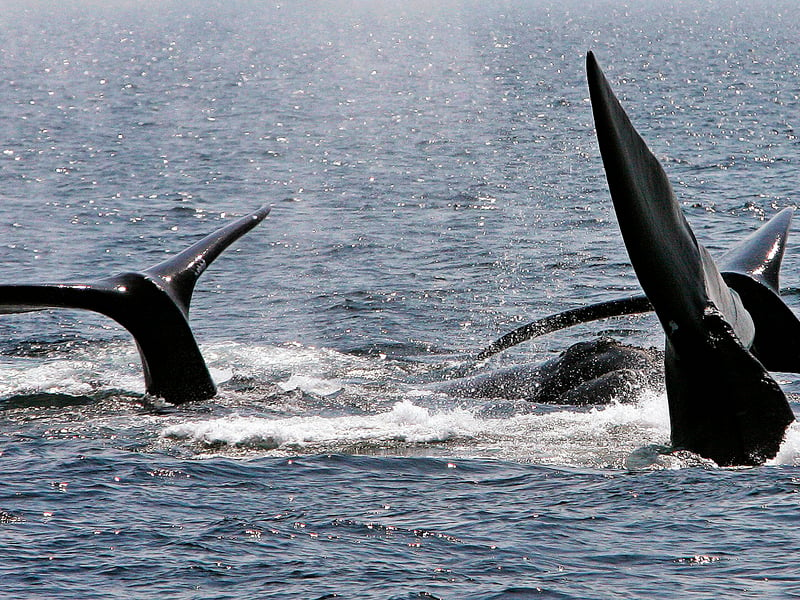
BOSTON (CN) — The First Circuit on Thursday upheld a federal regulation that limits lobster and Jonah crab fishing off Cape Cod in Massachusetts in order to protect North Atlantic right whales.
The rule prohibits the use of vertical buoy lines in February through April of each year. Apart from being hit by boats, the biggest threat to the whales is becoming entangled in the lines during their seasonal migration into the New England area.
Right whales average 50 feet long and 50 to 75 tons and were long targeted by whalers due to their docile nature and high blubber content. By 1937, when hunting them was banned worldwide, there were only about 100 left. The species rebounded a little, but in 1970 they were listed as endangered and the population today is estimated to be around 350.
The National Marine Fisheries Service banned buoy lines in the early spring as a temporary emergency rule in 2022. The following year, Congress enacted a moratorium on further buoy regulation — but it said the executive branch nevertheless could finalize any emergency rules that were already in place. The Biden administration finalized the 2022 rule in early 2024.
A group of Massachusetts fishermen sued, and persuaded a lower court judge that the emergency rule wasn’t “in place” in 2024 because it had expired at the end of the 2022 season.
On appeal, however, three judges disagreed in a 23-page opinion penned by U.S. Circuit Judge Seth Aframe.
Although the emergency rule expired in 2022, “the rule was not a dead letter on that date,” wrote Aframe, who was appointed by Joe Biden.
“This was not akin to a situation where a law, although not formally repealed, has lost its authority, is entirely ineffectual, or is defunct. There are myriad situations where a duly enacted law, although not presently restricting conduct, authorizes future regulatory action. We think it appropriate to describe such a law as being ‘in place.’"
Aframe also observed that when Congress authorized the Fisheries Service to finalize “any emergency rules that were already in place,” the buoy rule was the only such rule in existence — and therefore, if Congress didn’t intend for that rule to be finalized, its exception for rules already in place would make no sense.
“If the 2022 emergency rule is not regarded as having been ‘in place,’ … no other rule could possibly have come within the exception … rendering it a nullity,” Aframe said. “Courts are to avoid interpretations of statutes that have this effect.”
Congress obviously had the buoy-line regulation in mind, Aframe added. “These appeals do not ask us to interpret a broadly applicable statute designed to address future controversies involving unknown parties and facts … Rather, as clearly implied by the statute’s facially targeted text and its consistent history, Congress enacted the rider to address the specific, ongoing series of disputes among the parties to these appeals.”
The opinion was joined by U.S. Circuit Judge Gustavo Gelpí, who was also appointed by Biden, and U.S. Circuit Judge William Kayatta, who was appointed by Barack Obama.
Subscribe to our free newsletters
Our weekly newsletter Closing Arguments offers the latest about ongoing trials, major litigation and rulings in courthouses around the U.S. and the world, while the monthly Under the Lights dishes the legal dirt from Hollywood, sports, Big Tech and the arts.