
 Search Articles


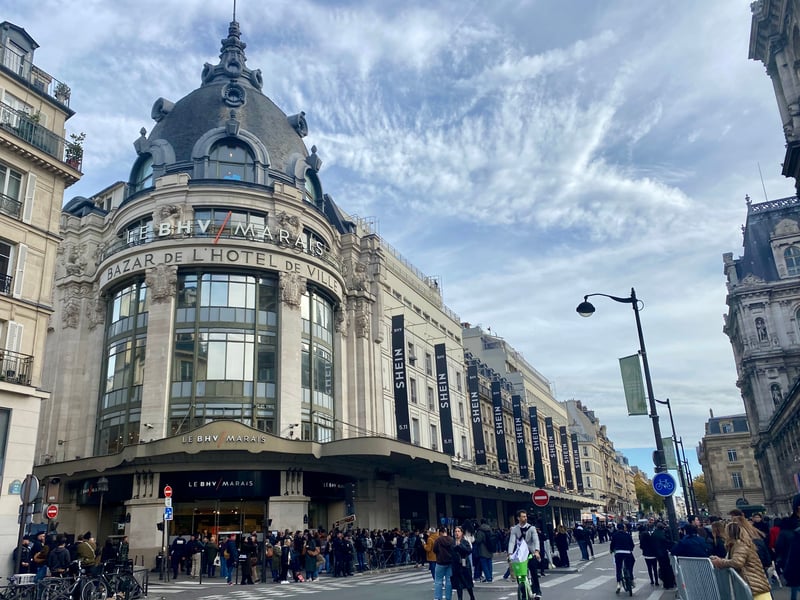
PARIS (CN) — The mood was not celebratory on Wednesday when the Chinese online retail giant Shein opened its first physical store worldwide in Paris.
Protesters yelled at shoppers across police-barricaded streets, politicians advocated against the brand and the French government announced that it would be suspending its website amid an ongoing sex doll scandal.
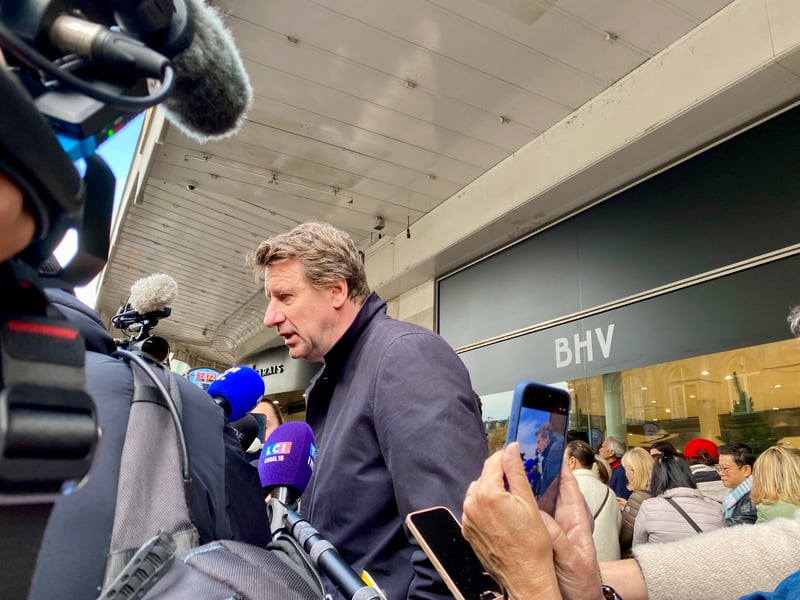
“Shame on you!” bicyclists cried at shoppers while riding down the Rue de Rivoli, one of the central arteries cutting through Paris. In a crowd of protesters, one man held up a sign reading, “Shein sends sexual dolls, Shein exploits workers and Uyghurs, Shein destroys the planet, Shein destroys French fashion.” Yannick Jadod, a prominent French senator for The Ecologists party, scolded the French government as he walked through throngs of reporters.
“These products are made under conditions of slavery," Jadod said. “There is an extreme environmental impact. [Paris storeowner Frédéric Merlin] is participating in the destruction of France’s economy and he is complicit in slavery in China. The state has to regulate and above all, forbid Shein in France.”
Shein has become the fifth-largest clothing retailer in France despite constant backlash over its role in fueling the fast fashion industry, and its questionable environmental and labor rights records. The French government has been working to stifle its growth — Shein was an impetus behind the bill aimed at curbing fast fashion giants through eco-taxes and ad bans, which was adopted in June.
But it’s an ongoing battle. Hours after the roughly 11,000-square-foot space opened in the BHV department store on Wednesday, the French government announced that it had initiated a procedure to suspend the website amid a scandal surrounding the sale of childlike sex dolls to “demonstrate to the authorities that all of its content is finally in compliance with our laws and regulations.”
Ministers will conduct an initial review within the next 48 hours, according to the office of Prime Minister Sébastien Lecornu. But the scandals didn’t stop hundreds of people from lining up for its opening in the early afternoon on Wednesday.
People chatted against the backdrop of booing protesters, some of whom flipped them off from the other side of the street. But for some shoppers, budget constraints outweigh moral considerations.
“There are people that criticize this, but we don’t always have the option to buy good products with good materials, and everything is made in China now,” one woman, who asked to be identified by her first name, Erille, told Courthouse News. “They have to understand that being from the modest or middle class, we want to buy good quality but not expensive.”
Flavie Vonderscher is an advocacy manager at the French nonprofit HOP, which aims to “unite citizens to obtain durable, repairable products” to fight against “planned obsolescence.” She told Courthouse News that the marketing strategies of fast fashion brands encourage higher consumption, so the cheap prices eventually add up.
“The first victims are the consumers, since they are constantly bombarded with incentives to consume,” Vonderscher said. “They certainly spend even more because, in reality, they’re never fashionable enough — there are always things to buy that are even cheaper, and all of this added up represents a cost.”
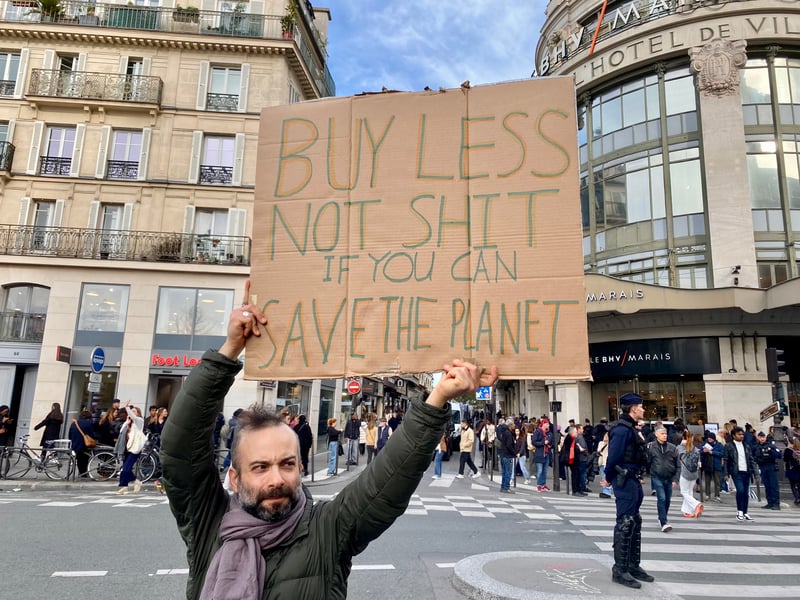
Environmentalists were also on the ground. Assaf Matityahu, a protester outside of the BHV department store on Wednesday, held up a cardboard sign reading, “Buy less; not shit; if you can; save the planet.” He wanted to raise awareness against the dangers of buying too much.
“I think that overconsumption in general, and ultra-fast fashion specifically, is one of the easiest problems to solve among all the social issues we have,” he told Courthouse News. “We just have to ban it and say no, so this is exactly the opposite … I think it’s so easy to solve, we just have to buy less, buy good quality if we can, and we’ll save the planet.”
The opening has prompted several French brands, like the designer Agnes B., to leave BHV citing ethical concerns.
As the clock ticked closer to 1 p.m., when the store officially opened its doors, the crowd grew and started to boo across the street. One of the women in the crowd, who was wearing a “No Shein” red pin as she leaned against the barricade, told someone next to her that she couldn’t understand why there were so many young people there.
“It’s shameful!” she told Courthouse News about the opening, asking not to be named.
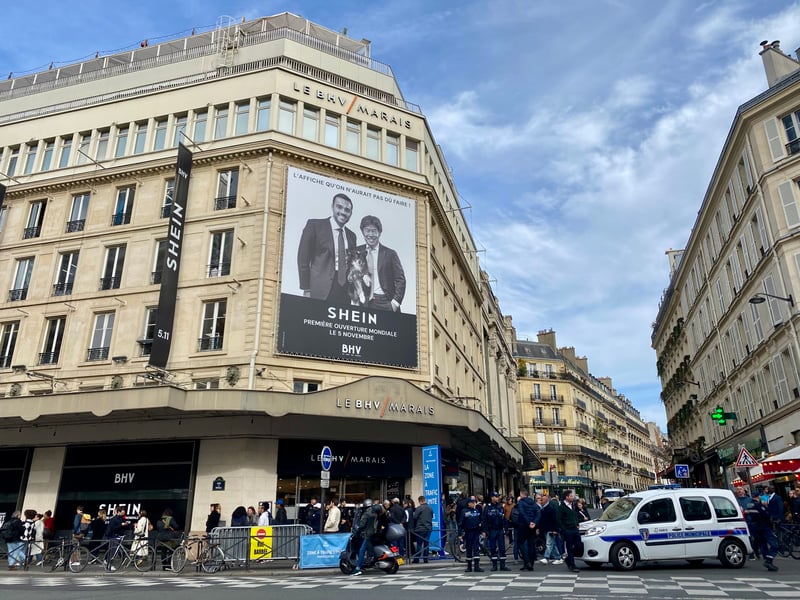
Shein banners lined the perimeter of BHV, leading to a huge poster of its owner, Frédéric Merlin, alongside Shein executive chairman Donald Tang. The two are all smiles under the text overhead: “The poster that we shouldn’t have made!”
 Follow @lilyradz
Subscribe to our free newsletters
Our weekly newsletter Closing Arguments offers the latest about ongoing trials, major litigation and rulings in courthouses around the U.S. and the world, while the monthly Under the Lights dishes the legal dirt from Hollywood, sports, Big Tech and the arts.