
 Search Articles


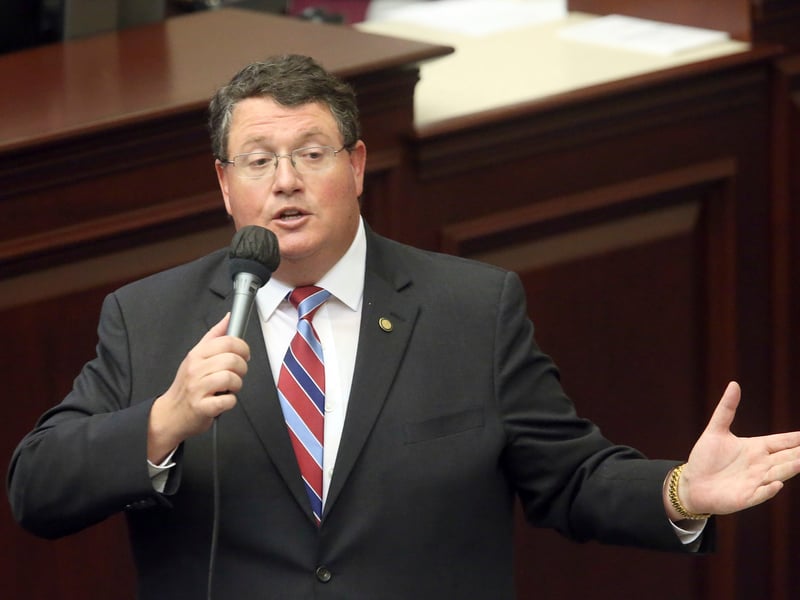
(CN) — Florida voters will fill two vacant congressional seats April 1 in a special election that could be a barometer on the national mood, three months into Donald Trump’s presidency.
In the state’s 1st Congressional District, Florida Chief Financial Officer and Trump-endorsed Republican Jimmy Patronis faces Democrat Gay Valimont, a gun violence prevention activist, to take the seat formerly held by Matt Gaetz. Gaetz resigned in November after President Donald Trump nominated him for U.S. attorney general, though he withdrew consideration for the nation’s top prosecutor amid accusations of sexual misconduct and drug abuse.
Patronis is a longtime Florida politician, beginning with his election to the state House in 2006 until his appointment by then-Governor Rick Scott to chief financial officer in 2017. His family’s restaurant, Capt. Anderson’s, is a fixture of the Panama City restaurant scene.
In the 6th Congressional District that includes rural parts of the Atlantic Coast, voters will choose between Republican state Senator Randy Fine and Democrat Josh Weil, a 35-year-old teacher in Orlando, for the seat formerly held by Mike Waltz, who Trump hired as his national security adviser.
Fine is known in the state as a bombastic conservative, a fierce defender of Israel and one of the architects of dissolving the Disney-controlled Reedy Creek Improvement District after the entertainment giant’s CEO criticized the state’s so-called “Don’t Say Gay" bill.
Despite close ties with state-level Republicans, Fine was one of the more prominent politicians in the state to endorse Trump over Governor Ron DeSantis in last year’s Republican presidential primary. Trump returned the favor by endorsing him in the district’s primary, held in January.
The Democratic challengers face an uphill battle in the special election. Both congressional seats lie in solidly red districts that Trump won by more than 65% of the vote in November. Both Gaetz and Waltz also sailed to victory in last year’s general election by similar numbers.
But an infusion of millions of dollars in campaign contributions over the last three months have some Democrats cautiously optimistic about their chances.
Valimont has raised more than $6.4 million, compared to Patronis’ $2.1 million in the 1st Congressional District race, according to filings with the Federal Election Commission. In the 6th Congressional District, Weil has raised more than $9.4 million, several times more than Fine’s $987,000.
The congressional races are the first in a series of special elections that could narrow the Republicans’ slim majority in the U.S. House, or if Democrats have a strong showing, change the balance of power in the capitol.
Currently, House Republicans have a 218-213 majority. The deaths of two Democratic House members and the expected appointment of Representative Elise Stefanik, a New York Republican, could narrow that margin even more after special elections in those districts.
That’s why these races have attracted attention on the national level from the Democratic Party. Last week, the Democratic National Committee sent funds to the Florida Democratic Party for organizing efforts and poll watchers.
“Florida Democrats are not going to let Trump’s hand-picked candidates walk into office without a fight,” said Florida Democratic Party Chair Nikki Fried in a statement**.** “Republicans are nervous, and with this investment, we will enter the final weeks of this race with the momentum we need to ramp up our organizing efforts when it counts the most.”
“These could be the biggest upset elections of the year,” she said.
Aubrey Jewett, a political science professor at the University of Central Florida, said Democrats chances are a longshot, but “there’s always a chance.”
“There’s the anger of rank-and-file Democrats around the country who are looking for ways to fight back against President Trump,” Jewett said. “This is the first opportunity to do so at the congressional level.”
The typical low turnout of voters in special elections could also have an impact, he said.
“Because special elections tend to have much lower turnout, the possibility of an upset is perhaps a little greater,” he said, while emphasizing that he predicts Republicans will take both seats. “Special elections can have more surprises than a general election.’
In the January Republican primary for the congressional seats, voter turnout barely scratched the surface of registered voters, with less than 10% showing up to vote in the 10 counties that comprise the two districts.
John Roberts, chairman of the Escambia County Republican Party, which lies in the 1st Congressional District, concedes that special elections do not typically have large turnouts.
“People are going to vote,” he said. “They’re not going to probably in large numbers, but neither will the opposition.”
Yet Roberts said in his conversations with voters he’s seen “a lot of enthusiasm from what Trump is doing, what he’s accomplishing.”
“People are pretty determined we’re going to keep a Republican in this district,” he said.
Roberts said the infusion of money from the Democratic Party will not make a difference, and maybe even hurt the Democratic party’s candidates.
“The Democrats are getting a lot of money from other states in California and New York and they are trying to put up a fight, but they aren’t going to get anywhere beyond their usual constituency,” he said.
“They are trying to buy this election,” Roberts added, referencing a postcard he recently received from Democrats in North Carolina. “I don’t know why they thought that would be effective. It’s not going to be effective with Republican voters. They aren’t going to go by a postcard from North Carolina.”
Derrick Scott, chairman of the Escambia County Democratic Party, said voters he has talked to are ready to send a message with this special election.
“We haven’t seen this level of enthusiasm and excitement for a campaign in a special election … in the last 20 or so years,” Scott said.
“We totally recognize that this is a ruby red district and the likelihood that Democrats would be elected to a congressional seat is unfathomable,” he said. “In normal circumstances it would be limited, but we do recognize this is a special election.”
Scott said low turn-out from Republicans and anger at proposed staffing cuts at the Department of Veteran Affairs, in a district that houses one of the largest populations of service members in the country, could be a perfect storm for Democrats.
“These are ideal conditions for an upset,” he said.
 Follow @alexbpickett
Subscribe to our free newsletters
Our weekly newsletter Closing Arguments offers the latest about ongoing trials, major litigation and rulings in courthouses around the U.S. and the world, while the monthly Under the Lights dishes the legal dirt from Hollywood, sports, Big Tech and the arts.