
 Search Articles


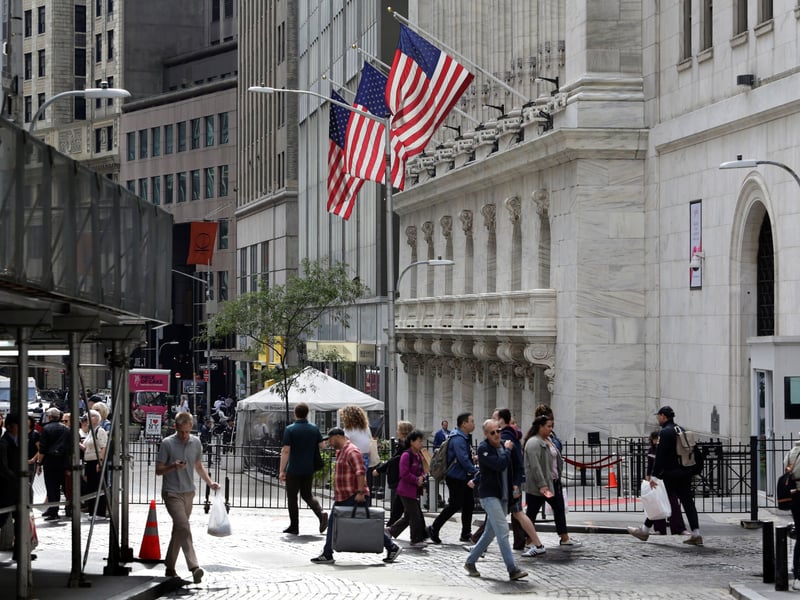
MANHATTAN (CN) — Investors are beset by tumultuous tariff policy, an escalating conflict in the Middle East and rising oil prices.
The good news: They have not yet panicked.
Investors are still in limbo on tariffs, as well as the important question of whether the United States will directly enter the fray between Israel and Iran.
Until those opaque issues congeal into something definitive, Wall Street is taking it slow and steady.
“There were already a lot of unknowns for investors to contend with,” wrote Tom Essaye of the Sevens Report in an investor’s note Friday morning. “Those unknowns will act as a weight on equities near term and make rallies a bit harder to manufacture, but these unknowns are not by themselves enough to cause a correction.”
By closing bell on Friday, the Dow Jones Industrial Average had gained nine points, the S&P 500 had lost nine points, and the Nasdaq had increased by only 41 points. U.S. markets were closed on Thursday due to the Juneteenth holiday.
On Tuesday, investors were dismayed by the latest retail data from the U.S. Census Bureau, which showed a surprising 0.9% decrease in May prices compared with the 0.6% anticipated decline.
“The early boost from tariff-related buying is fading, with households shifting focus to essentials and value,” Will Auchincloss, the Americas retail sector leader from EY-Parthenon, said in a statement. “To keep momentum through the summer, retailers will need to stay agile by adapting their product offerings, fine-tuning pricing strategies, and closely monitoring changing consumer preferences.”
The manufacturing surveys from the Federal Reserve Banks in New York and Philadelphia also disappointed observers. The former showed a 16-point decrease in manufacturing activity — 10 points lower than most analysts had predicted — to mark the fourth consecutive month of decline.
The Philly index similarly showed weakness in the manufacturing sector, coming in at -0.4%, the same as in May and worse than the -0.2% analysts had predicted. The bank’s “new orders” index fell five points, though the shipments index increased 21 points, the first such positive reading seen since March.
The culmination of recent economic data led the Federal Reserve to again hold interest rates steady at 4.25% to 4.5%. The central bank has also taken a wait-and-see approach, citing tariff uncertainty and “unusual flows” of economic data during the first quarter of 2025.
After the decision, President Trump lambasted Fed Chair Jerome Powell as a “dummy” and pitched the idea of himself taking over as head of the central bank.
“Am I allowed to appoint myself at the Fed?" Trump said. “I’d do a much better job than these people.”
Ignoring the president’s jibes, Powell stressed that inflation remains a concern.
“Everyone that I know is forecasting a meaningful increase in inflation in coming months from tariffs because someone has to pay for the tariffs,” Powell told reporters after the announcement.
“All through the [supply] chain, people will be trying not to be the ones who can take up the cost, but ultimately the cost of the tariff has to be paid,” he warned. “Some of it will fall on the end consumer.”
 Follow @NickRummell
Subscribe to our free newsletters
Our weekly newsletter Closing Arguments offers the latest about ongoing trials, major litigation and rulings in courthouses around the U.S. and the world, while the monthly Under the Lights dishes the legal dirt from Hollywood, sports, Big Tech and the arts.