Search Articles


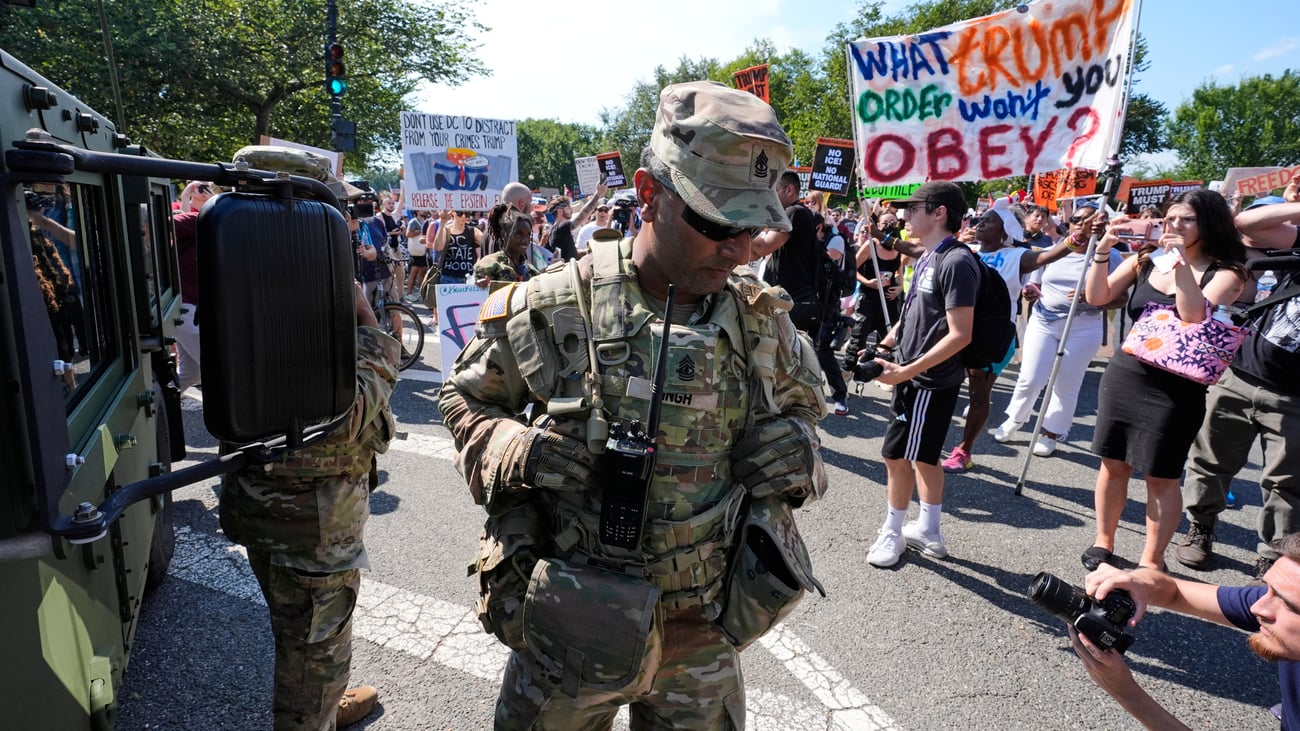
WASHINGTON (CN) — The health of the man charged with murdering a National Guard member near the White House in November 2025 is reportedly improving after a recent hunger strike, but a federal judge is still considering “extreme measures” to ensure his ability to stand trial.
U.S. District Judge Amit Mehta called in federal prosecutors and Rahmanullah Lakanwal’s defense team to discuss how to maintain a “wall” between the prosecution team and a medical records team as the government determines where to place the defendant while he continues treatment.
Mehta, a Barack Obama appointee, requested more information from the parties last Thursday after learning Lakanwal’s “dire circumstances” after refusing food and water and being admitted to George Washington University Hospital.
If Lakanwal’s condition were to again deteriorate and he continued refusing food, Mehta could issue an order to force-feed him that would need to be narrowly tailored to avoid amounting to cruel and unusual punishment while still in pretrial detention.
Lakanwal, who prosecutors say drove across the country from the state of Washington to D.C. for a “targeted” strike, faces a 17-count indictment. He previously pleaded not guilty to three charges in D.C. Superior Court on Dec. 2, 2025, six days after he was accused of ambushing two National Guard members on the eve of Thanksgiving.
U.S. Attorney Jeanine Pirro’s D.C. office secured a superseding indictment on June 16, which added four federal charges: one count of murdering an officer of the U.S., three counts of attempted murder, one count of murder with a firearm and three counts of discharging a firearm during a crime of violence.
The new federal charges carry maximum penalties of life imprisonment or death. Following the indictment, the Justice Department informed Mehta it has started the process to decide whether or not to pursue the death penalty.
Lakanwal otherwise faces life imprisonment for the remaining eight counts of premeditated first-degree murder, four counts of possession of a firearm during a crime of violence and three counts of assault with intent to kill while armed. Those charges were brought under the D.C. Code, which has not carried the death penalty since the D.C. Council abolished it in 1981.
Assistant U.S. Attorney Jocelyn Ballantine proposed a “filter-like process,” where an outside attorney could be appointed to review Lakanwal’s medical records to make placement recommendations to the Bureau of Prisons while he awaits trial, and pass a narrow set of records on to the prosecution team, with the court’s approval.
She recommended Kacie Weston, chief of the Special Proceedings Division at the U.S. Attorney’s Office for the District of Columbia, whom she described as having extensive experience in postconviction litigation, in particular where defendants are found not guilty by reason of insanity.
If Lakanwal’s attorneys were to pursue an insanity defense at trial, Ballantine said the prosecution would be entitled to relevant medical records, while suggesting Weston would be able to rejoin the prosecution team at trial.
Matthew Farley, one of Lakanwal’s appointed federal defenders, challenged the idea that Weston be allowed to essentially work on both sides of the wall, describing the suggestion as letting Pirro “have her cake and eat it too.”
“This is the U.S. government we’re talking about, they can find two separate people,” Farley said.
Michelle Peterson, another federal defender for Lakanwal, informed Mehta that despite his request for more information last week, she and Lakanwal’s family had difficulty obtaining updates from the George Washington University Hospital staff due to an apparent misunderstanding of his request. Mehta indicated he would address the issue in a full order.
Ballantine said Pirro has indicated she is “uncomfortable” with being entirely walled out from any such placement decisions.
“U.S. Attorney Pirro has to choose a side of the wall to be on,” Farley said.
Mehta instructed Ballantine to draft a proposed order he could consider that would create a medical review team led by Weston, which would be completely walled off from the prosecution team. The only way that wall could be “pierced,” he said, is if he ordered it.
“The more clearly drawn the wall, the better off we’ll be,” Mehta said.
 Follow @Ryan_Knappy
Subscribe to our free newsletters
Our weekly newsletter Closing Arguments offers the latest about ongoing trials, major litigation and rulings in courthouses around the U.S. and the world, while the monthly Under the Lights dishes the legal dirt from Hollywood, sports, Big Tech and the arts.