
 Search Articles


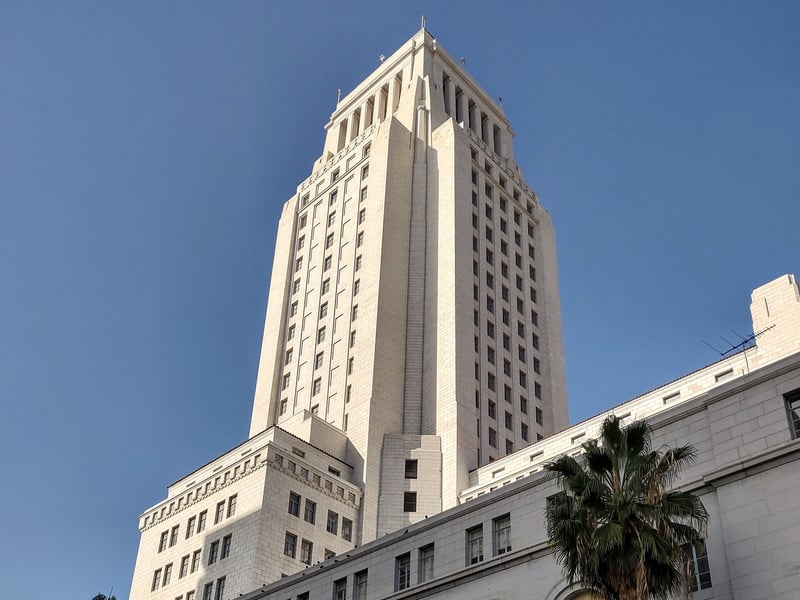
LOS ANGELES (CN) — The California State Bar announced Friday that it has brought disciplinary charges against the former Los Angeles chief deputy city attorney for his part in concocting a class action by a friendly lawyer to limit the city’s exposure to litigation from LA Department of Water and Power’s botched new billing system.
In early 2015, the state bar said, James Clark authorized and directed two lawyers that had been retained by the city to sue PricewaterhouseCoopers — which had sold the utility department the failure-prone billing system — to find a friendly outside attorney to lead a ratepayer class action against the city and the utility.
The goal of the scheme was to use the class action as a vehicle to quickly settle all ratepayer claims against the city on favorable terms.
Clark subsequently lied under oath when he submitted a declaration in Los Angeles Superior Court, in the city’s lawsuit against PwC, in which he denied ever attending the February 2015 meeting at which he discussed with the two lawyers, Paul Paradis and Paul Kiesel, the plan to collude on the “white knight” class action, according to the state bar.
“As chief deputy city attorney for the city of Los Angeles, Mr. Clark occupied a position of public trust and had an obligation to act honestly and in compliance with all ethical requirements,” George Cardona, chief trial counsel for the state bar, said in a statement. “Instead, the [Notice of Disciplinary Charges] alleges that he directed and authorized a scheme of collusion and deceit that was a blatant betrayal of his duties as an attorney and public official.”
Clark, formerly a long-time partner at Gibson Dunn, is also accused of accepting rock concert tickets from one of the attorneys involved in the collusion and then failing to report the gift, as required by law, on his financial disclosure.
Erin Joyce, an attorney representing Clark, said that the charges were solely based on a complaint by disbarred former New York lawyer, convicted felon and federal prison inmate Paul Paradis.
“Paradis’ self-serving allegations, which rely largely upon a falsely claimed conversation at an alleged meeting over nine years ago (in 2015), of which meeting there is no written record whatsoever, were made in an unsuccessful effort to obtain a more favorable sentence in his federal criminal case,” Joyce said.
Clark, Joyce said, is one of 18 attorneys against whom Paradis has complained to the state bar arising from the same series of transactions.
Paradis, the lawyer at the center of the bogus class action, last year was [sentenced](http://U.S. District Judge Stanley Blumenfeld Jr. rejected the government’s recommendation of 18 months’ custody, as well as Paradis’ bid for probation only. Blumenfeld said that the sprawling corruption schemes Paradis was involved in required a more substantial sentence to promote respect for the law. "There’s no individual in this entire sordid affair more responsible than Mr. Paradis," the judge said. "He corrupted the city attorney’s office as well as the Department of Water and Power." Paradis was hired as special counsel by the LA city attorney’s office in 2014 to be its point person as the city faced a deluge of lawsuits from the malfunctioning billing software that the Los Angeles Department of Water and Power had rolled out the previous year. The change resulted in tens of thousands of customers being overbilled. The lawyer cooked up a "white-knight" strategy through a friendly Ohio lawyer, which would allow the city to consolidate and settle the litigation on agreeable terms. Paradis drafted the complaint, hand-picked the Ohio attorney to file it, and crafted the plaintiffs’ demands, while engaging in sham mediation sessions that resulted in a $67 million settlement. In addition, Paradis secretly demanded that the Ohio lawyer give him a $2.18 million kickback, or about 20 percent of the fees the lawyer received as part of the settlement. Paradis wasn’t done, however. He also bribed the general manager of LADWP in order to get a three-year, $30 million no-bid contract to remediate the utility’s billing system. For that purpose, Paradis had created a new company, Aventador. He promised the utility’s general manager to make him chief executive of the venture, with a $1 million annual salary and a Mercedes, in return for the contract. "Corruption is contagious, and so too was defendant’s unlawful conduct," prosecutors with the U.S. attorney’s office in LA said in their sentencing memorandum. "Most notably, defendant’s actions led to multiple extortion plots related to concealing documents that would reveal the collusive litigation scheme." As news began to leak about the city’s involvement in the filing of the ratepayers’ lawsuit in 2019, Paradis started collaborating with federal investigators. He agreed to plead guilty two years ago. The judge noted Paradis’ extraordinary cooperation, which yielded several convictions. However, the judge said that it was somewhat ironic because the only reason Paradis was so helpful to the FBI was because he had placed himself at the center of the corruption schemes. "There’s no excuse for what I did," Paradis said at his sentencing in LA federal court Tuesday. "I’m sincerely sorry for what I did. I’m a changed man — I’m a broken man." David Wright, the former head of the LADWP, the largest municipal utility in the country, was sentenced to six years in prison last year for agreeing to take bribes from Paradis. A former litigator with the city attorney’s office escaped prison time because of his cooperation with the federal investigation, and got three years’ probation for aiding and abetting the extortion of an outside lawyer who worked for the city on the collusive ratepayers class action. Thomas Peters pleaded guilty in 2022 to pressuring Paul Kiesel, a special counsel for the city, to give in to a $1 million extortion demand by Kiesel’s recently fired secretary, who had evidence the city was behind the class action filed on behalf LADWP ratepayers against Los Angeles. Peters had threatened to fire Kiesel if he didn’t take care of the extortion threat, even if it meant paying up) to 33 months in prison.
U.S. District Judge Stanley Blumenfeld Jr. rejected the government’s recommendation of 18 months’ custody, as well as Paradis’ bid for probation only. Blumenfeld said that the sprawling corruption schemes Paradis was involved in required a more substantial sentence to promote respect for the law.
“There’s no individual in this entire sordid affair more responsible than Mr. Paradis,” the judge said. “He corrupted the city attorney’s office as well as the Department of Water and Power.”
Paradis was hired as special counsel by the LA city attorney’s office in 2014 to be its point person as the city faced a deluge of lawsuits from the malfunctioning billing software that the utility department had rolled out the previous year. The change resulted in tens of thousands of customers being overbilled.
The lawyer cooked up the “white-knight” strategy through a friendly Ohio lawyer, which would allow the city to consolidate and settle the litigation on agreeable terms. Paradis drafted the complaint, hand-picked the Ohio attorney to file it, and crafted the plaintiffs’ demands, while engaging in sham mediation sessions that resulted in a $67 million settlement.
In addition, Paradis secretly demanded that the Ohio lawyer give him a $2.18 million kickback, or about 20 percent of the fees the lawyer received as part of the settlement.
Paradis wasn’t done, however. He also bribed the general manager of the utility department in order to get a three-year, $30 million no-bid contract to remediate the utility’s billing system. For that purpose, Paradis had created a new company, Aventador. He promised the utility’s general manager to make him chief executive of the venture, with a $1 million annual salary and a Mercedes, in return for the contract.
“Corruption is contagious, and so too was defendant’s unlawful conduct,” prosecutors with the U.S. attorney’s office in LA said last year in their sentencing memorandum. “Most notably, defendant’s actions led to multiple extortion plots related to concealing documents that would reveal the collusive litigation scheme.”
As news began to leak about the city’s involvement in the filing of the ratepayers’ lawsuit in 2019, Paradis started collaborating with federal investigators.
David Wright, the former head of the LA Department of Water and Power, the largest municipal utility in the country, was sentenced to six years in prison last year for agreeing to take bribes from Paradis.
A former litigator with the city attorney’s office escaped prison time because of his cooperation with the federal investigation, and got three years’ probation for aiding and abetting the extortion of an outside lawyer who worked for the city on the collusive ratepayers class action.
Thomas Peters pleaded guilty in 2022 to pressuring Kiesel, a special counsel for the city, to give in to a $1 million extortion demand by Kiesel’s recently fired secretary, who had evidence the city was behind the class action filed on behalf of utility ratepayers against LA. Peters had threatened to fire Kiesel if he didn’t take care of the extortion threat, even if it meant paying up.
 Follow @edpettersson
Subscribe to our free newsletters
Our weekly newsletter Closing Arguments offers the latest about ongoing trials, major litigation and rulings in courthouses around the U.S. and the world, while the monthly Under the Lights dishes the legal dirt from Hollywood, sports, Big Tech and the arts.