Search Articles


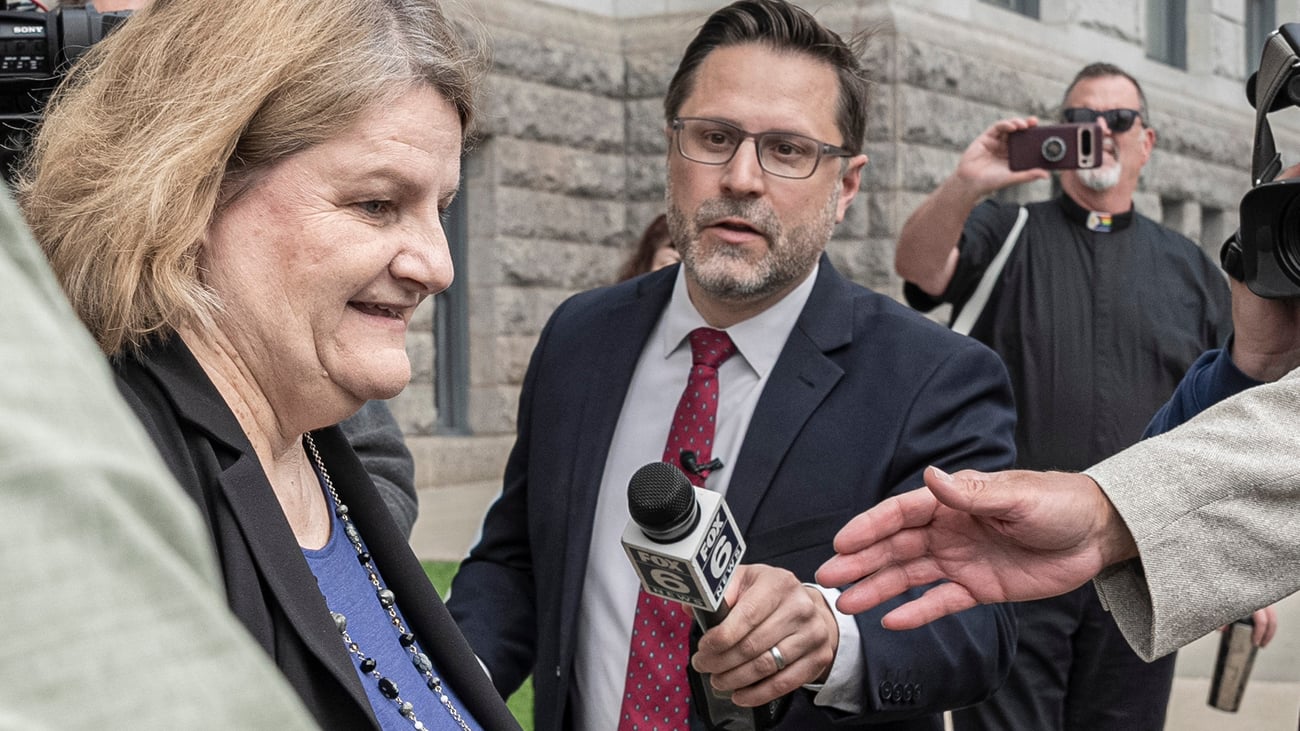
MILWAUKEE (CN) — Former Milwaukee County Circuit Court Judge Hannah Dugan was fined $5,000 Wednesday for attempting to help a man living in the country illegally evade immigration officers outside her courtroom.
The judge was convicted in December of obstructing U.S. Immigration and Customs Enforcement officers but acquitted on the lesser charge of concealing an individual set for deportation following a weeklong trial. She faced up to five years in jail for a felony obstruction conviction.
“It’s important to note what this case is not about. There’s no indication that the defendant acted for personal or private gain or favor. This isn’t like cases of public corruption where an official sells her office. An otherwise good person, upset by immigration enforcement in this country, made a bad decision in the heat of the moment,” U.S. District Judge Lynn Adelman said in his sentencing remarks.
The Bill Clinton appointee went on to characterize Dugan’s actions as “a few minutes of poor conduct” in a life devoted to service.
Adelman said prison time was not necessary as a deterrent for Dugan or other judges.
“I doubt anybody familiar with the defendant’s very public arrest and conviction would soon forget the government’s point that no one is above the law,” Adelman said.
The federal government had recommended 15 to 21 months imprisonment in presentencing documents.
Prosecutors told the court Dugan’s sentence should reflect the “broader institutional harm that is caused when a judge obstructs the normal administration of justice.”
Adelman noted he would consider the public trust factor, as well as the severity of the offense and the history of the defendant in his sentencing: “The punishment should fit the offender.”
Dugan faced fallout following her arrest and conviction, including resigning from the bench in January to focus on her case and being forced into hiding, her lawyers said. They added she had to move after receiving threats and can no longer attend public church services.
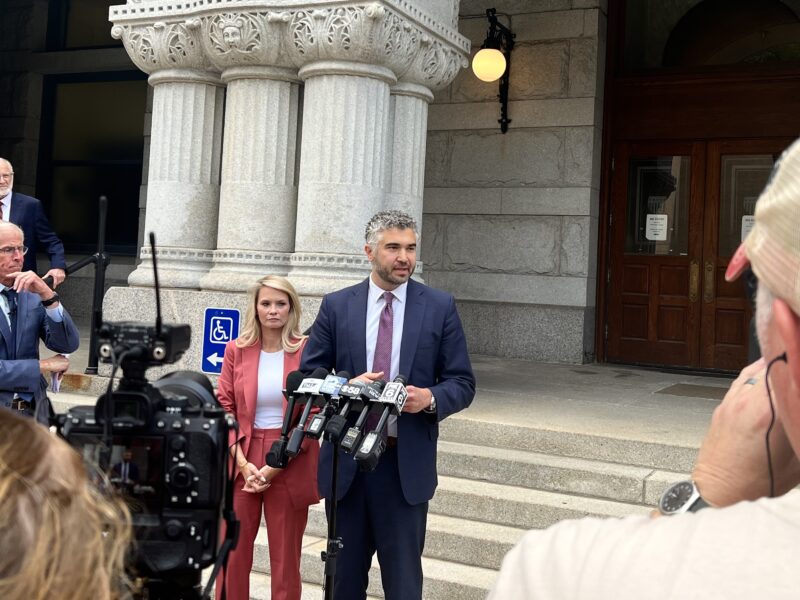
Dugan spoke to the courtroom for the first time, saying she is focused on serving her community and people in need.
“For more than a year, the circumstances of this prosecution have been polarized,” Dugan said from the defense table. “I’ve been cast as an outlaw and as a hero. I’m neither. I’m a public servant who was just trying to do my job.”
Dugan’s attorneys have maintained the charges amounted to political persecution, and the case has drawn national attention as part of President Donald Trump’s ongoing battle with the judiciary.
Her lawyers told reporters after sentencing that she would appeal some of Adelman’s rulings to the 7th Circuit.
Former Wisconsin Supreme Court Justice Janine Geske testified to Dugan’s character before Adelman imposed his sentence.
“When I think of her, I think of her quiet and gentle acts of courage for those around her. Her compassion is never for personal recognition — it’s who she is as a human being,” Geske said.
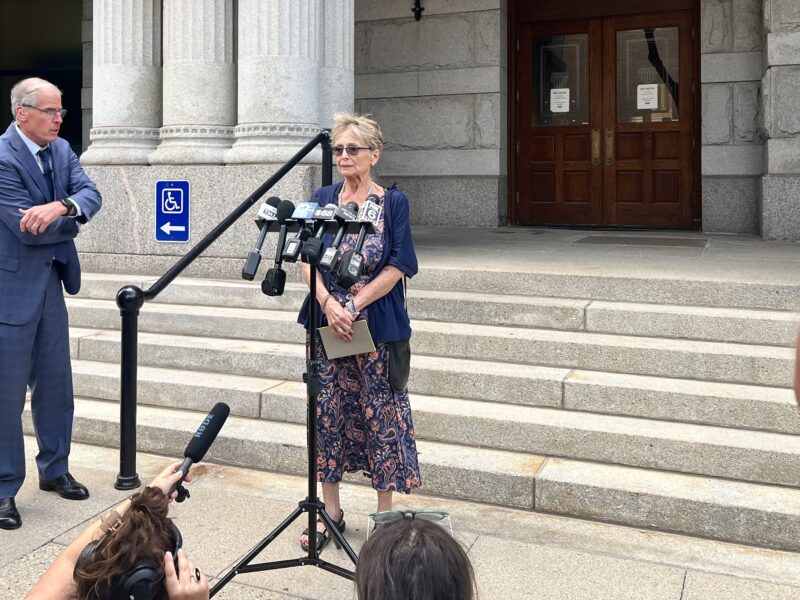
Geske also said after sentencing that Dugan is more distraught that she can’t support the community at public events than she is about losing her position.
In April 2025, Eduardo Flores-Ruiz appeared before Dugan for a hearing in an unrelated case. Six agents from ICE, FBI and the Drug Enforcement Administration were waiting outside the courtroom to arrest him on charges he entered the country illegally in 2013.
Upon learning immigration officers were waiting in the public hallway, Dugan left the bench to confront them. She directed five plainclothes officers to Chief Judge Carl Ashley’s office at the end of the hall, then returned to her courtroom.
She can be heard on courtroom audio recordings quickly rescheduling Flores-Ruiz’s case and ushering him and his attorney out of the room through the jury door to a hallway with two possible exits: a private staircase and a door to the public hallway where agents awaited.
The defense maintained throughout the trial that, had Dugan intended to help Flores-Ruiz escape, she would have led him to the staircase where he could have slipped away.
Federal prosecutors say that is what she intended but he misunderstood her instructions. He exited into the public hallway and was arrested after a short foot chase.
No evidence was presented to show Dugan knew who the agents were there to arrest, nor that she ever saw the warrant. In fact, her defense team argued she was simply following the policy that was being drafted by the chief judge to deal with such situations.
Adelman was unconvinced by Dugan’s last-chance appeal in June based on a Fourth Circuit opinion that she said redefined a “pending proceeding” under the law, warranting a new trial.
Dugan had asked the court for a new trial and acquittal in January, arguing that her actions in April 2025 fell within her judicial duties and that she could not be punished for discretionary official acts.
The case was shaken up after a Fourth Circuit ruling in United States v. Hernandez seemed to suggest that executing an ICE administrative warrant is pure police action falling under the exception of the felony obstruction law.
In a final hour motion for reconsideration, Dugan argued the opinion requires a retrial in her own case because the agents waiting for Flores-Ruiz had only an administrative warrant, falling under the newly defined exception to the law.
Adelman accused Dugan of oversimplifying Hernandez and ignoring glaring differences between the two cases in his order denying her motion.
“Reading Hernandez more broadly — to exclude all ICE enforcement and removal operations, regardless of the stage, from [the obstruction law] — cannot be reconciled with the plain language of the statute or the existing case law,” Adelman said.
He suggested the Seventh Circuit could eventually pare back its obstruction case law based on the Fourth Circuit case, which was a matter of first impression, but he will not anticipate such change.
In Hernandez, a final order for removal had already been issued when immigration agents detained him whereas the arrest of Flores-Ruiz was part of ICE’s investigation into whether he had violated federal law by returning to the U.S. without permission.
Since no final order of removal for Flores-Ruiz had been ordered, Dugan’s obstructive conduct was fully covered by the law under she was convicted under, according to Adelman.
U.S. Attorney Brad Schimel could not immediately be reached for comment.
 Follow @desdev5
Subscribe to our free newsletters
Our weekly newsletter Closing Arguments offers the latest about ongoing trials, major litigation and rulings in courthouses around the U.S. and the world, while the monthly Under the Lights dishes the legal dirt from Hollywood, sports, Big Tech and the arts.
Additional Reads
 Judge orders Trump to pay E. Jean Carroll $5 million July 8, 2026
 Rare manuscript theft July 8, 2026
 Istanbul mayor ejected from court in corruption case July 8, 2026