Search Articles


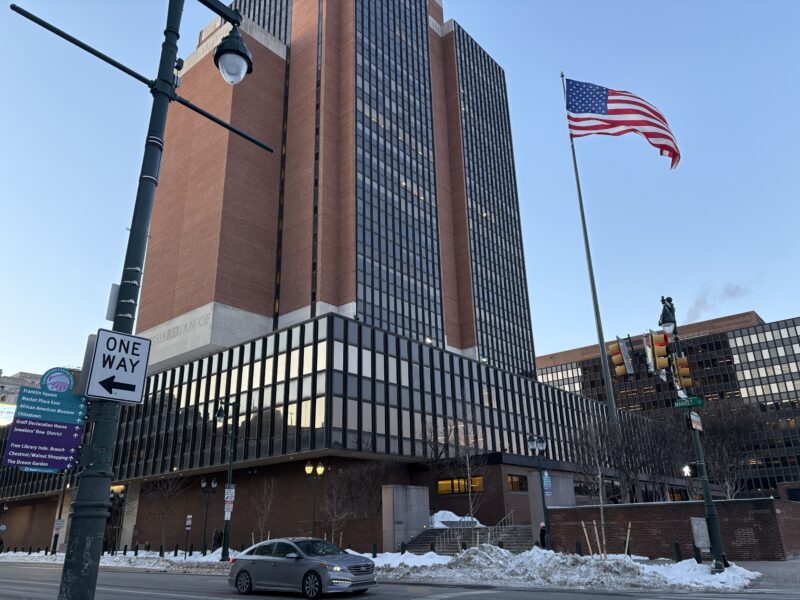
PHILADELPHIA (CN) — A former adjunct law professor whose employment was ended after a series of controversial “devil’s advocate” classroom exercises told the Third Circuit on Wednesday that her statements should have been protected under the First Amendment.
In 2016, public college Kean University informed then-adjunct law professor Cheryl Borowski it was investigating comments made by her during a series of classroom exercises.
Those comments, Borowski asserts, were intentionally contentious “devil’s advocate” prompts made to elicit Socratic conversation, and included discussions on the legality of terminating pregnant female employees due to lower productivity compared to a man.
Ultimately, the university found that Borowski’s classroom remarks violated the New Jersey State Policy Prohibiting Discrimination in the Workplace, a policy governing discrimination among state employees. The university issued Borowski a formal reprimand, requiring she attend sensitivity training and declining to renew her teaching contract.
Following a failed administrative appeal, Borowski sued Kean University in New Jersey federal court in 2020, asserting that the state policy facially violated her First Amendment rights, as it was too vague and overbroad.
After a yearslong back-and-forth between federal and appeals courts, a New Jersey federal judge dismissed the case last year, finding that Borowski failed to plead a prospective injury. Because Borowski was no longer employed by Kean University, she was no longer subject to the policy, ruled Senior U.S. District Judge William J. Martini, a George W. Bush appointee.
Borowski promptly appealed.
Representing Borowski, attorney Marc M. Susselman attempted to convince the wary three-judge appeals panel that his client maintains standing to seek declaratory relief.
When Senior U.S. Circuit Judge Marjorie M. Rendell noted Borowski has not been subject to the state policy since her departure from Kean University, Susselman suggested her termination created a continuing effect on her job prospects.
“It still affects her life and, she claims, has prevented her from getting employment,” Susselman said. “It has continuously affected her since she was terminated. She believes —"
However, Rendell interrupted Susselman.
“Well that’s the allegation, is she believes it may have played a role,” the Bill Clinton appointee said. “But she’s not alleging that someone is specifically going to use it against her. She doesn’t even aver that it’s been communicated to anyone, does she?”
“The facts are, she pled that she has applied for many jobs which she is qualified as a licensed attorney to teach,” Susselman replied. “She’s applied several times, and she’s been denied those positions.”
Also appearing hesitant to side with Susselman, Senior U.S. Circuit Judge Jane R. Roth provided an alternative reason for Borowski’s employment woes.
“Maybe she’s been unemployed because she’s a poor teacher,” the George H.W. Bush appointee said. “Do we know? I mean, isn’t it speculation?”
When asked plainly by Chief U.S. Circuit Judge Michael A. Chagares — a George W. Bush appointee — as to whether Borowski faces imminent reputational harm, Susselman said discovery would be necessary to make that determination.
Representing Kean University, government attorney Janine S. Balekdjian attacked Susselman’s assertion that the workplace policy is overbroad in part because it extends beyond New Jersey antidiscrimination law.
“There’s no constitutional problem with that,” Balekdjian said. “There’s no case saying that government employees’ workplace policy must extend only to the letter of discrimination and harassment law and no further … The state, like any employer, has a strong interest in regulating their workplaces.”
Rendell pushed back, questioning whether Borowski should have been afforded greater academic freedom to play devil’s advocate for educational purposes. Again, however, the university’s lawyer suggested the question was one the court need not consider.
“This court doesn’t even need to address the academic issue because the plaintiff here is bringing a facial challenge to the entirety of this policy as applied to every employee in the state,” Balekdjian told Rendell.
Furthermore, Balekdjian argued, even if the court did have to consider First Amendment rights specifically in education, Borowski herself would not have that academic freedom. Rather, Balekdjian said, Kean University would receive that freedom, with Borowski serving as its proxy.
“So if the school doesn’t like what the professor is saying in class or how they’re saying it, the school is free to discipline them or change that,” she added.
On rebuttal, Susselman again asserted that the workplace policy is so vague and overbroad that it violates the First Amendment.
“This applies to conversations between employees in New Jersey, and if an employee’s offended,” Susselman added. “If a male employee holds the door open for one female who’s Caucasian, but not for another female who’s not Caucasian, is that a violation of the policy that they can be terminated for?”
 Follow @JacksonHeals
Subscribe to our free newsletters
Our weekly newsletter Closing Arguments offers the latest about ongoing trials, major litigation and rulings in courthouses around the U.S. and the world, while the monthly Under the Lights dishes the legal dirt from Hollywood, sports, Big Tech and the arts.
Additional Reads
 Oil company appeals drillers’ pay dispute April 29, 2026