Search Articles


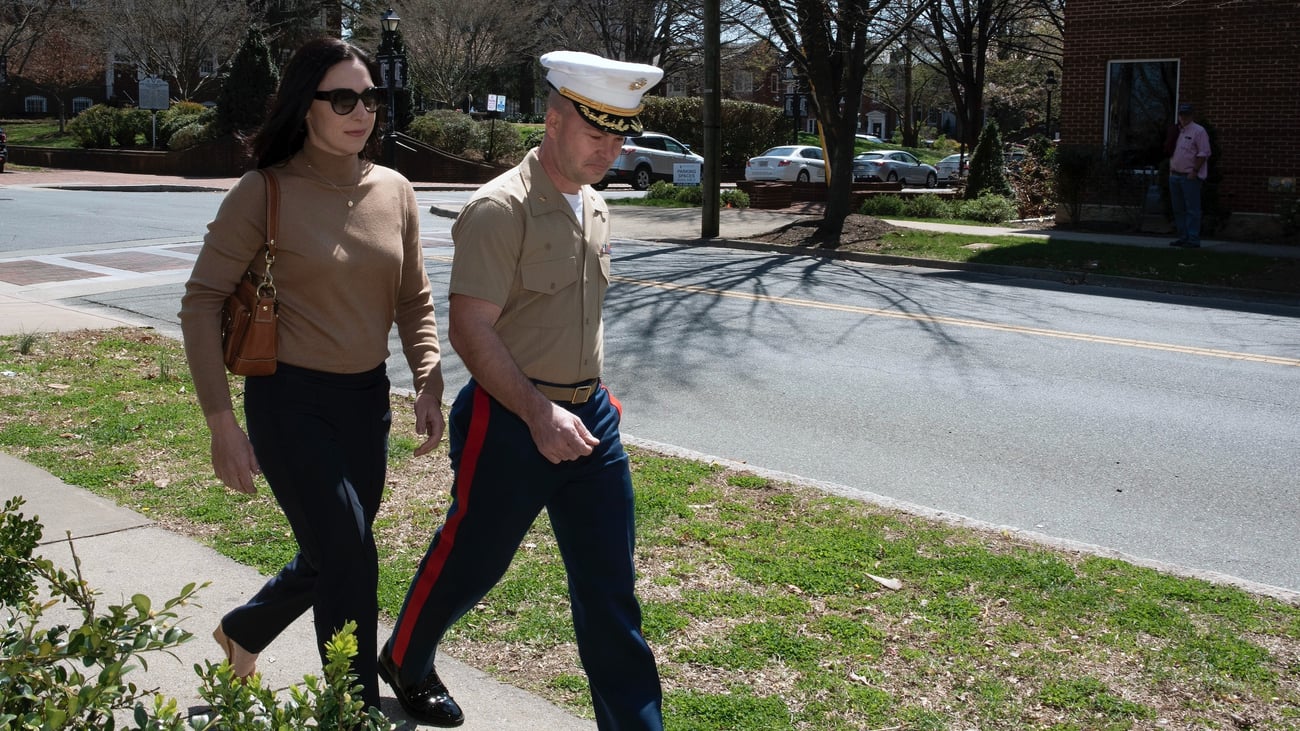
RICHMOND, Va. (CN) — The Fourth Circuit upheld a protective order Wednesday shielding the identity of an Afghan family involved in a custody dispute with a Marine and his wife.
“Although the order is a content-based prior restraint, this is the exceptional case in which a prior restraint is permissible,” said U.S. Circuit Judge Julius Richardson, a Donald Trump appointee. “The threat to the government’s compelling interest in ensuring our nation’s security is not mere conjecture.”
An Afghan couple accused Virginia-based U.S. Marine Corps attorney Joshua Mast and his wife, Stephanie, of abducting their baby cousin. According to the couple, the child — referred to as Baby Doe in court proceedings — was orphaned at 2 months old after her parents and five siblings were killed during a U.S. military operation in rural Afghanistan in September 2019.
The parties have litigated extensively in state and federal courts since the Afghan couple filed suit in 2022 seeking $10 million in damages for conspiracy, tortious interference with parental rights, assault, fraud, intentional infliction of emotional distress and false imprisonment.
Before the federal litigation, U.S. District Judge Norman Moon granted a protective order allowing the Afghan couple and the baby to proceed under pseudonyms out of fear for the safety of their family members in Afghanistan. Two years later, the Bill Clinton appointee found the Masts in civil contempt in 2024 after the U.S. couple sent photos of the child to a nonprofit, which posted the pictures on its website and social media accounts for a legal fundraising campaign.
The Masts did not appeal the civil contempt order; instead, they appealed Moon’s 2024 ruling denying their attempt to lift the protective order. The Masts argue the protective order, which they label a gag order, unfairly allows the public to scrutinize them without knowing the identities of the plaintiffs.
The lower court reasoned that the couple is seen as foreign collaborators in the Taliban’s eyes, as the United States evacuated them during Operation Allies Refuge. And the Fourth Circuit panel agreed that perceived collaboration with the United States places a risk on the couple’s family remaining in Afghanistan.
“When United States military and intelligence agencies conduct foreign operations requiring local assistance, potential collaborators naturally assess the risks,” Richardson said. “Common sense tells us that establishing the trust necessary to recruit actual collaborators requires the United States to protect those perceived as collaborators."
Richardson ruled that the protective order survives strict scrutiny.
“While we agree with the Masts that the protective order constitutes a content-based prior restraint, we nonetheless hold that the order does not violate the First Amendment,” Richardson said. “The record supports the conclusion that the speech enjoined would undermine the government’s compelling national security interests.”
Richardson emphasized that judicially imposed prior restraint is allowed only in the most extreme circumstances, as violations of the restraint result in sanctions.
“So, the district court’s order in this case may be upheld only if it is narrowly tailored to — and the least restrictive means of achieving — a compelling government interest that is jeopardized by the restricted speech,” Richardson said. “We hold that the order satisfies this demanding test.”
Richardson said the order is necessary to protect national security and the couple’s family. Richardson cited the Supreme Court’s opinion in CIA v. Simsto support the view that maintaining confidentiality for foreign collaborators is a matter of national security.
“If potentially valuable intelligence sources come to think that the [government] will be unable to maintain the confidentiality of its relationship to them, many could well refuse to supply information,” Justice Warren Burger, a Richard Nixon appointee, wrote in the 1985 decision. “Even a small chance that some court will order disclosure of a source’s identity could well impair intelligence gathering and cause sources to ‘close up like a clam.’”
Richardson said these protections are necessary even for those only perceived as collaborators.
“This nation’s adversaries often target suspected collaborators — not just confirmed ones — to create widespread fear and deter assisting the United States,” Richardson said. “If the government only protects the secrecy of information of actual collaborators, the nation’s adversaries would be capable of effectively deterring potential collaborators and thereby undermining the government’s ability to gather the intelligence necessary to protect the United States’ foreign policy and security interests.”
Judges must narrowly tailor protective orders to serve the government’s interest.
“The district court’s protective order does not purport to control the Masts’ ability to speak generally about the litigation, about the Does’ claims, or about their own defenses,” Richardson said.
Lastly, to survive strict scrutiny, the protective order must not be unconstitutionally vague. Richardson rejected the Masts’ argument that the protective order’s prohibition against indirectly identifying the plaintiffs is fatally imprecise.
“The district court’s protective order should be straightforwardly read to prohibit disclosing information that gives away the Does’ identities unless the person to whom the Masts make the disclosure signs a nondisclosure agreement,” Richardson said.
U.S. Circuit Judge Robert King, a Clinton appointee, dissented from the majority after deciding the court lacked jurisdiction.
The Masts appealed the lower court’s order denying their request to vacate or modify the protective order. The Fourth Circuit has jurisdiction over interlocutory orders that refuse to dissolve or modify injunctions. The Fourth Circuit can further review appeals to interlocutory orders it hears that pass a two-prong test asking whether the order has serious consequences and whether it can only be effectively challenged through immediate appeal, rather than upon final judgment. Richardson said the loss of First Amendment freedoms equates to a serious consequence.
Chief U.S. Circuit Judge Albert Diaz, a Barack Obama appointee, joined Richardson in the majority. Attorneys representing the couple and the Masts declined to comment.
Subscribe to our free newsletters
Our weekly newsletter Closing Arguments offers the latest about ongoing trials, major litigation and rulings in courthouses around the U.S. and the world, while the monthly Under the Lights dishes the legal dirt from Hollywood, sports, Big Tech and the arts.
Additional Reads

 Orbán gone, pipeline fixed: EU unlocks $105B for Ukraine April 22, 2026