
 Search Articles


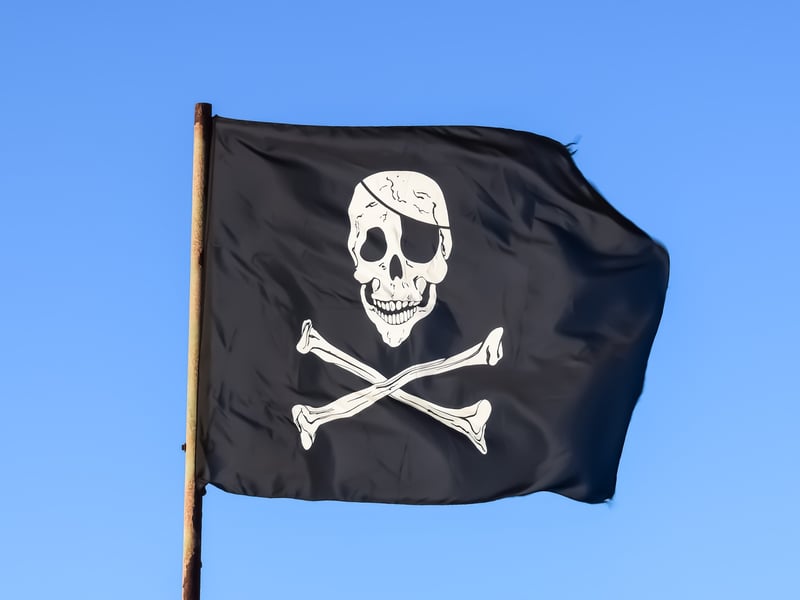
RICHMOND, Va. (CN) — A longstanding copyright dispute over photos and videos documenting North Carolina’s efforts to recover infamous 18th century pirate Blackbeard’s ship landed in the lap of a Fourth Circuit panel Wednesday.
Frederick Allen first suedthe state governor and and several members of the North Carolina Department of Natural and Cultural Resources in 2015, claiming that the new “Blackbeard’s Law” — which labeled photographs and recordings of a shipwreck in the custody of a state agency public records — “specifically targeted Allen’s body of work,” treating his nearly two decades of work videographing the state’s recovery of the ship, the Queen Anne’s Revenge, as public record, rather than copyrighted material.
The case previously reached the U.S. Supreme Court, which affirmed a previous Fourth Circuit finding that although the Copyright Remedy Clarification Act abolishes claims of sovereign immunity, it is invalid because it exceeded Congress’s constitutional power.
“They were immune from copyright infringement,” Adam Adler, counsel for Allen, argued Wednesday. “That doesn’t mean that the state then has free license to violate due process by infringing copyrights freely. Just because we can’t sue them doesn’t mean it’s right to infringe, doesn’t mean it’s right to steal property.”
Allen registered 13 copyrights, each covering a year of videos. State agents, who shared his work on the internet, later settled with him over the infringement in 2013, with the department agreeing to not use the footage without his permission.
But once Blackbeard’s Law passed, Allen said, the state began displaying his photographs again without his permission and attribution — including using the photos in a magazine, displaying them in a state museum and handing out copies of his work.
The defendants are not entitled to sovereign immunity, Allen argued in his brief, and their copyright infringement deprived him of his property. The infringement escalated, he said, when he asked them to stop. They didn’t provide him with any resolution process to challenge the infringements, he said, let alone a sufficient process.
A lower court reopened the litigation following the Supreme Court ruling, allowing Allen to file an amended complaint and assert a new claim that the copyright infringement violated the Fourteenth Amendment’s due process clause, abrogating the state’s sovereign immunity.
North Carolina Governor Josh Stein appealed, arguing in briefings that allowing the case to be reopened exceeded the statute of limitations.
Adler told the court Wednesday that it didn’t have jurisdiction over the case being reopened, as the appeal was not filed quickly enough and the order it appeals is not a final judgment. No exception allowing an interlocutory appeal applies in this case, he said.
“Defendants are challenging an order granting plaintiff leave to file an amended complaint,” he said. “That’s exactly the sort of issue that should not be the subject of an interlocutory appeal.”
U.S. Circuit Judge Robert Bruce King didn’t bite, pointing out that the plaintiffs, Allen and his company Nautilus Productions, are attempting to assert a new legal theory years into the litigation.
“It flies in the face of the fact that both our court and the Supreme Court held the state immune from copyright,” the Bill Clinton appointee said. “And you’re now trying to find a theory to get around both courts.”
Nicholas Brod, counsel for the defendants, said that the plaintiffs are trying to execute a do-over, and that the case has exhausted the legal process.
“The court gave Mr. Allen a do-over to assert a claim that he could have raised 10 years ago, and now 10 years after the filing of the original complaint, you know, five years after the U.S. Supreme Court decision, we’re 12 years now from the settlement agreement in 2013 that gave rise to a lot of this litigation. Witnesses move, memories fade. We’ve defended this case all the way up to the United States Supreme Court,” he said. “There’s clear prejudice to us from continuing a case that should have ended.”
“Basically, your argument comes down to the law generally doesn’t like a second bite,” said George H.W. Bush-appointee U.S. Circuit Court Judge Paul Niemeyer. “And this is a second bite because there’s not new developments.”
“I don’t see anything on this record that indicates that the district court could have acted within its discretion to revive the case,” said Brod. “This case should have been over.”
“This isn’t a do-over,” Adler said.
A plaintiff who has their case dismissed without prejudice — which allows them to refile — is able to file a new complaint with different legal arguments. The only difference here is that there was an appeal in the process, he said.
“There’s nothing unusual happening here,” Adler said. “There’s just a plaintiff who sees a problem in his complaint and wants to get a resolution of the merits.”
In an email after the hearing, Adler said “We continue to believe that state-sanctioned copyright infringement is unconstitutional and unlawful. The state’s latest effort to obtain premature relief on procedural issues is improper and, if allowed, would overwhelm the courts by allowing disgruntled litigants to bring multiple appeals mid-case — delaying trials and clogging appellate courts. We look forward to the Fourth Circuit’s ruling on these important issues.”
U.S. Circuit Judge Pamela A. Harris, a Barack Obama appointee, also served on the panel, which did not say when it planned to rule on the case.
The state did not immediately reply to a request for comment after the hearing.
 Follow @SKHaulenbeek
 Follow @shaulenbeek.bsky.social
Subscribe to our free newsletters
Our weekly newsletter Closing Arguments offers the latest about ongoing trials, major litigation and rulings in courthouses around the U.S. and the world, while the monthly Under the Lights dishes the legal dirt from Hollywood, sports, Big Tech and the arts.