
 Search Articles


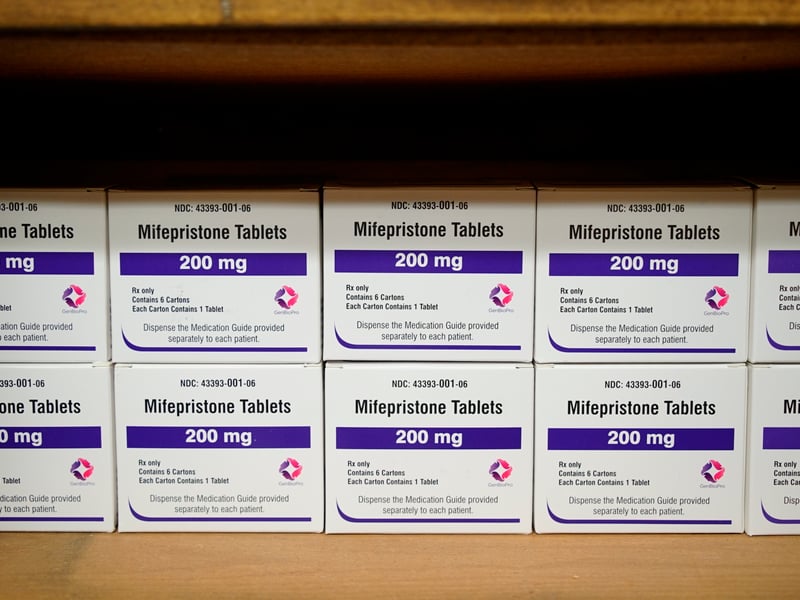
(CN) — A Fourth Circuit panel upheld a West Virginia law that bans most abortions, including drug-induced abortions.
U.S. Circuit Judge J. Harvie Wilkinson III, a Ronald Reagan appointee, wrote in a 28-page opinion that the federal government’s role in the regulation of medicine does not prevent the Appalachian state from enforcing its own law promoting public health and safety.
GenBioPro, a maker of the generic version of the abortion drug mifepristone, challenged West Virginia’s Unborn Child Protection Act, which bans most abortions, including those that are drug-induced. The drugmaker argues the state law is preempted by the Food and Drug Administration Amendments Act of 2007, which provides the FDA sole authority to regulate certain medications, including mifepristone.
The three-judge panel appeared hesitant to wade into the controversial waters of abortion after the U.S. Supreme Court’s decision in Dobbs v. Jackson Women’s Health Organization effectively eliminated a federal constitutional right to the medical procedure.
“For us to once again federalize the issue of abortion without a clear directive from Congress, right on the heels of Dobbs , would leave us one small step short of defiance,” Wilkinson wrote.
U.S. Circuit Judge DeAndrea Gist Benjamin, a Joe Biden appointee, argued in a 16-page dissenting opinion that West Virginia’s law upsets the constitutional balance between the federal and state governments by usurping the FDA’s “clear authority” to regulate mifepristone.
“The twin sensitivities of abortion access and states’ rights cannot influence our willingness to recognize the (FDA’s) clear authority in this area,” Benjamin wrote.
Mifepristone is the first in a two-drug regimen.) used to terminate pregnancies within 10 weeks of conception. Approved by the FDA in 2000, mifepristone blocks the hormone progesterone, which is needed for the pregnancy to continue. Its counterpart, misoprostol, causes uterine contractions.
In 2019, GenBioPro received FDA approval to sell a generic version of mifepristone, which is also known by the brand names Korlym and Mifeprex.
West Virginia passed the Unborn Child Protection Act on the heels of Dobbs , making it a felony to sell, prescribe or dispense mifepristone to induce an abortion, except in certain circumstances. Prescription of the drug by telemedicine is also prohibited.
GenBioPro sued state authorities in January 2023, arguing the FDA had sole power to regulate mifepristone.
U.S. District Judge Robert Chambers granted summary judgment in favor of the state and dismissed the case in substantial part later that year. The Bill Clinton appointee determined West Virginia had the authority to regulate the health and safety of its citizens, which included access to abortion drugs.
Arguments continued at an appeal hearing in October.
Erin Hawley, an attorney for the D.C.-based conservative advocacy group Alliance Defending Freedom, argued the FDA Amendments Act set the floor — not the ceiling — for drug regulation. If a state determines that a drug, like mifepristone, poses a significant threat to the health and safety of its citizens, it has the authority to impose additional regulations for use, Hawley said.
David Frederick of the D.C.-based firm Kellogg, Hansen, Todd, Figel & Frederick represented GenBioPro. He countered that the 2007 act contained clear language granting federal regulators the sole authority to provide safe access to drugs with known health risks that were otherwise unavailable.
Wilkinson expressed skepticism of the drugmaker’s arguments during the hearing, wondering aloud if there needed to be a clear expression of intent from Congress to displace state authority.
On Tuesday, Wilkinson wrote that the 2007 act fell “well short” of expressing that intent.
The federal law regulates how mifepristone must be prescribed and dispensed if a medical abortion is performed, but it is silent on whether such a procedure is permitted, Wilkinson reasoned. Abortion regulation historically falls within the domain of states and nothing in the 2007 act changes that.
“The FDAAA authorized the FDA to establish minimum safety rules for administering drugs like mifepristone where they may be legally prescribed,” Wilkinson wrote. “It did not create a right to utilize any particular high-risk drug, which would have constituted a significant intrusion into a state’s traditional authority to protect the health and welfare of its citizens.”
Benjamin countered in dissent that the Unborn Child Protection Act usurped federal authority by criminalizing an act medical professionals are federally certified to perform — prescribing mifepristone.
“It invades the very space occupied by the federal government and reserved for federal oversight — the regulation of medication,” Benjamin wrote.
U.S. District Judge Rossie D. Alston Jr., a Donald Trump appointee, joined Wilkinson’s opinion.
 Follow @SteveGarrisonPC
Subscribe to our free newsletters
Our weekly newsletter Closing Arguments offers the latest about ongoing trials, major litigation and rulings in courthouses around the U.S. and the world, while the monthly Under the Lights dishes the legal dirt from Hollywood, sports, Big Tech and the arts.