Search Articles



(CN) — France can make porn sites check users’ ages and stop navigation apps from tipping off drivers about police operations, but Europe’s highest court said Tuesday that Paris cannot skip the EU process when those services are based elsewhere in the bloc.
The Court of Justice of the European Union ruled that French efforts to shield minors from online pornography and prevent motorists from dodging certain police checks pursue legitimate public-interest goals. Age-verification requirements and restrictions on certain police alerts are compatible with EU law in principle, the judges said, even when they affect services established in another member state.
XVideos operator WebGroup Czech Republic, XNXX owner NKL Associates and navigation-app company Coyote each challenged France’s attempt to police services headquartered in other EU countries.
French lawmakers have long argued that a simple click confirming a user is over 18 offers little protection when explicit material is only seconds away. Under the French regime, media regulator ARCOM can pressure websites to adopt stronger age-verification tools and seek court orders blocking services that fail to comply.
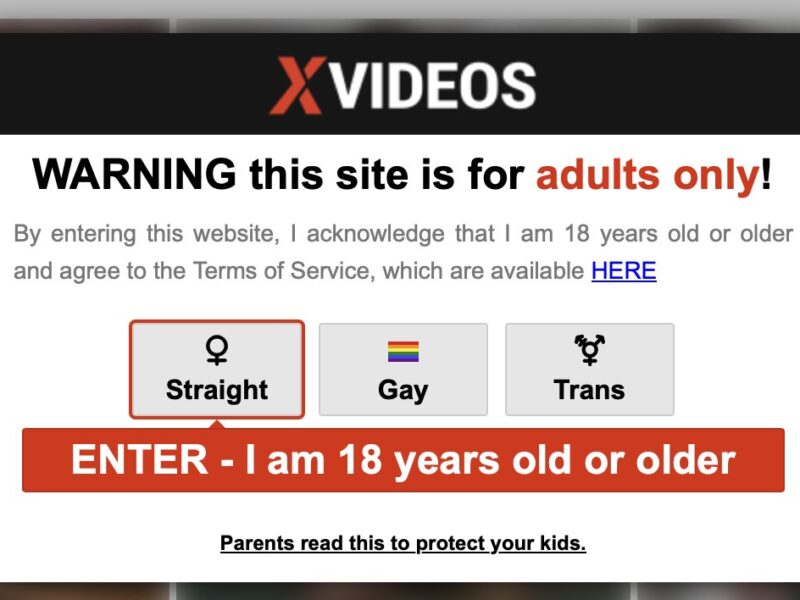
The operators of XVideos and XNXX argued that France was trying to export its rules beyond its borders by forcing Czech-based websites to comply with French age-verification requirements. Judges disagreed, finding that age-verification requirements regulate the operation of an online service and therefore fall within what EU law calls the “coordinated field,” including “requirements concerning the conduct of the service provider, the quality of the service or the content of the service.”
France did not get everything it wanted, however. Before restricting a service established elsewhere in the bloc, it generally must consult the provider’s home country and notify the European Commission rather than relying solely on broad national legislation.
French authorities make a similar argument about alerts warning motorists of certain roadside police operations, saying they can undermine efforts to catch drunk drivers, drug-impaired motorists and people sought by law enforcement. Coyote countered the restrictions interfere with an online service that, under EU law, is generally regulated by the country where it is based rather than by every member state where it operates.
Judges again sided with France on the objective itself. Limiting the redistribution of information about certain police operations may serve public-safety goals, they said. But the measure remains subject to the same EU framework governing cross-border online services.
The court also rejected France’s argument that measures tied to criminal law or public security automatically fall outside the bloc’s digital-services rules. Labels alone are not enough, the judges indicated. If a measure regulates how an online service operates, EU law still governs how it can be enforced.
That aspect of the ruling stood out to Paul De Hert, a professor of criminal law and fundamental rights at Vrije Universiteit Brussels and an associate professor at Tilburg University. He said the judgment confirms that member states can pursue stronger protections for minors online, but generally cannot act unilaterally against services established elsewhere in the EU. Instead, they must rely on the directive’s case-by-case derogation procedure.
De Hert said the judges adopted a respectful tone toward governments seeking to protect young people online while remaining faithful to the court’s longstanding preference for existing EU rules. He was particularly struck by the court’s response to France’s claim that criminal-law measures fall outside the bloc’s digital-services framework.
“The question remains: Is the criminal law loophole for member states to step outside the EU law framework firmly closed or not?” De Hert said.
Alexandre Humain-Lescop, a digital-law researcher and lecturer at Institut Polytechnique de Paris, said the ruling’s logic could eventually be tested in disputes over social media age-verification laws.
Several European governments are considering age-verification requirements for social media platforms, but Humain-Lescop said the legal analysis may be different. Unlike pornography sites, social media can also serve children’s interests by supporting expression and access to information.
“A strict prohibition of access could therefore appear disproportionate,” he said.
With the European Commission — the bloc’s executive body — already considering bloc-wide age-verification rules, Humain-Lescop said future national restrictions on social media access may be shaped in Brussels before they are ever tested in Luxembourg. Any such measures would likely face commission scrutiny at the drafting stage, he noted, potentially narrowing the issues that eventually reach the court.
XVideos, meanwhile, said the ruling addresses legal authority rather than whether age-verification measures actually protect children.
“The real question is whether years of restrictions targeting adult websites have produced meaningful results for child protection,” the company said in a statement. “Regulators should focus on measures that demonstrably work, rather than repeatedly targeting a single category of websites.”
Representatives for the French government, NKL Associates and Coyote did not respond to requests for comment.
There is no appeal from a preliminary ruling of the Court of Justice. The cases now return to the French courts, but one point is no longer up for debate: France can keep pushing age checks and police-alert restrictions, though not without Brussels in the loop.
Courthouse News reporter Eunseo Hong is based in the Netherlands.
Subscribe to our free newsletters
Our weekly newsletter Closing Arguments offers the latest about ongoing trials, major litigation and rulings in courthouses around the U.S. and the world, while the monthly Under the Lights dishes the legal dirt from Hollywood, sports, Big Tech and the arts.