Search Articles


PARIS (CN) — Military leaders from 30 countries convened in London this week to plan a defensive strategy that would ensure free passage through the Strait of Hormuz in the long term.
“The task [on Wednesday and Thursday] is to translate diplomatic consensus into a joint plan to safeguard freedom of navigation in the strait and support a lasting ceasefire,” U.K. Defense Secretary John Healey said in a statement.
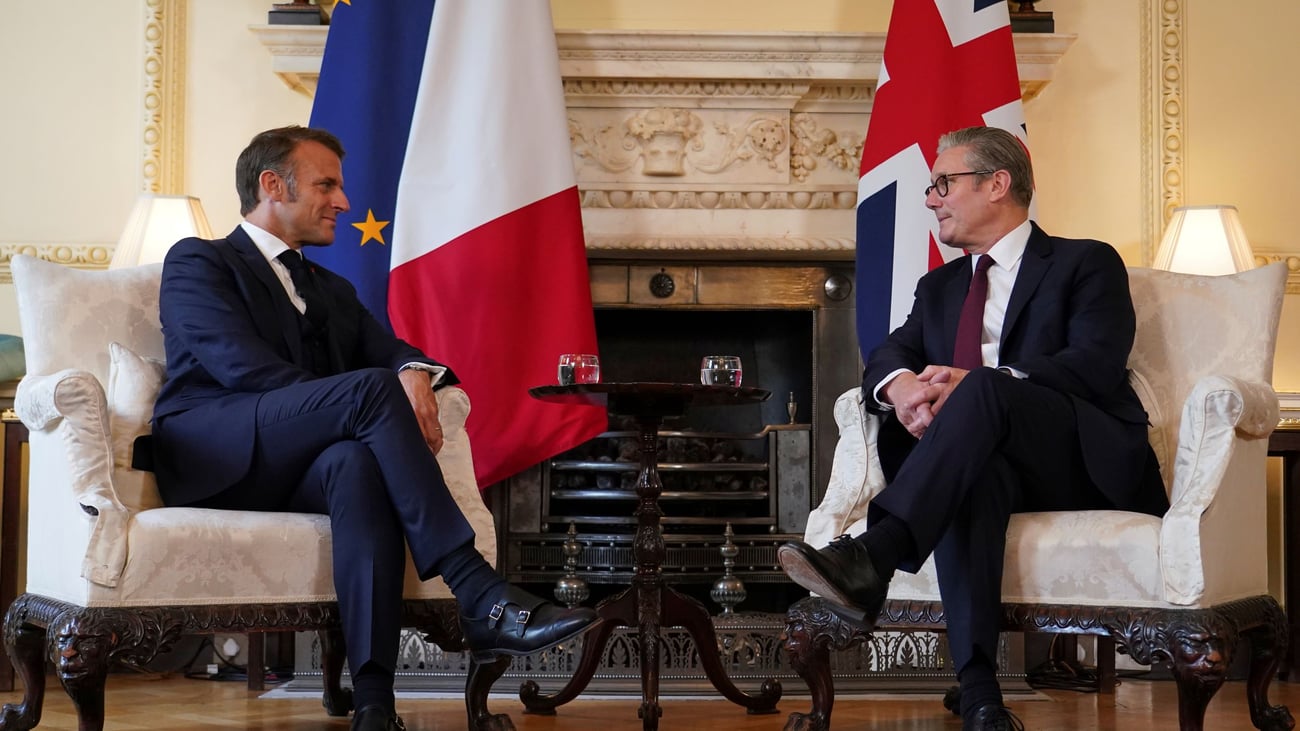
The meeting has been framed as the next step in a mission that French President Emmanuel Macron and U.K. Prime Minister Keir Starmer unveiled in Paris last Friday. However, Starmer repeatedly clarified that such a task force would only come into play “when conditions allow,” meaning when the Iran war comes to an end.
Experts are struggling to imagine what this mission could actually achieve.
Adel Bakawan, the director of the European Institute for Studies in the Middle East and North Africa, believes Europe’s initiative to bring diplomacy back into this regional war is a good thing. In reality, though, symbolism alone will not influence what happens in the Strait of Hormuz.
“What is the European initiative? We intervene to secure the Strait of Hormuz once the war is over,” he said. “But if the war is over, it’s because there was an agreement between the United States and the Islamic Republic of Iran, and if there was an agreement, it’s because that agreement guarantees the security and stabilization of the Strait of Hormuz.”
The strait is a critical shipping route for Europe, and the continent has already suffered consequences in the tumultuous weeks after Iran announced its closure on March 27. On Thursday, the airline Lufthansa announced that it would cut 20,000 flights for the next six months in response to a looming jet fuel crisis triggered by Hormuz blockages.
But Bakawan views Europe’s mission as giving itself a “pat on the back” that serves no actionable purpose. European leaders have been firm about not getting involved in the war — in France, a recent Ipsos poll showed that roughly 75% of people disagree with the U.S. and Israel’s actions in the region — raising questions over how such a framework could work in practice.
“If the Islamic Revolutionary Guard Corps ever tells Europeans, Arabs, Gulf nations, ‘No, we won’t let you enter the Strait of Hormuz, we won’t let you secure the Strait of Hormuz,’ do you go to war? A war against the Revolutionary Guard? Of course not,” Bakawan said. “In that case, this initiative — forgive me for saying so — is doomed from the start.”
This puts Europe in a difficult bind.
Andrea Teti, an associate professor of political science at the University of Salerno, believes the continent has led itself into a “dead end” — it still relies on oil and gas, and the U.S. is pressing leaders to put more resources into their “theater.” However, this would require economic and military resources already being used to support Ukraine.
“Europe cannot sustain war on two fronts,” he said. “So Europeans are militarily and economically overextended, geopolitically isolated and — if you listen to the Germans, the Italians and the EU Commission — they are busily taking themselves into confrontations they are not able to sustain.”

As of Thursday evening, any developments from the military strategy meeting were still under wraps. But there’s no indication there will be a continent-wide naval presence in the region in the short term.
“If there is a desire to have some kind of European coalition, it isn’t taking shape — neither in terms of the mission nor the timing — since, apart from the French who sent a carrier strike group, we also know that the Royal Navy is having great difficulty maneuvering in the region,” said Jonathan Piron, a historian specialized in the Middle East. “In fact, at the start of the conflict, we saw repeated failures to deploy naval elements far enough, with those famous destroyers, I believe, that didn’t leave on time, or some that left and then returned.”
For Jehan-Christophe Charles, an associate researcher at the Mediterranean Foundation for Strategic Studies who previously worked in the navy and defense industries, some of the biggest challenges of establishing this mission would be organizational.
“The technical challenge would be getting navies that aren’t used to working together to cooperate,” he said. “Then, in practical terms, we draw boxes and tell the ships to stay in their box and report everything that happens … with very strict rules of engagement, which may differ depending on the country.”
However, for Charles, even if Europe has been sidelined from negotiations on the Strait of Hormuz, it’s important that it continues to advocate for the right to freedom of navigation, trade at sea and the ability to cross the waterway without charge. The challenge is turning diplomacy into something more actionable.
“I’m not certain that the United Kingdom and France currently have enough political weight to bring everyone else along,” Charles said.
 Follow @lilyradz
Subscribe to our free newsletters
Our weekly newsletter Closing Arguments offers the latest about ongoing trials, major litigation and rulings in courthouses around the U.S. and the world, while the monthly Under the Lights dishes the legal dirt from Hollywood, sports, Big Tech and the arts.
Additional Reads
 EU leaders, Zelenskyy to celebrate unblocked funds in Cyprus April 23, 2026
 Duterte now faces trial over drug war at the ICC April 23, 2026