
 Search Articles


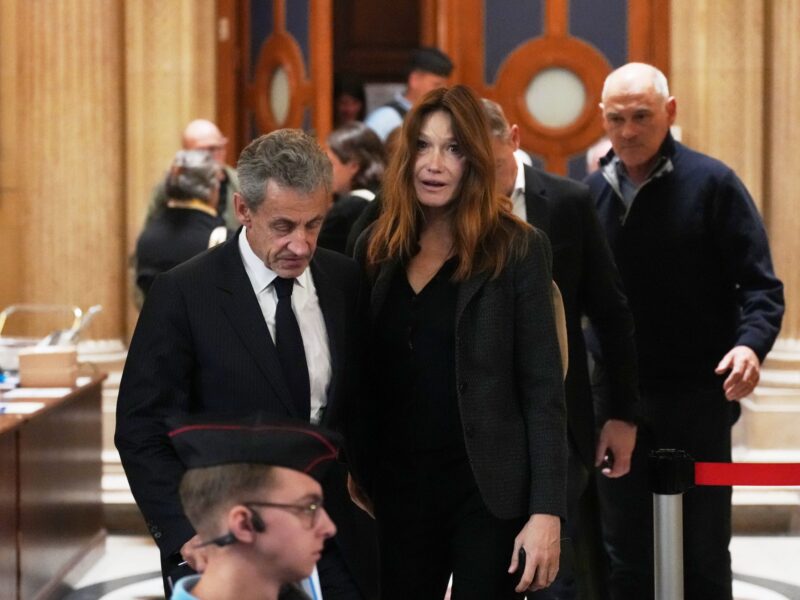
PARIS (CN) — “I am innocent,” former French President Nicolas Sarkozy told the Paris Court of Appeal Tuesday, speaking in a packed room under frescoes and chandeliers. “The truth is that there wasn’t a single Libyan cent in my campaign.”
Roughly six months ago, Sarkozy was found guilty of criminal conspiracy over Libya’s financial involvement in his successful 2007 presidential campaign. In France, candidates cannot receive donations of more than about $5,000 from individual donors; but prosecutors said the former autocratic Libyan ruler Moammar Gadhafi bragged to the media about contributing $58 million to Sarkozy’s fund.
Although the court ultimately couldn’t verify the payments went through, it deemed that the scheme was enough to convict Sarkozy for criminal conspiracy. He was acquitted on other charges, including receiving stolen goods, passive corruption and willfully underreporting accounting entries in an election campaign account.
Despite the acquittals, the court fined Sarkozy roughly $120,000 and banned him from running for public office for five years. But the verdict had historic consequences; Sarkozy was also sentenced to five years imprisonment with immediate effect, and became the first French president to go to prison. He was freed 20 days later and published a book about his prison stint, which sold almost 100,000 copies in the week after it was published on Dec. 10 2025.
Now, Sarkozy is back in court to appeal the charges. Tuesday was the first day he testified after the trial, which will reexamine all evidence and testimony, began on March 16.
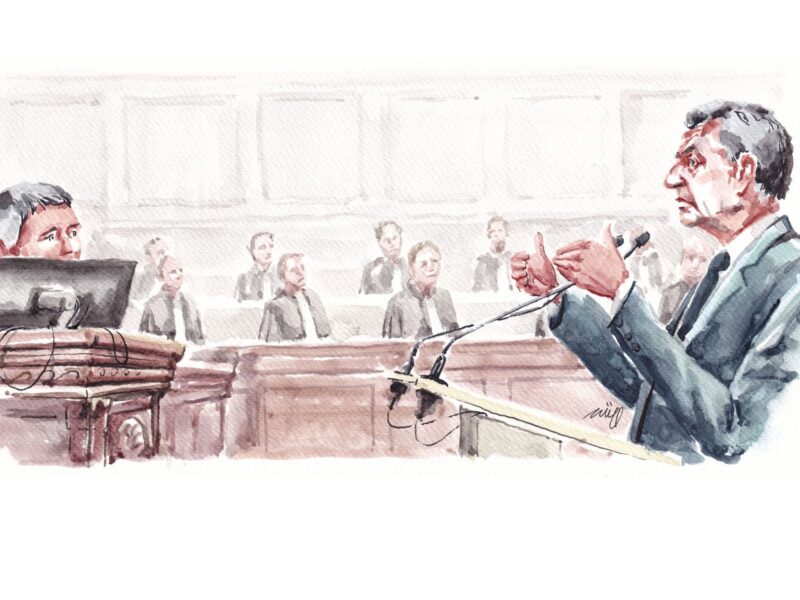
On Tuesday afternoon, Sarkozy sat in the front of the courtroom where lawyers huddled around him, waiting for the second round of hearings to begin. He spoke animatedly, shrugging and gesticulating with his arms. The lawyers leaned over the table to listen.
When the courtroom was called to stand, Sarkozy tossed some blank sheets of notepaper onto the stand, and took his position.
Throughout the next few hours, presiding Judge Olivier Géron probed a complex web of people, dinners, locations and connections. He began by asking Sarkozy to define his predecessor Jacques Chirac’s relationship with Libya. Sarkozy held various posts in Chirac’s cabinet, including interior minister.
“It was a policy of reintroducing Libya onto the international stage, and Jacques Chirac went along with the movement,” he said with conviction. “He didn’t open the door, but the idea was not to be left behind, hence the trip he made in 2004.”
That year, some western countries were beginning to normalize relations with Gadhafi. The former U.K. Prime Minister Tony Blair also traveled to Libya to open talks.
Sarkozy traveled to Libya around this time, prompting Géron to question the objectives behind his trip. The former president said he was sent to try to “manage migration flows at the border” and enforce deportation orders.
Two names repeatedly came up during the hearing: Former Interior Minister Claude Guéant, and Ziad Takieddine, a Lebanese businessman who claimed to have proof that Libya contributed significant funding to Sarkozy’s campaign. He told the French investigative outlet Mediapart millions of euros were smuggled in suitcases to Sarkozy and Guéant, which he later confirmed to investigators.
Takieddine died on Sept. 23, 2025, two days before the verdict of the initial trial was handed down.
On Tuesday, Sarkozy told the court he wasn’t aware of the “close relationship” between the two, who have become critical figures in the investigation.

The case has also raised questions about Abdallah Senoussi, Gadhafi’s brother-in-law. He was responsible for the bombing of UTA passenger flight 772 that killed 170 people, including 54 French citizens, over Niger in 1989. Senoussi was sentenced in absentia to life in prison.
In 2005, Guéant had dinner with Senoussi. And investigators found another former interior minister, Brice Hortefeux, met with Senoussi the same year. The meetings were kept secret, and Sarkozy said he was not aware they ever happened.
When Géron mentioned a note left by Takieddine, which might have implied Sarkozy had also met Senoussi, Sarkozy lost his composure and raised his voice in the courtroom.
“Do I need to remind the court that Mr. Takieddine has consistently lied?” he said, throwing his arms into the air. “Am I supposed to be foolish enough to have a phone conversation with [the person] responsible for the deaths of 54 French citizens?”
Prosecutors have argued Sarkozy’s campaign financing was part of a wider “corruption pact,” where Libya would donate funds in exchange for diplomatic leverage. They said lessening Senoussi’s sentence could have been a condition for funding the campaign.
This prompted 13 family members of those killed in the attack to join the appeal as civil parties.
“So, the families of the victims of this plane crash … are also heavily involved in this trial,” Jean-Yves Camus, a political scientist, researcher and author specializing in far-right movements, said. “There are many French victims, and as a result, it is no longer just about money; it is also about whether the president’s two closest aides met someone directly responsible for the deaths of French citizens in a plane crash, for which the full truth has never been established.”
On Tuesday morning, Sarkozy took the opportunity to address the family members.
“We must respond to the victims, because … they have suffered, and I can understand that 36 years later, the pain and anger remain,” he said. “I owe them truth, just as I owe it to the French people. You can’t repair suffering with injustice — I am innocent.”
Sarkozy will appear for another full day of hearings on Wednesday, which are expected to extend into Thursday and possibly longer. A verdict is scheduled for the fall.
 Follow @lilyradz
Subscribe to our free newsletters
Our weekly newsletter Closing Arguments offers the latest about ongoing trials, major litigation and rulings in courthouses around the U.S. and the world, while the monthly Under the Lights dishes the legal dirt from Hollywood, sports, Big Tech and the arts.
Additional Reads
 American journalist Shelly Kittleson has been released April 7, 2026
 Graft trial of Spanish PM's former top aide begins April 7, 2026