
 Search Articles


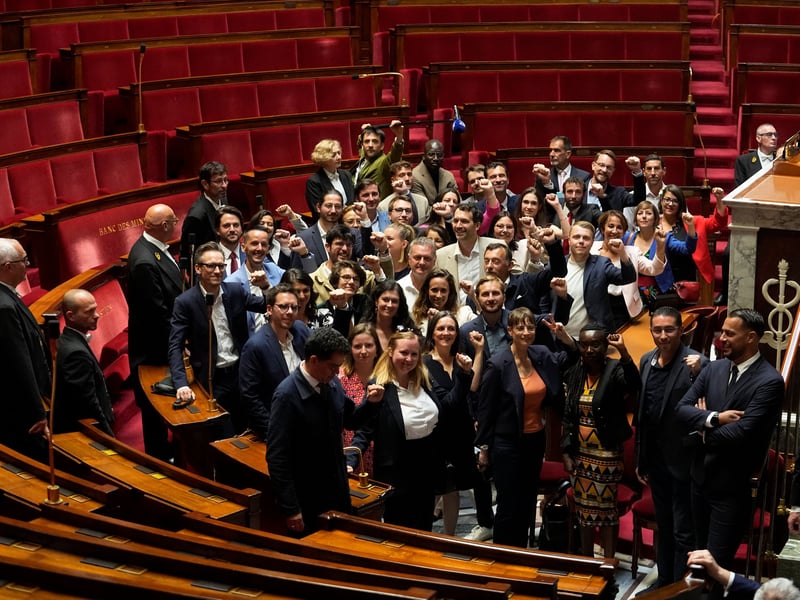
PARIS (CN) — On Tuesday, France’s newly elected deputies entered a fractured National Assembly, with the top-performing leftist coalition in talks to form a governing majority following the inconclusive results of the country’s snap elections.
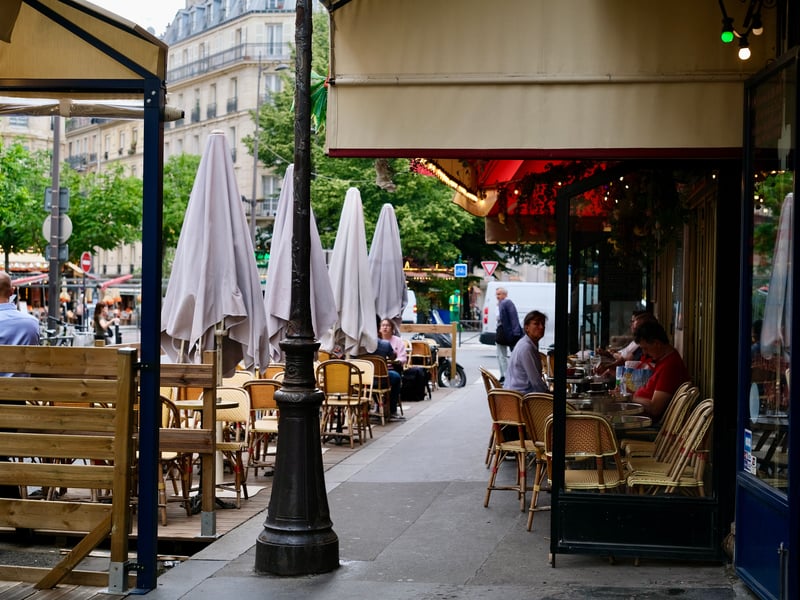
Paris’ streets were quiet as scattered showers rained down on empty café terraces. The city tends to shut down in July and August, when residents leave for sunnier places, leaving an air of calm. But inside the government, modern France has never been in such a state of chaos.
No group established a clear majority in Sunday’s election, leaving the government in an unprecedented modern state of division that could mean months of uncertainty.
Leaders of the three main parties in the top-performing leftist coalition — the hard-left France Unbowed, the Socialists and the Greens — are negotiating with other groups in hopes of finding enough support to take control. Their efforts are anything but certain to yield results.
A group needs an absolute majority of 289 of the 577 seats in the assembly, the more powerful of France’s two legislative chambers, to avoid political deadlock and pass legislation.
Three big blocs came out on top, but none were close to having the numbers necessary to govern: The New Popular Front won 182 seats, Macron’s centrist Ensemble coalition got 168 seats and the far-right National Rally earned 143, far short of the majority some predicted for the controversial RN party but still besting their previous showing of 89 seats in 2022.
After the first round of voting June 30, over 200 third-place candidates withdrew from the final races to give non-RN candidates a better chance of beating the far-right party, a strategy that seems to have worked.
President Emmanuel Macron’s decision to dissolve the government on June 9 threw France into a state of pandemonium, with its future seemingly hanging in limbo. Though the loudly predicted far-right win didn’t materialize, the results haven’t brought much clarification.
“I’m afraid that if [the left] can’t reach out beyond the aisle and really form a dialogue with the other parties, it will really devastate that the French economy and its social life, and that that could bring back the right wing,” Hall Gardner, a professor of politics at The American University of Paris, told Courthouse News. “So it’s very important in my view that the left reach out to the centrist and even the right wing in order to maintain France’s stability.”
There are some deep rifts within the French left that could prove stumbling blocks for new alliances. The most controversial figure is Jean-Luc Mélenchon, the left-wing leader of France Unbowed, known as LFI. He is perceived as radical and extreme, especially after his refusal to call Hamas’ Oct. 7, 2023, attack on Israel an act of terror. His position sparked outrage across the political spectrum.
Mélenchon and Macron have each said they would not form a coalition together. Other parties on the left have also tried to distance themselves from Mélenchon. But his voice remains the loudest in the room.
“I have hope that those members of the left will reach a deal among themselves, but then they also have to reach out to Ensemble and the centrists,” Gardner said. “So that’s going to be the real dilemma for them because Mélenchon, and the LFI party, for the most part, is pretty dogmatic and doesn’t want to reach too far out across the aisle to the other political parties.”
Although Prime Minister Gabriel Attal handed in his resignation on Monday, Macron refused it, asking Attal to remain in his position for now “to ensure the stability of the country.” There is no clear front-runner to replace Attal, though the top negotiator for the Socialist party, Johanna Rolland, said Mélenchon won’t get the job.
The president appoints the prime minister, who is accountable to parliament and can be ousted through a no-confidence vote.
On Tuesday morning, Pascal — who preferred to give only his first name — was working in a wine shop near Montparnasse in a black T-shirt that said “Drink well” in white block letters. Rain poured down as Pascal contemplated the new government. He thinks that voters showed more maturity than politicians, who can be stubborn and unwilling to work together. In his view, the assembly has no choice but to put their differences aside, form new alliances and get to work.
“The political forces need to learn how to engage in dialogue,” he told Courthouse News. “We need to learn to govern together.”
He is optimistic that the political establishment will find opportunity in the government’s shake-up.
“I think it will maybe make them reflect,” he said. “I think these people aren’t stupid, and they’re capable of reasoning, but they could be taken over by party logic and personal logic — we have to hope that they understood something.”
Yael Braun-Pivet, a member of Macron’s centrist alliance and former president of the National Assembly, said “in my view, the French people sent us a clear message. They did not want to give an absolute majority to any specific political bloc so they’re ordering us to listen to one another, work together and that’s what we need to do.”
Others aren’t as hopeful that the government will be able to put aside ideological differences to come together.
Analysts and experts say France could remain in a state of political deadlock.
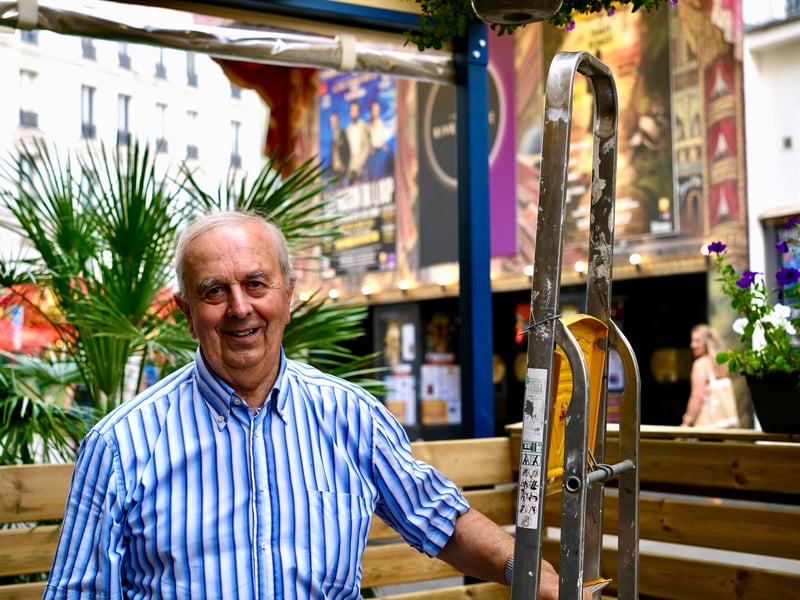
One man, who preferred not to give his name, was repairing string lights outside of a café on Tuesday. He said that other countries look at France and laugh, especially because people don’t work enough, and many take advantage of welfare benefits.
“We don’t see anything in the future for France,” he told Courthouse News. “I didn’t vote — there wasn’t anyone that represented me.”
Macron has three years remaining in his presidential term.
 Follow @lilyradz
Subscribe to our free newsletters
Our weekly newsletter Closing Arguments offers the latest about ongoing trials, major litigation and rulings in courthouses around the U.S. and the world, while the monthly Under the Lights dishes the legal dirt from Hollywood, sports, Big Tech and the arts.