
 Search Articles


(CN) — The Federal Trade Commission sued Live Nation and its subsidiary Ticketmaster on Thursday, claiming the entertainment giant engages in illegal practices that force concertgoers to pay significantly more for event tickets.
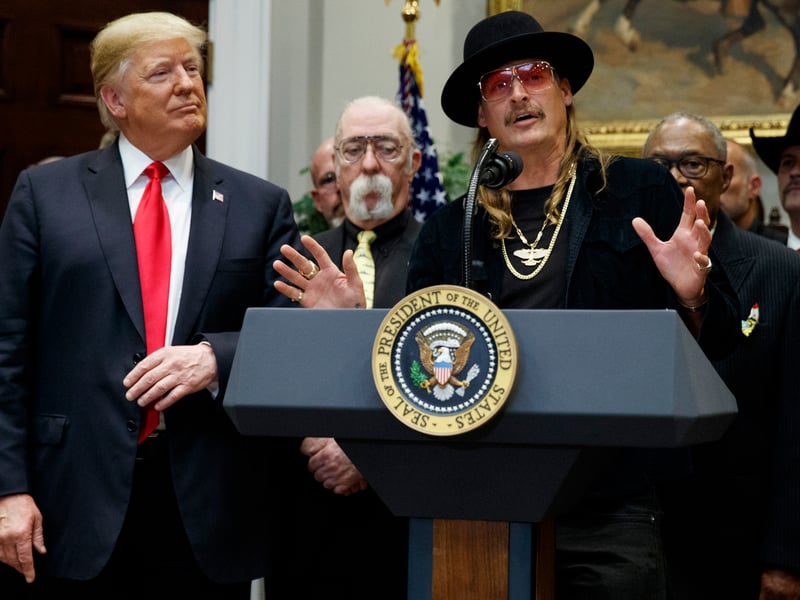
In March, President Donald Trump was joined by recording artist Kid Rock as he signed an executive order to crack down on ticket scalping and price gouging at live events.
“President Donald Trump made it clear in his March executive order that the federal government must protect Americans from being ripped off when they buy tickets to live events,” FTC Chairman Andrew Ferguson said in a written statement. “American live entertainment is the best in the world and should be accessible to all of us. It should not cost an arm and a leg to take the family to a baseball game or attend your favorite musician’s show."
Ticketmaster, which merged with Live Nation in 2010, has a near-monopoly on ticket sales in the U.S., controlling “roughly 80% of major concert venues’ primary ticketing for concerts and a growing share of the secondary market,” according to the FTC’s complaint, which accuses the publicly traded company of three illegal practices. According to the FTC, Ticketmaster routinely adds a series of fees at the end of the purchase, inflating the sale price far above what the listing price stated — a “bait and switch approach.” Second, despite claiming to limit the number of tickets each customer is allowed to purchase, the company lets brokers snatch up far more than the limit and resell the tickets at an enormous markup, the FTC says.
The FTC also accuses Ticketmaster of routinely violating the Better Online Ticket Sales Act, which banned the resale of tickets that were bought using bot technology.
“Rather than enforce their ticket limits and purchasing rules against brokers, defendants knowingly allow, and in fact even encourage, brokers to use multiple Ticketmaster accounts to circumvent Ticketmaster’s own security measures and access control systems,” the FTC says in its complaint. “Defendants’ tacit agreement to allow brokers to circumvent their ticket limits so that those same brokers can then list the unlawfully purchased tickets on defendants’ resale marketplace drives up the price of tickets and leaves ordinary fans unable to access the finite pool of tickets available at their face value.”
At one point, according to a Ticketmaster internal review cited in the complaint, just five brokers controlled 6,345 Ticketmaster accounts, managing to amass 246,407 tickets to 2,594 events.
The practice allows Ticketmaster to “triple dip” on fees, collecting them first from the brokers on the initial purchase, then again from brokers when they list their tickets for sale on Ticketmaster’s website, and then a third time when customers buy tickets on Ticketmaster’s secondary market. According to the FTC, the company made $3.7 billion just from fees on resale tickets from 2019 to 2024.
Ticketmaster offers users a software platform called TradeDesk, which the FTC says in its complaint “enables brokers to aggregate tickets purchased from multiple Ticketmaster accounts into a single interface for simpler resale management. Defendants make TradeDesk available only to high-volume brokers.”
The company also developed a tool that has the ability, according to an employee email quoted in the complaint, “to stop ‘shell accounts’ using fake emails from making purchases. A pattern that both fraudsters AND brokers use to violate limits.” But, according to the employee, the account verification system was “turned … down for now since it was too effective," meaning the “the brokers can go wild again."
Seven states joined the FTC as plaintiffs in the lawsuit, including Florida and Colorado. The plaintiffs want a judge to bar Live Nation and Ticketmaster from violating various federal and state laws, and to order the companies to pay civil penalties.
Neither Live Nation nor Ticketmaster responded to emails requesting a comment on the lawsuit.
 Follow @hillelaron
Subscribe to our free newsletters
Our weekly newsletter Closing Arguments offers the latest about ongoing trials, major litigation and rulings in courthouses around the U.S. and the world, while the monthly Under the Lights dishes the legal dirt from Hollywood, sports, Big Tech and the arts.