
 Search Articles


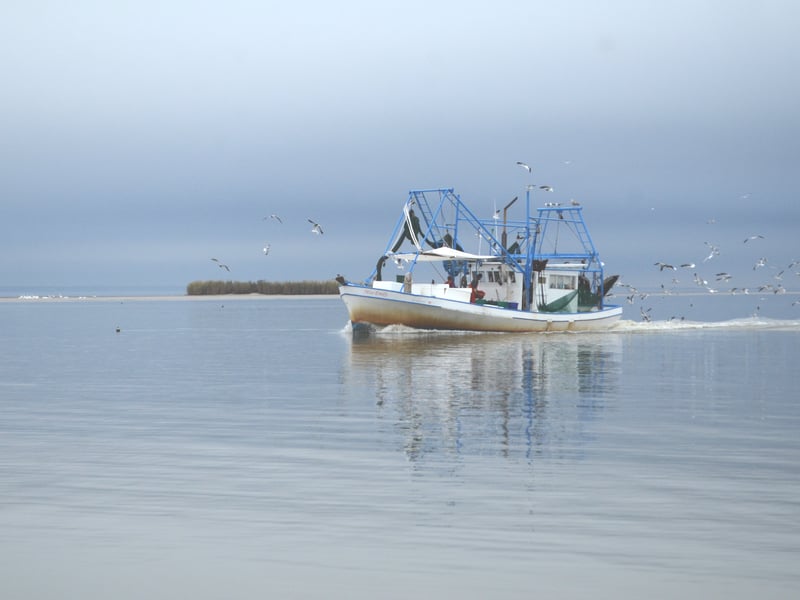
(CN) — The ruse was first exposed in Morgan City last summer, at the Louisiana Shrimp and Petroleum Festival. Acting on a hunch and armed with a rapid genetic test, a team of consultants for the domestic shrimp industry ordered cooked plates of shrimp from five different vendors.
The shrimp was supposedly sourced from the Gulf of Mexico — but within minutes, the consultants say they discovered the truth. Four of the five samples contained genetic markers of imported farm-raised shrimp, not Gulf shrimp like the vendors claimed.
The team was with SeaD Consulting, a Houston-based company dedicated to rooting out seafood fraud. Funded in part by the Southern Shrimp Alliance, an industry group for shrimp fishers and processors, SeaD is pioneering this new type of rapid genetic test, which specializes in identifying shrimp species.
The test has helped bring light to what shrimp-watchers say is a major problem: Fraud and mislabeling in the domestic shrimp supply.
“Ninety percent of shrimp sold in the United States is imported, farm-raised shrimp,” SeaD founder Dave Williams said in a phone interview in December. Much of it comes from Asia and South America, where groups like the World Bank have subsidized aquaculture as a means of economic development. He added: “I have no problem with that product, except when you are implying or deliberately telling people that you’re selling one thing and you’re not.”
And yet across the Gulf region, the company says many food vendors are doing just that. At the National Shrimp Festival in Gulf Shores, Alabama in October, they say they once again found that four out of five samples contained imported shrimp.
It wasn’t just festivals: Testing restaurants across the Gulf and South Atlantic regions, the company says it found a fraud rate of around 79% percent across Florida, Mississippi and Texas. (Louisiana has a much lower rate at 23%, which SeaD says may be due to stricter regulations.) Taken together, they say that amounts to more than a $1 billion loss for the domestic shrimp industry.
“Our sample size is continuously growing, and with it, our understanding of the seafood supply chain,” Williams wrote in one email. “While we do not test every restaurant in every market, our data provides a representative snapshot of seafood fraud along the coast.”
More mislabeled shrimp means less money for domestic shrimpers like Jeremy Zirlott, part of a multigenerational shrimping family in Bayou La Batre, Alabama. Readers may know it as the place where the fictional Forrest Gump gets rich catching shrimp after a hurricane destroys all the other boats in the local fleet.
Zirlott’s three boats have survived several hurricanes. Still, amid a flood of mislabeled foreign shrimp, he says shrimping isn’t all Hollywood magic.
“At the current rate, I would say that in 10 years or less, there’ll be no industry left,” he said in a phone interview.
As domestic shrimpers see their profits go down, they also lay off workers, taking the economic wind out of entire coastal communities.
Zirlott is encouraged by new truth-in-labeling laws passed in Louisiana and Alabama in 2024. He’s hopeful that under President Donald Trump, a critic of foreign trade, Congress will work to protect the U.S. seafood industry.
“I have no problem with a foreign product if that product is not subsidized and goes by the same standards that we have to deal with,” Zirlott said. “But almost nothing in the world is like that anymore. It’s not free trade, it’s all manipulated trade.”
Under former President Joe Biden, regulators went after fraud in the seafood supply. In October, Federal Trade Commission Chairman Alvaro Bedoya sent a warning letter t0 the country’s 10 highest-grossing seafood restaurants. He said he would “not hesitate to request a law enforcement investigation” if there was evidence of seafood fraud. The agency has demanded that restaurants “tell the truth and play by the rules.”
In November, the Justice Department imposed a $1.5 million penalty against a well-known seafood restaurant in Biloxi, Mississippi for misrepresenting imported fish as local. The restaurant’s owner was also criminally sentenced. With Trump only around a month into his second term, it remains to be seen how enforcement under his administration will compare.
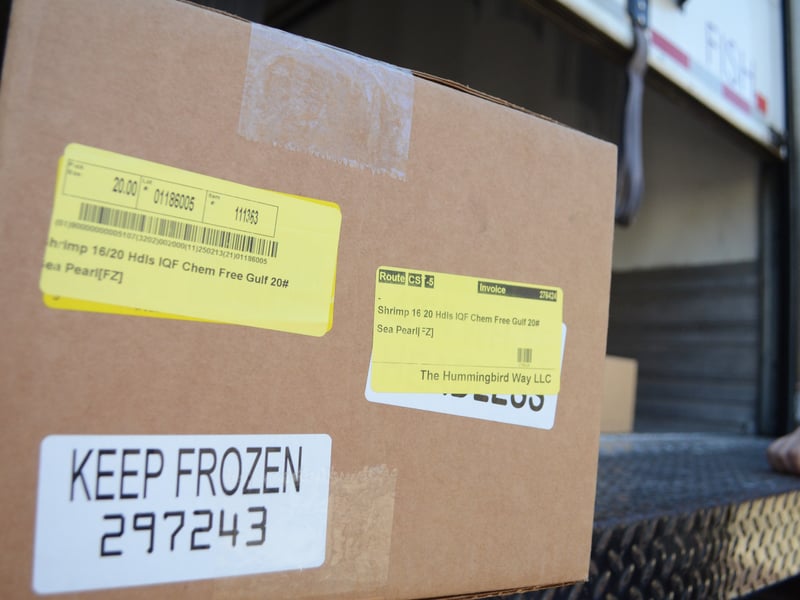
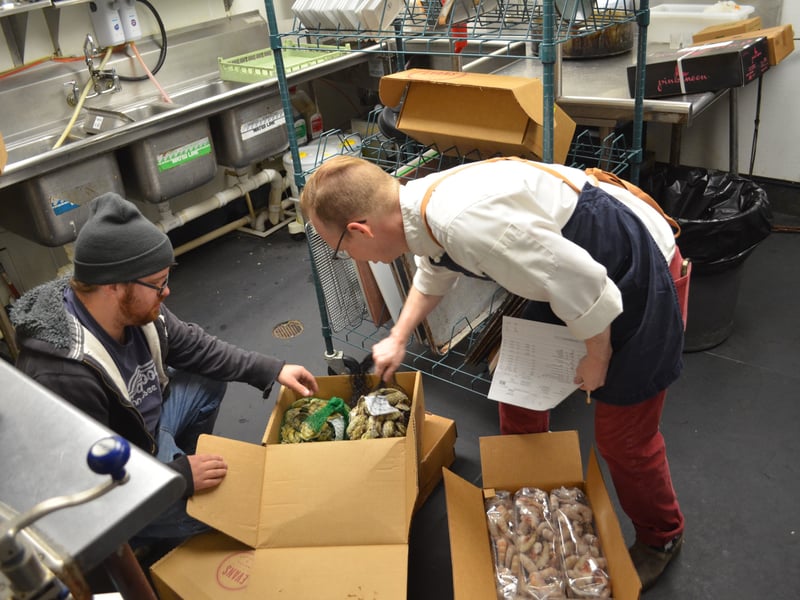
Jim Smith doesn’t condone shrimp mislabeling, but he understands why it happens. A former chairman of the Alabama Seafood Marketing Commission and a working chef, Smith appeared on two seasons of “Top Chef” and won the Great American Seafood Cook-Off in 2011. He now runs The Hummingbird Way Oyster Bar in Mobile, Alabama.
“There’s only one reason not to serve local shrimp, and it’s money,” Smith said in a phone interview in February. “It may be nice to pay $5 for a big plate of shrimp, but alarm bells should be going off in your mind.”
Like the Southern Shrimp Alliance, Smith warned of labor violations in the foreign shrimp supply. Domestic shrimp has better taste and consistency, he said, and savvy diners seek it out. He gets most of his shrimp from Alabama suppliers, except for some delicacy rock shrimp, which he imports from Florida.
“You can either pay a little bit more and trust that you’re getting a good quality product that was made by your neighbors, or you can pay a little bit less and sort of not know anything about where it comes from,” Smith said. “For me, it’s not a choice.”
That’s one reason why the domestic shrimp industry is so up in arms about mislabeling: It robs consumers of the choice to shop local. Savvy foodies aside, many consumers can’t differentiate between wild domestic and imported farm shrimp, said Dave Williams, the SeaD founder.
“If all the restaurants that implied they served domestic shrimp actually served domestic shrimp, our industry wouldn’t be in the problem it is,” he said.
With its tests, SeaD hopes it can bring some transparency to the market. Erin Williams, chief operating officer at the company and Dave Williams’ daughter, helped develop the rapid genetic test for Atlantic shrimp while working with Prashant Singh, a microbiologist at Florida State University.
Unlike traditional genetic testing, which analyzes entire gene sequences, SeaD’s test quickly searches for critical gene markers that can be used to identify Atlantic white shrimp. It fits in a suitcase, delivers results in minutes and works on raw and cooked specimens.
“Our genetic test has undergone peer review and is based on patent-pending technology that frequently outperforms traditional barcoding methods” for gene sequencing, Dave Williams beamed in an email. He added that the accuracy and reliability of the test — to say nothing of its speed — made it an important tool for those in the shrimp industry eager to tamp down on fraud.
For now at least, the company is not calling out alleged shrimp fraudsters. Erin Williams said the company’s goal is not to name and shame restaurants but rather highlight establishments that are doing it right. Passing restaurants are listed on the company’s website, indicating to consumers where its testing has backed up claims about local catch.
“There’s a lot of awareness of what’s going on,” Williams said of shrimp mislabeling. In some cases, she noted, SeaD had found multiple restaurants in the same vicinity that were all passing off imported shrimp as local. If a restaurant doesn’t get busted, there’s little accountability to stop them from deceiving consumers. “Who’s actually ensuring authenticity in the supply chain?”
 Follow @gabetynes
Subscribe to our free newsletters
Our weekly newsletter Closing Arguments offers the latest about ongoing trials, major litigation and rulings in courthouses around the U.S. and the world, while the monthly Under the Lights dishes the legal dirt from Hollywood, sports, Big Tech and the arts.