Search Articles



ATLANTA (CN) — Early voting is underway in Georgia’s competitive May 19 primary election, with four top statewide offices up for grabs along with other critical races for congressional seats.
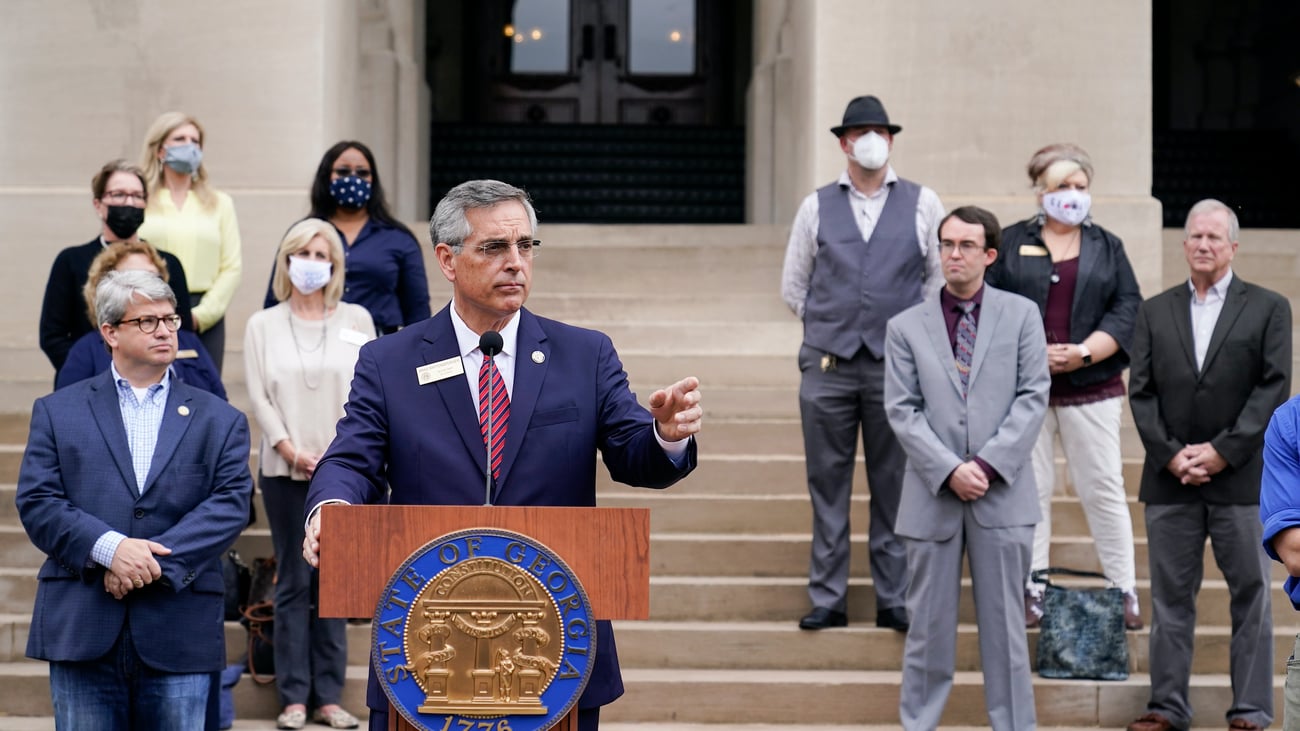
Georgians are choosing a new governor, and voters are already turning out in record numbers across the state. That’s according Secretary of State Brad Raffensperger, whose name appears on the ballot.
Raffensperger and three other Republicans are vying to replace Republican Governor Brian Kemp. Elected for his current term in 2022, Kemp has served for two terms and enjoyed high approval ratings.
Raffensperger has likewise served two terms as the secretary of state. As the top official overseeing Georgia’s elections, his name was thrust into the national spotlight in 2020 when he refuted President Donald Trump’s accusations of statewide election fraud. It’s unclear if that move will ultimately benefit or harm his campaign.
Despite their differences, Raffensperger has supported other Trump policies, including a crackdown on drug trafficking. In 2018, Raffensperger lost his own son Brenton to a fentanyl overdose.
Also on the GOP governor ballot is Rick Jackson, a political newcomer and the billionaire executive of Alpharetta-based Jackson Healthcare. With a $56 million war chest, he’s pulled into the lead in recent polls.
Jackson says he grew up in five foster homes. He wants to pass the Fostering Success Act, allowing foster youth to attend public colleges and universities tuition-free, with no additional cost to taxpayers.
“In a crowded field, name recognition is often the determining factor,” said Kimberly Martin, a Georgia Southern University professor. “Rick Jackson’s lead is largely fueled by a record-breaking self-funded ad blitz.”
“Georgia voters frequently gravitate toward ‘outsider’ candidates,” Martin added. “Rick Jackson has successfully framed himself as a competent outsider. The ability to blanket the airwaves as an unknown candidate gives him a powerful advantage by allowing him to define himself before his opponents could do it for him.”
Another viable candidate, according to Martin, is Burt Jones, who has served as the lieutenant governor since 2023. She credits his competitiveness to his experience in the legislature, his support of recent state income tax cuts and Trump’s stamp of approval.
That endorsement came after Jones stood by Trump’s efforts to overturn his 2020 defeat in the state. But it’s also created new liabilities, including more than $1 million worth of brutal attack ads from a Delaware-based organization called Georgians for Integrity.
Jones has also faced attacks from Jackson and from the fourth name on the Republican governor’s ballot: Chris Carr. Currently the attorney general of Georgia, Carr accuses Jones of blocking legislation from lawmakers who backed his rivals and using his office to benefit his campaign and family business interests.
In the office since 2016, Carr is familiar name to many voters. Like the other candidates, Carr has expressed support for the president. Still, he’s attempted to appeal to more moderate voters by condemning politicians including Trump for using the criminal justice system to go after political opponents.
In the likely scenario that no candidate receives at least 50% of the vote, the close contest will head to a runoff on June 16.
The winner will then face the winning Democratic candidates in November. That looks likely to be Keisha Lance Bottoms, who is currently leading in recent polls.
Bottoms made a name for herself as the former mayor of Atlanta — but her tenure was not without controversy. She led the city through the Covid-19 pandemic and social unrest in 2020.
“Keisha Lance Bottoms’ dominance comes from a combination of name recognition and institutional backing from the Democratic Party and Democratic elites around the state,” Martin said. Bottoms also served as a White House senior adviser under former President Joe Biden, giving her “a national donor network that her rivals struggle to match.”
“Women — and especially black women — are a reliable Democratic voting bloc,” Martin added. “Keisha Lance Bottoms comes across well to this voter group.”
Four other Democrats are trailing behind Bottoms, including Geoff Duncan, a former Republican lieutenant governor under Kemp who gained fame when he criticized Trump’s election fraud claims and switched parties. But the Democratic primary is shaping out to be less of a nail-biter: As Bottoms surges ahead in polls, another top Democratic candidate — current Senator Jon Ossoff, one of the first Democrats elected to that position since 1996 — is running for reelection unchallenged.
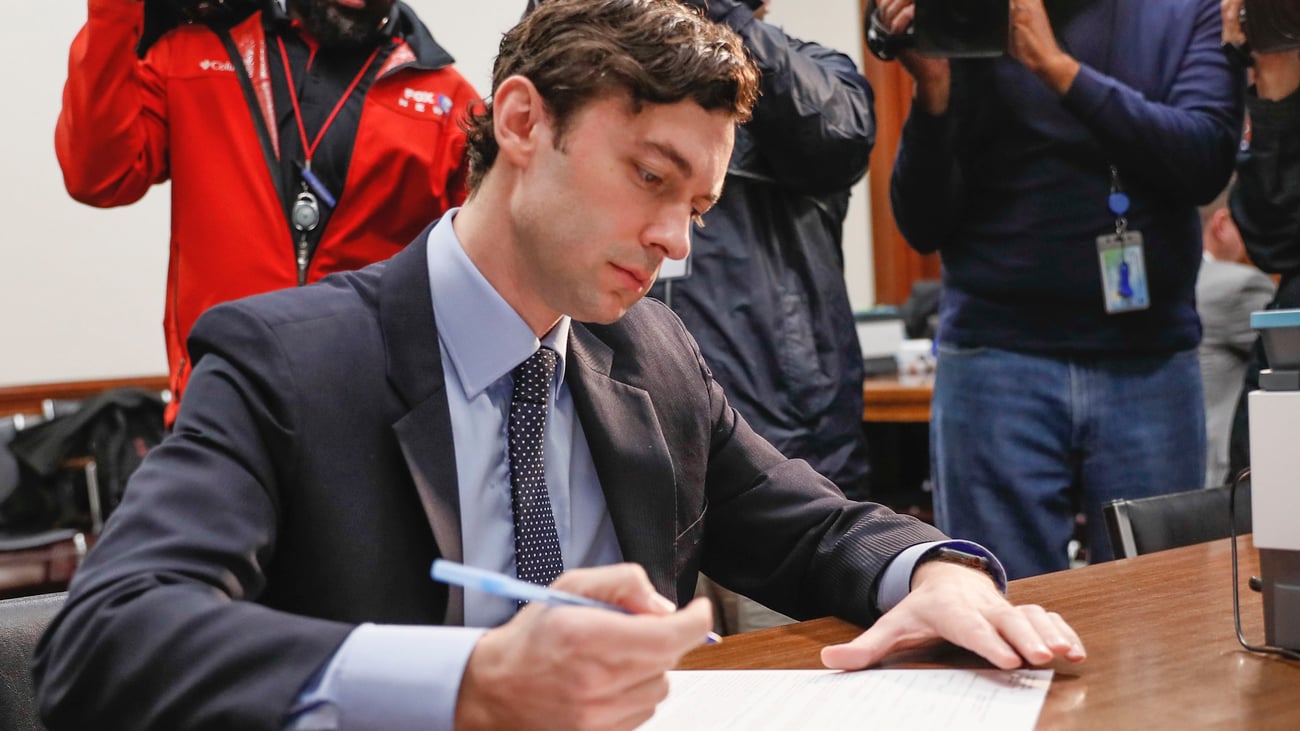
Back on the GOP ballot, several candidates are fighting to take on Ossoff for the Senate in November, including current Congressmen Mike Collins and Buddy Carter and former football coach Derek Dooley. Jonathan McColumn, a pastor and retired brigadier general in the U.S. Army reserve, and real estate developer John Coyne are also on the ballot.
Without a Trump endorsement, Collins and Carter are trying to position themselves as the most reliable MAGA candidate in the race. They’re also trying to differentiate themselves through personal attacks on their opponents.
“Indeed, it is not hyperbole to say that the Republican party has become the Trump party,” said Charles Bullock, a professor of political science and public and international affairs at the University of Georgia.
“They are not going to be criticizing Trump in the general primary. You’d be signing your death warrant,” Bullock added.
Still, Trump’s deteriorating national approval could mean trouble for Republicans come fall, Bullock said, as some who have closely aligned with the president have ultimately lost to Democrats.
“People are unhappy with what they are seeing in the White House,” he said.
Collins is serving his second term in the U.S. House. He touts the passage of the Laken Riley Act — named after a slain 22-year-old university student — which requires immigration officials to detain immigrants without bail for specific crimes. But his campaign has been dampened by an ongoing congressional investigation into his misuse of government funds to benefit a top aide. Collins has denied wrongdoing.
Meanwhile, Collins has accused Carter of enriching himself while in office. According to data from OpenSecrets, Carter’s net worth grew from $20.8 million when he took office in 2015 to $33.2 million in 2019. Carter — with more than $6.7 million raised for his campaign — currently has an advantage in the race.
Dooley is the son of famed University of Georgia football coach Vince Dooley, a legend among Bulldog fans. He spent his career in the coaching field, getting him a thumbs up from Kemp, an alumnus.
He’s used his outsider status to run as a middle ground candidate who can appeal to both Trump-supporting Republicans and more moderate voters.
McColumn is advocating his military and Christian background, with a focus on moral leadership and national security. Coyne is a former Democrat and self-described centrist.
According to a March poll from Emerson College, the economy is the top concern for Georgia voters, followed by housing affordability, healthcare and threats to democracy.
So far in the 2026 primary election, 389,425 people have voted — 17% higher than at this point in 2022, according to Georgia Votes.
High primary turnout is important because the more people vote, the more winning candidates reflect the views of actual voters, said Tammy Greer, a Georgia State University professor.
“The people in the middle would really like a more moderate candidate, because Georgia is not completely conservative and at the same time its not so progressive,” Greer said. “Georgia is the canary in the coal mine for the former Confederacy. I’m curious if the voters of Georgia are ready to take on that responsibility of being the leader in the south.”
 Follow @Megwiththenews
Subscribe to our free newsletters
Our weekly newsletter Closing Arguments offers the latest about ongoing trials, major litigation and rulings in courthouses around the U.S. and the world, while the monthly Under the Lights dishes the legal dirt from Hollywood, sports, Big Tech and the arts.