
 Search Articles


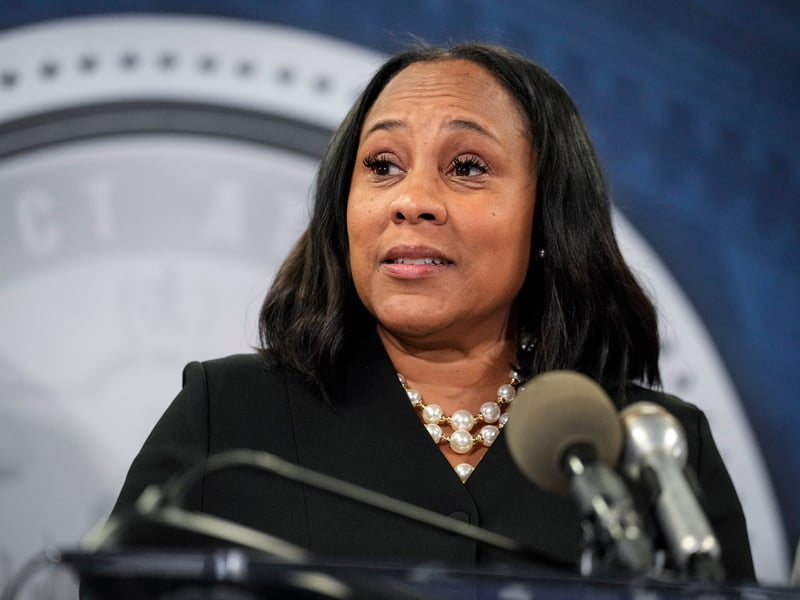
ATLANTA (CN) — The Georgia Supreme Court heard arguments Tuesday over whether Fani Willis, the prosecutor who led the 2020 election interference case against President Donald Trump, must appear before a state Senate committee.
The Republican-led Special Senate Committee on Investigations was created in January 2024 purportedly to grant it the power to subpoena witnesses and documents. But it specifically targeted Willis amid efforts by nine defendants, including Trump, to stop her from prosecuting the case.
Bill Cowsert, an Athens Republican who leads the Senate committee, contends that his panel has the legal authority to force Willis’ testimony in their investigation of her prosecution.
However, Willis claims the committee’s subpoena is now moot because the legislative session it was issued under has ended.
Willis, who serves as the Fulton County district attorney in Atlanta, also argued the subpoena was invalid and unenforceable from the start because it was served nearly five months after the General Assembly adjourned sine die.
“This case is not moot,” Cowsert’s attorney, Josh Belinfante, told the justices.
Belinfante argued that the initial subpoena is still enforceable, but the justices appeared unpersuaded.
“If the subpoena is from a committee that no longer exists then that subpoena is no longer in effect,” Justice Andrew Pinson said.
Willis’s attorney, former Georgia Governor Roy Barnes, told the justices that a new subpoena has since been issued under this year’s newly sworn-in General Assembly and that she plans to comply and appear on Dec. 17. The reconvened special committee remains the same except for one new member.
“If she shows up and testifies, there is nothing left for us to do,” Justice Charlie Bethel said.
Still, Barnes expressed separation of power concerns and argued that the General Assembly as a whole must grant the subpoena power to a committee, either by resolution or statute.
While the investigative committee lacks the power to prosecute or disbar Willis, it could recommend changes to the state budget or draft legislation setting stricter oversight guidelines for prosecutors.
“It’s not the traditional function of the General Assembly as to engage in that kind of investigative effort,” Justice Nels Peterson said.
Willis had originally argued that testifying about the prosecution could hinder what was an open criminal case at the time. But an order from the Georgia Court of Appeals removed her from the case in September and the entire case was ultimately dismissed last month by a new prosecutor.
Her removal followed efforts by several defendants in the sprawling racketeering case to disqualify Willis over her personal relationship with Nathan Wade, the former appointed special counsel on the case. They argued the relationship created a conflict of interest and that Willis misused public funds to hire him and enriched herself through personal trips the two took together.
Now, she argues the committee continues to seek her testimony to pry into her personal affairs and attempt to cast doubt upon the state’s prosecution of President Trump and others who sought to overturn his defeat in the 2020 presidential election.
Additionally, Cowsert has made his investigation of Willis and criticism of Democratic prosecutors the centerpieces of his current bid to be elected as Georgia’s attorney general.
Willis’s office did not immediately respond to a request for comment.
 Follow @Megwiththenews
Subscribe to our free newsletters
Our weekly newsletter Closing Arguments offers the latest about ongoing trials, major litigation and rulings in courthouses around the U.S. and the world, while the monthly Under the Lights dishes the legal dirt from Hollywood, sports, Big Tech and the arts.